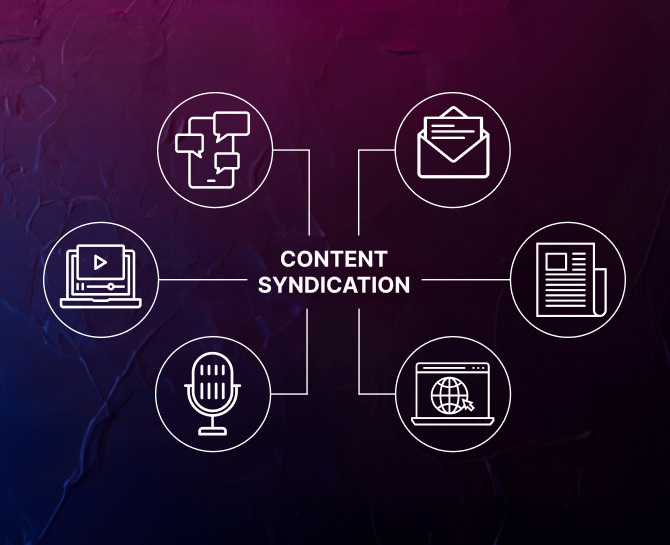
Struggling to generate quality B2B leads through content syndication? Discover the 14 most critical B2B content syndication mistakes enterprises make in 2026 — and how to fix them before they drain your pipeline.
In 2026, B2B content syndication is no longer a nice-to-have — it’s a core pillar of enterprise demand generation. With buyer journeys growing more complex, buying committees expanding across verticals, and AI-driven content flooding every channel, syndicating the right content to the right audience at the right time has become one of the most efficient and scalable ways for B2B enterprises to fill their pipeline and accelerate revenue growth.
Done right, B2B content syndication solutions allow enterprises to publish and distribute expert content — thought leadership, whitepapers, product insights, use cases — across third-party platforms, niche industry publications, and high-intent B2B media networks. The result: amplified reach, qualified lead generation, and a stronger brand presence in accounts that your owned channels simply cannot access.
But here’s the reality check: most B2B marketing teams are doing it wrong.
Despite the opportunity, many organizations are leaving serious pipeline on the table — not because content syndication doesn’t work, but because they’re falling into predictable, costly traps. They burn budget on unqualified traffic, alienate prospects with inconsistent messaging, and fail to connect syndication efforts to measurable revenue outcomes.
In this guide, we break down the 14 most damaging B2B content syndication mistakes that enterprise teams make in 2026 — and more importantly, how to fix each one before your next campaign goes live.
Before diving into the mistakes, it’s worth grounding the conversation in the current B2B landscape.
Today’s enterprise buyers conduct over 70% of their research independently before ever engaging a sales rep. They’re consuming content on syndication networks, reading analyst reports, and engaging with peer communities — all before you even know they exist. B2B content syndication gives you presence in those dark funnel spaces, putting your brand in front of in-market buyers at the exact moment they’re evaluating solutions.
With AI-powered intent data now standard in most modern B2B tech stacks, content syndication is no longer a spray-and-pray exercise. When paired with a robust demand generation strategy, it can deliver account-level insights, engagement signals, and high-quality MQLs that convert into pipeline far faster than organic or paid search alone.
The stakes are high — and the room for error is smaller than ever.
The most foundational — and most common — mistake: jumping into content syndication without a documented B2B content marketing strategy tied to business outcomes.
Without a defined strategy, you can’t determine which content formats perform best, which buyer personas to target, or how to measure ROI. You’re essentially guessing. In 2026, where every marketing dollar is scrutinized against pipeline contribution and revenue impact, guessing isn’t a strategy — it’s a liability.
Before launching any syndication campaign, align on clear objectives: Are you targeting net-new accounts? Accelerating mid-funnel opportunities? Building awareness in a new vertical? Your answers should dictate every subsequent decision — from content type and syndication partner selection to lead scoring criteria and follow-up cadence.
Fix it: Build a content syndication playbook that maps content assets to funnel stages, defines ICP-aligned targeting parameters, and connects campaign goals to measurable KPIs like cost-per-lead, pipeline influenced, and marketing-sourced revenue.
B2B buyers today interact with your brand across multiple touchpoints before converting. When your syndicated content delivers inconsistent messaging — different value propositions, varying brand voice, conflicting product claims — it erodes trust at scale.
Some enterprise teams make the mistake of treating each syndication partner in isolation, using different content assets, calls-to-action, and positioning for each channel. The result? A fragmented brand experience that confuses your ICP and reduces conversion rates.
Fix it: Develop a core messaging framework and apply it consistently across every B2B content syndication platform you operate on. Repurpose content intelligently — adapt format for each channel while keeping the core narrative cohesive.
In 2026, “we think our buyers care about X” is not a content strategy — it’s a gamble. Yet many B2B organizations still build their syndicated content on internal assumptions rather than validated buyer intelligence.
First-party data from your CRM, third-party intent data from platforms like Bombora or G2, and direct customer research (surveys, interviews, win/loss analysis) should be the foundation of every content asset you syndicate. Content grounded in real data generates higher engagement, earns more trust from in-market buyers, and consistently outperforms opinion-based content.
Fix it: Before creating any asset for syndication, validate the topic against intent data signals, sales intelligence, and existing customer feedback. If a topic isn’t registering measurable buyer interest, reprioritize.
Content syndication at the enterprise level is not a one-person job. It requires strategic oversight, content production, technical execution, analytics, and vendor management — simultaneously. Organizations that assign all of this to a single marketing generalist will always underperform.
In 2026’s competitive B2B demand generation environment, the most effective syndication programs are run by dedicated teams or pods: a content strategist, a performance marketer, a marketing ops specialist, and a sales alignment lead. Each brings a distinct capability that, combined, creates a compounding syndication engine.
Fix it: Structure a dedicated content syndication function — or embed syndication responsibilities into a broader demand generation pod. If budget is a constraint, prioritize marketing ops and content strategy roles first.
Syndicating mediocre content at scale doesn’t generate pipeline — it generates noise. Worse, it trains your target accounts to associate your brand with low-value communication. In 2026, B2B buyers are sophisticated and time-poor; they will disengage from your brand permanently if your syndicated content doesn’t immediately deliver value.
Before you amplify, ask: Would your best customer share this content with a peer? Does it address a real, pressing challenge your ICP faces? Does it contain proprietary insights, original research, or a clear framework — or is it generic?
Fix it: Establish a content quality bar before any asset enters your syndication distribution. Peer review, subject matter expert validation, and buyer persona alignment checks should be standard practice before publishing.
You cannot optimize what you don’t measure. One of the most costly B2B content syndication mistakes is deploying campaigns without a robust analytics framework in place — and it’s alarmingly common.
Without proper tracking, you can’t determine which syndication partners are delivering qualified leads versus junk fills, which content formats are resonating with your ICP, or how syndicated touches are influencing pipeline progression. In an era where CFOs demand marketing attribution clarity, operating without analytics is professionally untenable.
Fix it: Before launching any syndication campaign, configure UTM parameters, CRM source tracking, and lead scoring logic. Use your marketing automation platform (HubSpot, Marketo, Pardot) alongside tools like Google Analytics 4 and intent data overlays to build a multi-touch attribution model that connects syndication efforts directly to revenue.
Many B2B teams set up basic analytics but fail to continuously monitor and act on syndication performance data. A campaign goes live, leads come in, and the team moves on — missing critical optimization signals.
In 2026, real-time performance monitoring is table stakes. You need to track not just lead volume, but lead quality metrics: engagement depth, conversion rates at each pipeline stage, account-level penetration within your ICP, and sales velocity for syndication-sourced leads.
Fix it: Create a weekly syndication performance review cadence. Segment performance by publisher, content type, audience segment, and funnel stage. Use this data to dynamically reallocate budget toward top-performing channels and retire underperformers quickly.
Ad hoc content syndication is not a demand generation strategy. Without a structured content calendar governing your syndication schedule, you risk content gaps, duplicated efforts, inconsistent frequency, and missed opportunities tied to industry moments, product launches, or buying cycles.
In 2026, the most effective enterprise syndication programs run on 90-day rolling content calendars, synchronized with the broader marketing calendar, sales priorities, and product roadmap.
Fix it: Build a dedicated content syndication calendar that maps asset types, publication frequency, syndication partners, target personas, and funnel stages. Align it with your overall B2B demand generation plan to ensure consistent top-of-funnel pressure throughout the year.
Your syndicated content may be brilliant — but if the CTA doesn’t compel action, it fails. A generic “Learn More” or “Visit Our Website” CTA is not sufficient for a B2B buyer who needs a reason to engage further.
In 2026, high-performing B2B content syndication programs use intent-matched CTAs: the offer aligns precisely with where the prospect is in their buying journey. A top-of-funnel reader responding to a thought leadership piece doesn’t want a product demo — they want a relevant follow-up resource, an expert guide, or a benchmark report.
Fix it: Map your CTAs to buyer journey stages. Use action-oriented, value-forward language: “Get the 2026 B2B Benchmarks Report,” “Calculate Your Content ROI,” or “Book a Pipeline Strategy Session.” Test CTA variants across syndication partners and optimize based on conversion data.
Manual follow-up to syndicated leads is slow, inconsistent, and unscalable. In a market where speed-to-lead directly impacts conversion rates, delays in follow-up communication are a significant revenue risk.
Marketing automation is the connective tissue between your syndication programs and your revenue engine. It enables automated lead nurturing sequences, behavioral-triggered follow-ups, dynamic content personalization, lead scoring, and seamless handoffs to sales — all without human intervention at every step.
Fix it: Integrate your syndication lead sources directly into your marketing automation platform. Build automated nurture sequences specific to each syndication source, content type, and persona. Use lead scoring to surface sales-ready leads to your SDR team immediately and nurture the rest systematically.
Inconsistent follow-up — whether too aggressive or too sparse — is one of the fastest ways to lose a syndicated lead forever. B2B buyers who engage with your syndicated content are often in early research mode; the nurture sequence you deliver in the following days and weeks determines whether they stay engaged or go cold.
In 2026, hyper-personalized nurture cadences — powered by AI and first-party behavioral data — are the expectation, not the exception. Generic email blasts following a content download are a fast path to unsubscribes and brand damage.
Fix it: Design persona-specific nurture tracks for each syndication audience segment. Calibrate frequency carefully — enough to maintain brand presence without becoming intrusive. Use engagement signals (opens, clicks, content consumption) to dynamically adjust the cadence and content of your follow-up.
Vendor concentration is a significant strategic risk in B2B content syndication. Organizations that depend on a single publisher or platform for the majority of their syndicated leads are one contract change or algorithm update away from a serious pipeline disruption.
Additionally, different syndication platforms deliver different audience segments. Relying on one limits your reach, skews your data, and prevents you from building a diversified, resilient demand generation engine.
Fix it: Diversify across a portfolio of B2B content syndication platforms — including vertical-specific publications, intent-driven networks, association media, and premium content hubs. Establish clear performance benchmarks for each partner and rebalance your investment quarterly based on lead quality and pipeline contribution data.
Perhaps the most strategically damaging mistake: running content syndication as a standalone marketing activity, completely disconnected from revenue objectives and sales team priorities.
When marketing doesn’t have visibility into margin, deal velocity, and closed-won data by source, it continues to invest in syndication channels that generate volume but not value. Sales, in turn, loses confidence in marketing-sourced leads — creating the all-too-common friction that undermines B2B revenue growth.
Fix it: Build a formal alignment loop between marketing and sales around content syndication. Define shared metrics: pipeline contribution, marketing-influenced revenue, and lead-to-close rates by syndication source. Make syndication performance a standing agenda item in revenue reviews. Ensure cost-per-qualified-lead and cost-per-pipeline-dollar are tracked alongside volume metrics.
B2B buying cycles are long — often 6 to 18 months for enterprise deals. A prospect who downloads your whitepaper today may not enter an active buying cycle for another two quarters. If your syndication program goes dark between campaigns, you lose presence at the exact moment they become ready to evaluate vendors.
Think of your demand generation engine like a fuel system: the top of your funnel needs to be consistently replenished, not sporadically flooded. An always-on content syndication strategy ensures your brand stays visible, your intent signals remain fresh, and your pipeline never runs dry — regardless of what’s happening within any one account.
Fix it: Shift from campaign-based syndication to an always-on model. Maintain a rolling inventory of evergreen content assets optimized for different funnel stages. Reserve burst campaigns for product launches, key industry events, and seasonal demand spikes — but never let your baseline syndication engine go silent.
Avoiding the mistakes above is the foundation. Building a world-class B2B content syndication program requires a systematic framework:
Define clear syndication objectives aligned to pipeline and revenue targets — not just lead volume.
Develop a tiered content asset library mapped to buyer journey stages, personas, and key verticals.
Select syndication partners based on audience quality, intent data integration, and demonstrated conversion performance in your ICP.
Build a full-funnel measurement model connecting syndication touches to pipeline progression and closed revenue.
Maintain content freshness through consistent production cadences, performance-driven repurposing, and SEO-aligned distribution.
Align with sales through shared definitions, lead qualification criteria, and transparent performance reporting.
B2B content syndication remains one of the most cost-efficient and scalable strategies for enterprise demand generation in 2026. The fundamentals haven’t changed — but the execution bar has risen significantly.
With AI-driven personalization, sophisticated intent data, and increasingly discerning B2B buyers, the organizations that win will be those that treat content syndication as a precision instrument, not a volume play. That means building with strategy, measuring with rigor, and optimizing with discipline.
Audit your current syndication program against the 14 mistakes outlined above. Identify your highest-priority gaps. Then build a roadmap to close them — because in today’s competitive B2B landscape, the pipeline you’re leaving on the table won’t wait.
B2B content syndication is the process of distributing your content — whitepapers, blogs, case studies, webinars — across third-party platforms, publications, and media networks to reach in-market buyers outside your owned channels. When executed strategically, it fills the top of your funnel with intent-qualified leads from accounts that are actively researching solutions in your category, giving your sales team a consistent stream of pipeline to work with.
If your syndication program is working, you’ll see it reflected in measurable outcomes — not just lead volume. Track cost-per-qualified-lead, lead-to-MQL conversion rates, pipeline influenced by syndication-sourced touches, and ultimately, marketing-sourced revenue. If your numbers show high lead volume but low pipeline contribution, that’s a signal your targeting, content quality, or lead scoring needs recalibration.
The three that hurt ROI the most are running without an analytics framework (so you can’t optimize), over-relying on a single syndication partner (concentration risk), and disconnecting syndication efforts from revenue goals. Together, these three mistakes cause organizations to spend consistently while unable to attribute, optimize, or justify that spend to the business.
As a baseline, audit your syndicated content library every quarter. Any asset older than six months should be reviewed for relevance — especially in fast-moving categories where market conditions, buyer priorities, or competitive dynamics shift frequently. High-performing evergreen assets can be refreshed and re-syndicated rather than retired, which maximizes your content investment while keeping your distribution engine consistently fueled.