Explore how Physical AI and standardized orchestration help manufacturers coordinate autonomous robots, improve interoperability, and scale automation.
Most plants don’t struggle to buy robots. They struggle to get those robots working together. One vendor’s arm speaks one language, another’s mobile platform speaks something else, and the shop floor ends up as a patchwork of islands. That’s the real bottleneck now, and it’s why Physical AI has moved from pilot slides to actual budget lines.
Physical AI is artificial intelligence that senses, decides, and acts in the real world. In a factory, that means models running on machines that move, grip, weld, inspect, and haul. They don’t just analyze a dashboard. They respond to a part that’s slightly out of position or a pallet that isn’t where the schedule said it would be.
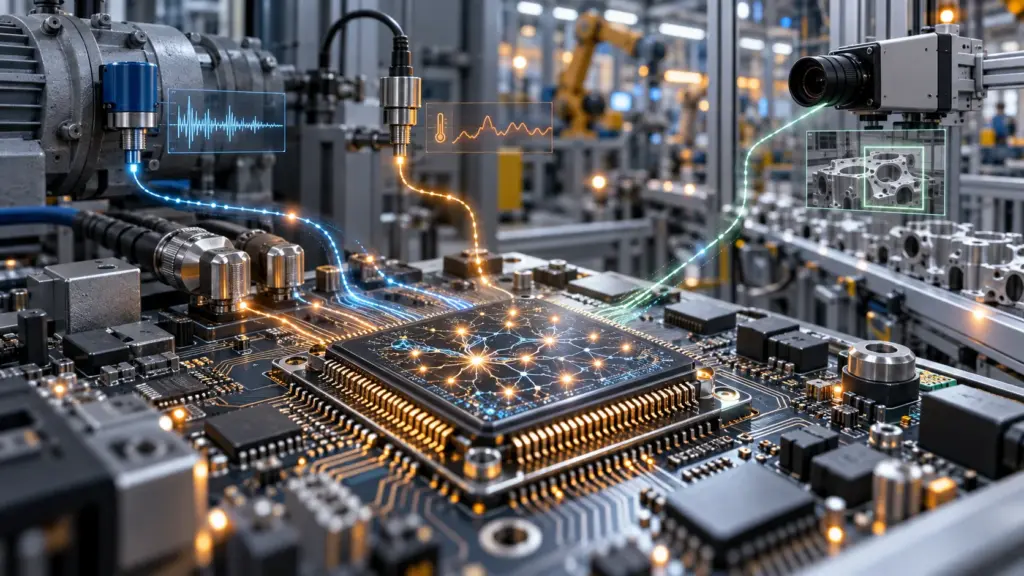
Autonomous industrial robots are the visible face of this shift. Unlike fixed-path machines, they read their surroundings and adjust. That ability rests on perception and sensor fusion, where cameras, lidar, force sensors, and encoders feed one coherent picture of the workspace. Without it, autonomy is just a scripted routine with better branding.
A single robot cell is easy to justify. Ten cells from four vendors is a different story. Each ships with its own controller, its own software, and its own idea of what “done” looks like. Engineers end up writing custom bridges, and every bridge becomes something to maintain.
The costs rarely show up on the purchase order. They show up in commissioning delays, weekend patch work, and a maintenance team chasing faults across three different dashboards. Multiply that across lines and sites, and the hidden expense can outweigh the hardware itself.
Three problems show up again and again:
That’s why smart manufacturing technology isn’t really about the robots. It’s about the layer that sits above them.
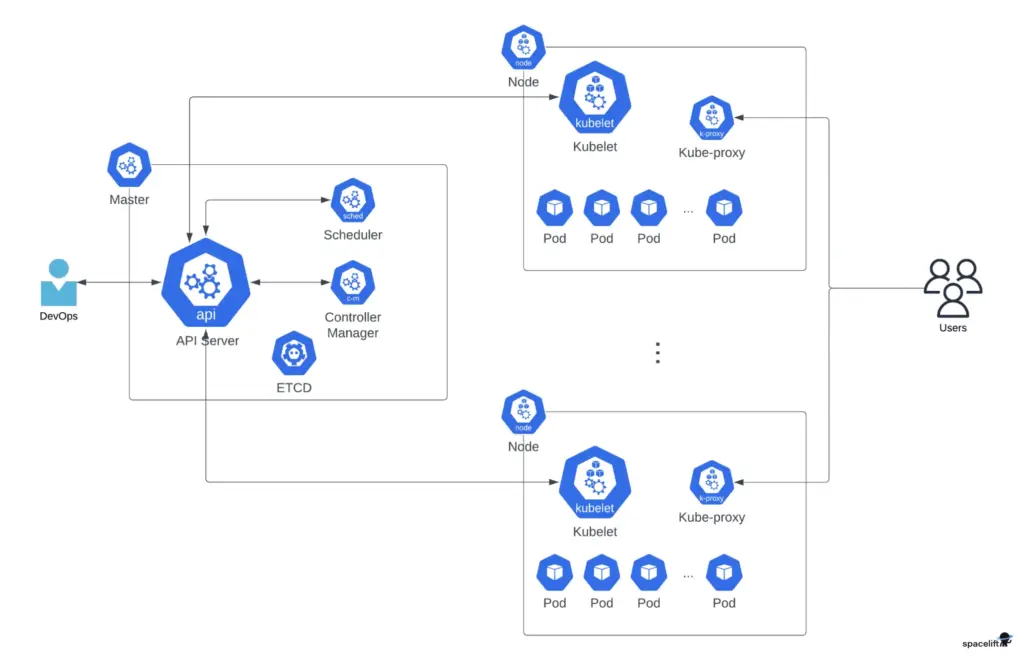
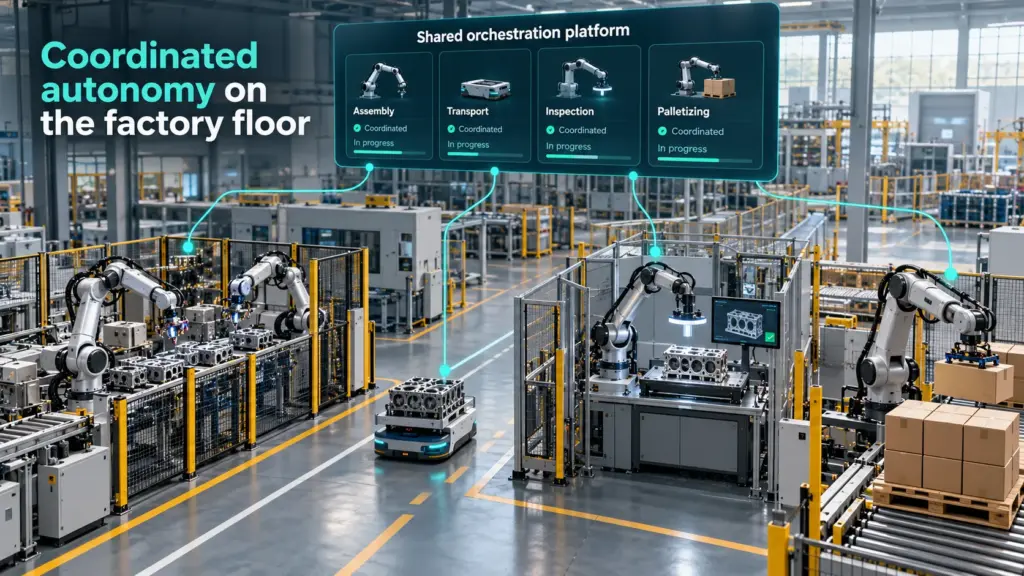
Robot orchestration platforms act as the shared brain and traffic controller for a mixed fleet. They take work orders from plant systems, break them into tasks, and hand each task to whichever machine is best placed to do it.
Standardized orchestration for industrial robots goes a step further. Instead of one-off integrations, every robot talks to the platform through a common interface. Swap a machine, and the rest of the system barely notices.
This is where robotics interoperability earns its keep. Open protocols and shared data models let a gripper from one vendor and a mobile base from another behave like a single system. Many teams build on robot operating systems such as ROS 2 for this reason, since they offer a common messaging layer, hardware abstraction, and a deep tooling ecosystem.
Multi-robot coordination is where theory meets the aisle. It covers task allocation, path planning, right-of-way at intersections, and what happens when something fails.
A good orchestration layer handles a few things well:
There’s a bonus, too. Coordination produces data. Cycle times, wait times, and fault patterns become visible, which gives operations leaders something concrete to tune.
If you’re wondering how to deploy autonomous robots in manufacturing facilities without derailing production, start small and build the foundation first.
Pick one workflow with a clear pain point. Material transfer between stations is a common starting place.
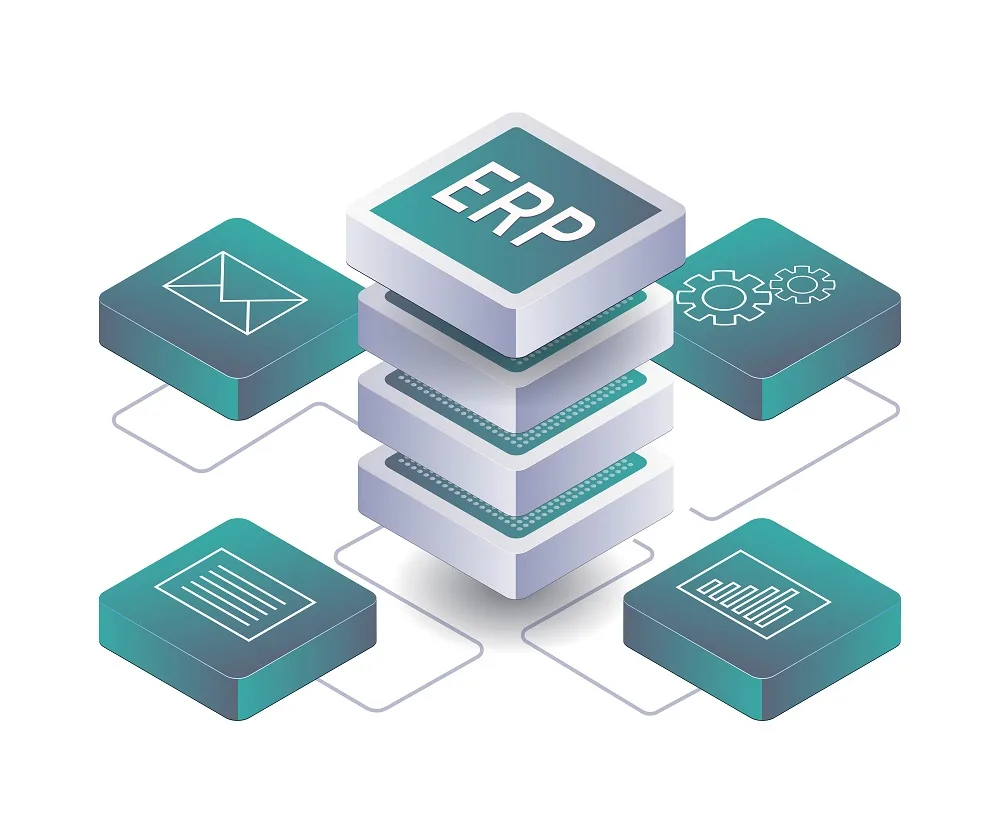
Audit your systems. Know what your MES, ERP, and safety systems expose before promising integrations.
Choose the orchestration layer first. Look for open APIs and support for multiple vendors.
Pilot in a contained zone. Measure throughput, downtime, and operator interventions against a baseline.
Expand in stages. Add robot types and zones only when the interface holds up.
Train your people. Operators and maintenance teams need to trust what the system is doing.
Rolling out autonomous industrial robots this way keeps risk low and learning high.
Ask hard questions. Does the platform support open standards? Can it manage different robot brands without custom code? How does it handle network loss? What audit trail does it leave for safety and quality teams? A platform that answers well today saves you from a rebuild later. That’s the quiet advantage of adopting a standard approach early.
Ask for references, too. A vendor that has connected equipment from several suppliers in a live plant will tell you more than any brochure. Request a walkthrough of a real deployment, including the awkward parts, and note how the team handled change requests after go-live.
Physical AI won’t scale on hardware alone. The plants that pull ahead will treat orchestration as core infrastructure, connect their machines through common standards, and expand one proven workflow at a time. That’s less glamorous than the demos suggest, but it’s what pays off. Start with the interface, and the robots will follow.
Physical AI is AI that perceives and acts in the physical world. On a factory floor, it powers robots that adapt to real conditions instead of repeating fixed motions.
Traditional automation follows fixed programs in tightly controlled setups. Physical AI learns from sensor data and adjusts on the fly, so it copes with variation that would stop a scripted machine.
It’s the software layer that assigns tasks, schedules work, and keeps a mixed fleet in sync. Think of it as the shift supervisor for your machines.
Without them, every new machine means another custom integration. Common interfaces make robotics interoperability practical, cut integration time, and reduce vendor lock-in.
Use an orchestration layer with shared maps, dynamic scheduling, and clear traffic rules. That’s the core of multi-robot coordination, and it works best on open standards.