Learn how B2B teams use buyer intent signals, CRM insights, and personalized nurturing to reactivate dormant accounts and recover sales opportunities.
Every sales team has a graveyard. It sits quietly inside the CRM, packed with deals that were chased for months and then marked lost. Most teams never open it again. That’s an expensive habit, because a “no” in March is rarely a “never” in October. Budgets reset, champions change roles, and the problem you pitched against only gets bigger. Closed-lost opportunity reactivation is the practice of going back to those accounts at the right moment with the right message.
It’s the process of finding accounts that rejected or stalled on your offer, then re-engaging them when their situation changes. It isn’t a mass email to old contacts. It’s a targeted program built on timing, context and relevance. Done well, it becomes a quiet engine for sales pipeline acceleration, since these buyers already know your product, your pricing and your people.
That familiarity matters. A cold prospect needs education. A former opportunity just needs a reason to reconsider, and that job is far shorter.
Deals rarely die because the product was wrong. More often it’s the calendar. Budget freezes, a competing internal priority, a leadership change, a stalled procurement cycle, or an incumbent contract that hadn’t expired yet. Many dormant sales opportunities simply ran out of runway, not interest.
Your CRM usually says as much. The loss reason field, if reps filled it in honestly, is the first filter for who deserves a second look. “Chose a competitor on price” is a different conversation from “no budget this year.”
Start with data you already own. Here’s a simple way to approach how to use CRM data to identify dormant prospects. Pull closed-lost records from the past six to 24 months. Segment them by loss reason, deal size and the stage the deal reached. Deals lost late in the cycle, after several stakeholder meetings, deserve priority because they carry the most built-up trust.
Then check for contact changes. If your old champion has moved to a new company, you now have two doors to knock on.
This is where sales opportunity management discipline pays off. Teams that log clean loss reasons, next-step dates and stakeholder roles end up with a far richer inactive prospect database to work from. Teams that don’t are left guessing.
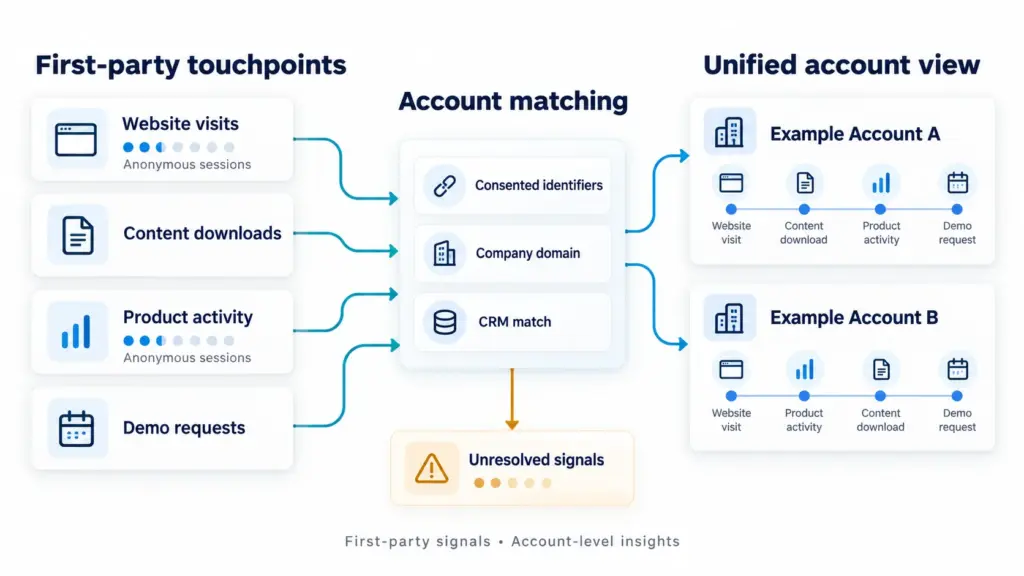
Records tell you who to watch. Behavior tells you when to act. Buyer intent signals are the digital footprints showing an account is back in research mode:
One signal on its own is weak. Several together, on an account that once reached late stage, make a strong case for outreach this week. Marketing and sales should agree on a shared score so the handoff never turns into a debate. Layer these signals over your inactive prospect database and the list of names to call shrinks from hundreds to a handful that are actually worth the effort.
Here’s how to reactivate closed-lost B2B sales opportunities without sounding like you’re chasing:
Segment first. Group accounts by loss reason, not by rep.
Refresh the story. Lead with what has changed: a new feature, a case study from their industry, a pricing model that answers their earlier objection.
Stay useful. Share one helpful asset every few weeks instead of a pitch, since consistent lead nurturing builds the familiarity that gets replies.
Personalize honestly. Mention the earlier conversation. “We spoke last spring about onboarding, and this might be relevant now” works better than pretending it never happened.
Hand off warm. When intent spikes, route the account to the original rep or a new owner with full context.
Measure. Track reply rate, meetings booked and revenue influenced.
Steady lead nurturing keeps your name in the room while the buyer’s circumstances shift. It’s the quiet work between the “no” and the next conversation.
Reactivation fails when it lives in one team. Sales knows the history. Marketing owns the content, the channels and the signal tracking. Together they can run closed-lost deal recovery as a shared program, with common definitions for what counts as re-engaged and who owns the next step. A weekly review of accounts with rising intent is enough to start. Strong sales opportunity management keeps that review honest, because every account has an owner, a status and a clear next step.
One caution: respect the “no.” If a prospect picked a rival on a three-year contract, don’t contact them monthly. Wait for the renewal window and be genuinely helpful until then.
Your next best customers may already be sitting in your CRM. Small dormant sales opportunities add up when you revisit them every quarter. Treat closed-lost accounts as a pipeline source instead of an archive, and you’ll find that growth often starts with names you already know. That is the promise of closed-lost opportunity reactivation.
It’s a structured effort to re-engage accounts that previously turned down or stalled on your offer. Marketing and sales use CRM history and fresh signals to decide who to approach, when, and with what message.
Yes, often more easily than new leads. These buyers already understand your solution. When budgets, priorities or stakeholders change, a well-timed and relevant message can reopen the conversation.
Segment by loss reason, refresh your message around what has changed, and reach out with something useful. Personal, honest outreach beats a generic follow-up, and good lead nurturing keeps you visible until timing improves.
Usually for practical reasons: frozen budgets, shifting internal priorities, leadership turnover, or a long procurement cycle. Lack of interest is rarer than it looks.
Watch for pricing page visits, repeat content engagement, relevant hiring, and third-party research activity. When several buyer intent signals appear on one account, flag it to sales for timely follow-up.