Discover how neuromorphic computing enables ultra-low-power edge AI, reducing energy use and latency for real-time B2B IoT and industrial applications.
Your sensors collect readings every second, and most of them say nothing new. Yet a typical Edge AI setup treats every reading as urgent, wakes a hungry processor, and drains the battery you promised would last for years. Across plants, warehouses and fleets, that math falls apart at scale. Neuromorphic computing takes a different route. It borrows from how the brain handles information, and it gets the job done on a fraction of the power. Here’s how it works and where it’s already earning a place in B2B IoT.
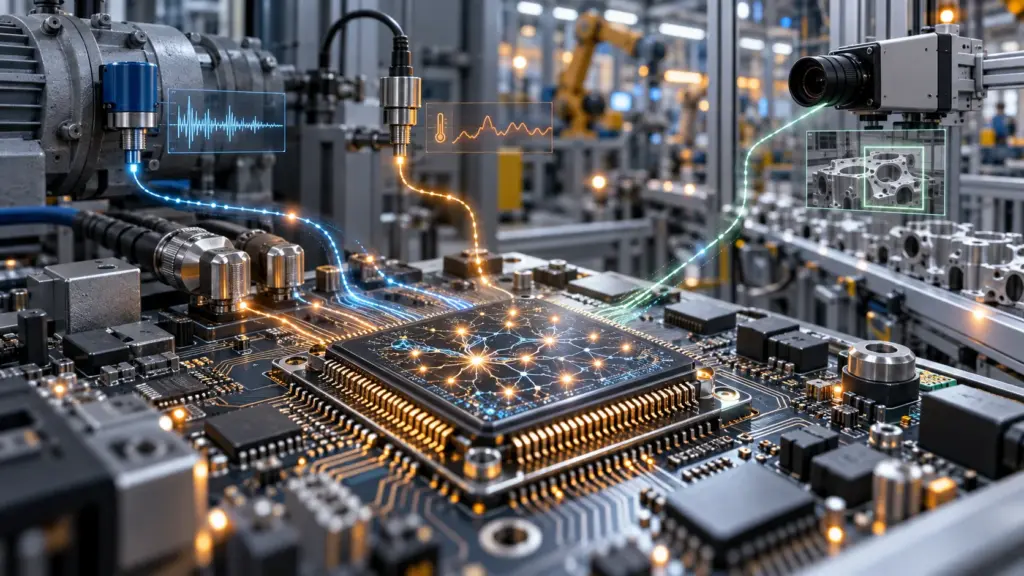
Neuromorphic computing is a chip design approach that mimics how biological neurons and synapses process signals. Conventional processors shuttle data between separate memory and compute units, and that traffic eats most of the energy. Neuromorphic designs keep memory and computation side by side. Artificial neurons stay quiet until something meaningful changes, then they fire a short pulse and pass it along.
That event-driven behavior is the whole point. A standard chip runs on a fixed clock, so it burns power whether the input changes or not. A neuromorphic chip spends energy only when there’s real activity. Picture a vibration sensor on a motor that runs smoothly for most of the day. The savings pile up quickly.
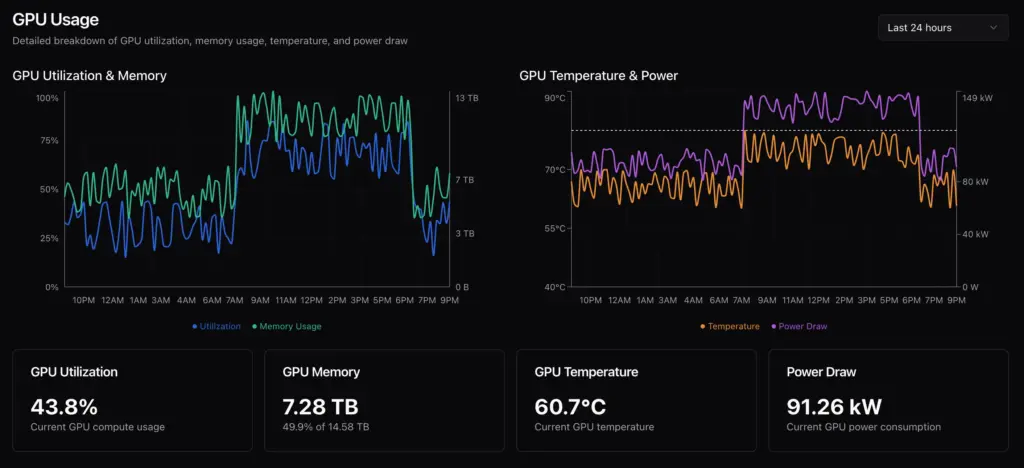
Most deployments today lean on GPUs or general-purpose AI accelerators squeezed into small enclosures. They work, but they were built for dense, continuous math. Push that into a battery-powered gateway and three problems show up fast. Heat limits where you can mount the device. Power draw shortens battery life and raises maintenance costs. Round trips to the cloud add latency that real-time control loops can’t afford.
None of this is a flaw in the models. It’s a mismatch between the hardware and the kind of data IoT produces, which is sparse, bursty and mostly uneventful. That’s the gap energy-efficient AI has to close, and it’s why teams are looking beyond scaled-down data center silicon.
Spiking neural networks are the software half of the story. Instead of passing continuous numbers between layers, they communicate through discrete spikes. Information lives in the timing of those spikes, not just their size. Because most neurons stay silent, the network does very little arithmetic per input.
That changes edge inference in a practical way. A trained spiking model can run on a neuromorphic processor and respond within milliseconds, with no trip to the cloud. Privacy improves, since raw sensor data never has to leave the site. Platforms such as Intel’s Loihi and BrainChip’s Akida have shown strong energy results on sparse, event-driven tasks, which is exactly the profile of most industrial signals.
The strongest use cases share one trait: lots of data, very little of it interesting.
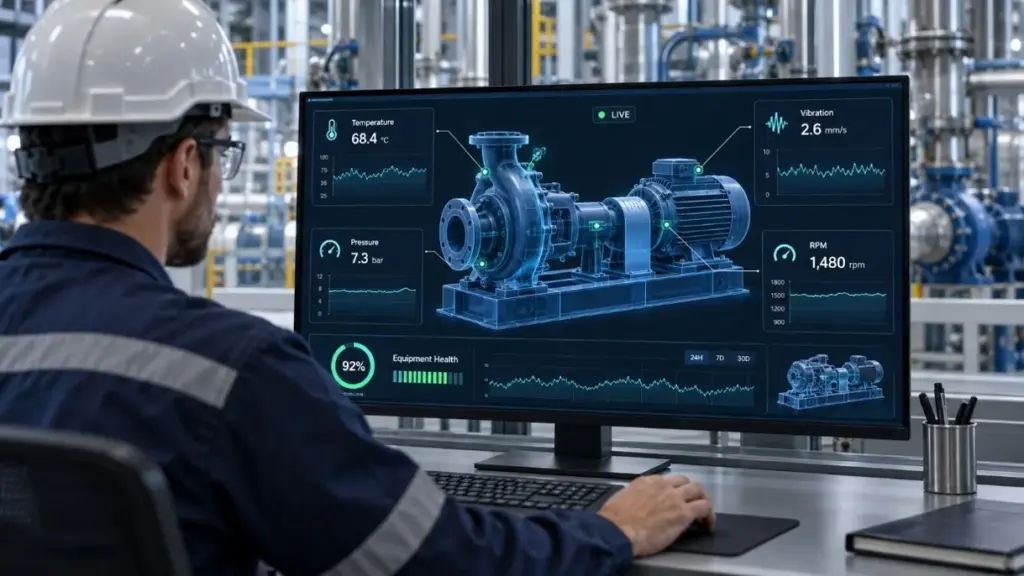
Predictive maintenance is the clearest example. Smart sensors with a neuromorphic chip built in can listen for early bearing wear or odd vibration patterns and raise an alert only when something shifts. The rest of the time, they sleep. That means fewer false alarms and batteries that last far longer between service visits.
Logistics and cold chain teams get a similar win. Asset trackers that classify shock, temperature drift or door-open events locally can run for long stretches without a recharge, and they only transmit when there’s news. In energy and utilities, distributed grid monitors can flag anomalies at the substation instead of streaming everything upstream. Event cameras on production lines pair naturally with spiking models too, since they report only pixel changes instead of full frames.
This is where neuromorphic chips for edge AI start to look less like a research topic and more like a design decision. They bring edge intelligence to places where a conventional processor would be too hot, too hungry or too slow.
It isn’t plug and play yet, and it’d be unfair to pretend otherwise. Tooling is younger than the GPU ecosystem. Converting a conventional model into a spiking one takes care, and some accuracy trade-offs are possible. Talent is thinner, too, so expect a learning curve for your team.
A sensible path is to start small. Pick one high-volume, battery-bound use case and benchmark it against your current setup on power, latency and accuracy. Check which frameworks the vendor supports and how they fit your existing data pipeline. If the numbers hold, expand from there. For low-power AI processing for IoT, a focused pilot teaches you more than any whitepaper will.
Edge devices don’t need to think harder. They need to think only when it matters. That’s the promise behind this technology, and it’s maturing quickly as more vendors ship production silicon. If your IoT roadmap is limited by power, heat or response time, it’s worth putting neuromorphic computing on the shortlist now, while the early advantages are still up for grabs.
It’s a way of building processors that work like the brain. Artificial neurons and synapses handle data and memory together, and they only activate when something changes. The result is far lower power use than traditional chips on the right workloads.
Inputs are converted into spikes, which are short pulses sent between artificial neurons. A neuron fires only when its incoming signals pass a threshold. Since most of the network stays idle, energy goes only where there’s activity, and processing happens right next to memory.
Neuromorphic computing suits tasks that involve sparse, real-time signals. Think anomaly detection, sensor processing, gesture and speech recognition, event-based vision and robotics. It fits anything where low power and fast response matter more than raw throughput.
It runs edge inference directly on the device or gateway. Smart sensors can spot faults, classify events and filter noise locally, then send only the important results. That saves battery, cuts bandwidth and reduces response time.
It’s AI that runs on neuromorphic hardware, typically using spiking neural networks. Rather than crunching dense matrices continuously, it processes events as they happen, which makes it a good fit for always-on, power-limited devices.