Something fundamental has shifted in how buyers discover products.
It didn’t happen with a big announcement.
There was no clear moment where search “changed.”
But quietly, the starting point moved.
Instead of typing into Google, people are now asking ChatGPT, Claude, or even tools like Perplexity AI for recommendations, comparisons, and advice.
And those systems don’t just pull from your website.
They pull from the internet as it actually exists.
For a long time, marketing teams operated with a clear assumption:
control the message, control the outcome.
Your website, your landing pages, your campaigns. That’s where your brand lived.
But LLMs don’t think that way.
They build answers using:
Which means your brand is being defined in places you didn’t plan for, in language you didn’t write, by people you don’t control.
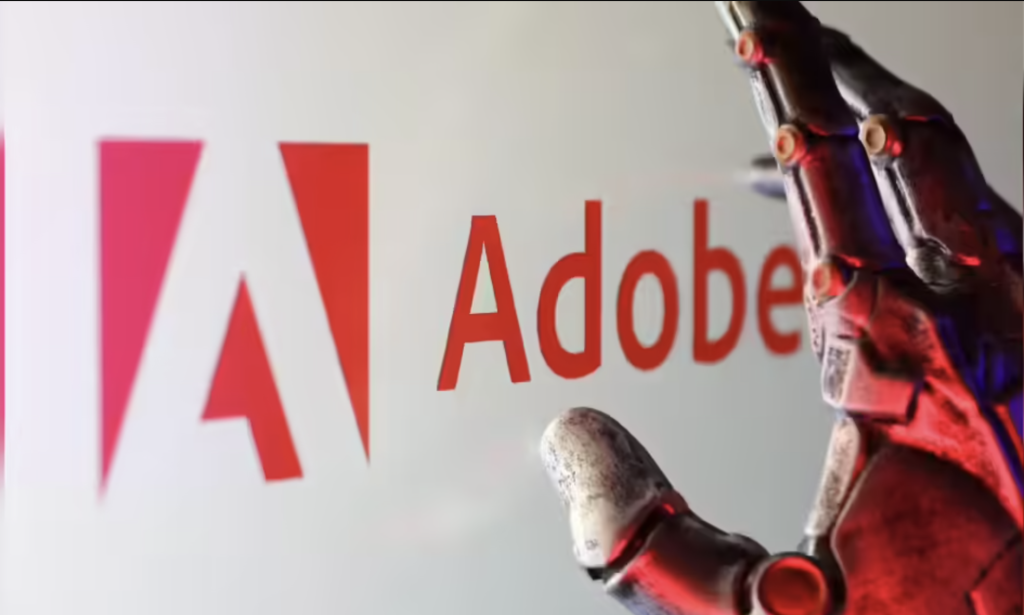
That’s the shift companies like Adobe are already responding to.
Adobe has started investing in Reddit. Not as a traditional advertising channel, but as a credibility layer.
Because Reddit doesn’t reward polished positioning.
It rewards honesty.
It’s conversational. It’s unfiltered. And it pushes back.
If a brand shows up with over-scripted messaging, the community will dismantle it in minutes.
So the approach changes.
Instead of broadcasting “we’re the best,” the focus becomes:
It’s closer to how B2C brands behave than traditional B2B marketing.
And that’s exactly the point.
At Vanguard, the shift goes even deeper.
The question is no longer just: how do we influence buyers?
It’s: how do we influence the systems that guide buyers?
AI agents are now intermediaries. They interpret intent, evaluate sources, and construct recommendations before a human even sees a shortlist.
And the scale is accelerating fast.
A 2025 report from Human Security found AI agent traffic grew 7,851% year-over-year, with over half of web activity now automated.
So when someone asks a chatbot:
“I just graduated. I need help managing savings and liquidity.”
The answer isn’t pulled from a single brand page.
It’s assembled from:
And brands don’t get to decide which of those gets included.
There used to be one algorithm to figure out.
Now there are many.
Each with its own logic, sources, and update cycles.
You’re no longer just optimizing for search. You’re navigating an ecosystem that includes:
Each one pulls from different parts of the internet.
Each one decides credibility differently.
There is no single playbook anymore.
This isn’t just another channel to add to your mix.
It changes how visibility works.
Your website becomes one input among many, not the center of gravity.
Community platforms move from “nice to have” to influential.
AI systems start acting as gatekeepers, shaping perception before a buyer ever reaches you.
And most importantly, discovery becomes context-driven.
People aren’t searching for products in isolation anymore.
They’re asking for guidance based on real situations.
Many companies will respond by doing more of the same.
More SEO.
More campaigns.
More content built for owned channels.
But that misses what’s actually happening.
The advantage now sits with brands that:
Because in this environment, visibility doesn’t come from ranking higher.
It comes from being included in the answer.