Google unveils its 8th-gen TPU chips, TPU 8t and TPU 8i, to power advanced AI workloads as demand for AI compute and cloud infrastructure grows rapidly.
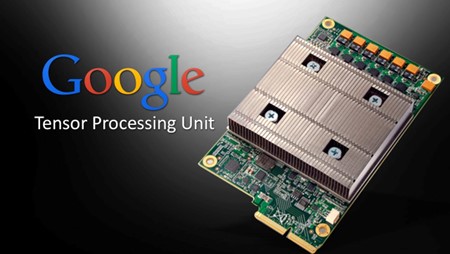
At Google Cloud Next 2026, Google introduced two new chips that reflect how quickly AI is evolving. The TPU 8t and TPU 8i, part of its eighth-generation tensor processing units, are built for a world where models are no longer static systems but continuously learning, reasoning, and executing complex workflows.
The TPU 8t focuses on training, pushing beyond previous limits with massive scale and higher interconnect speeds, while the TPU 8i is designed for inference, prioritizing responsiveness and efficiency in environments where even small delays can compound. This split highlights a deeper shift in AI infrastructure, where training and real-time execution are being optimized separately to keep up with increasingly agent-driven systems. At the same time, this move places Google alongside other hyperscalers like Amazon and Microsoft, who are building in-house chips to reduce reliance on traditional players like Nvidia and AMD.
What stands out is not just the performance jump, but the need for an entirely new way to run AI systems. Google introduced Virgo Network to connect multiple data centers into a single computing layer, moving toward a model where infrastructure behaves like one large machine rather than separate units. This is a direct response to the scale of modern AI, where some models now demand more compute than a single data center can handle.
That demand is already visible in how quickly usage is growing. Google’s models are processing over 16 billion tokens per minute, and adoption of its enterprise AI tools continues to accelerate. Internally, AI is also reshaping how work gets done, with a significant portion of new code now being generated by AI systems themselves. At the same time, Google is investing heavily in its ecosystem, committing hundreds of millions of dollars to help partners build and deploy agentic AI solutions across industries.
What this launch really signals is a shift in where the AI race is being fought. It’s no longer just about building better models, but about building the infrastructure that can support them at scale. As AI systems become more autonomous and operate in continuous loops, compute is turning into the core differentiator.
The companies that win won’t just be the ones with the smartest models. They’ll be the ones that can run them faster, cheaper, and across environments that don’t break under pressure.