Running workloads across multiple cloud providers doesn’t make multi-cloud a strategy. Here’s what it takes to flip infrastructure into a competitive advantage.
Most enterprises running workloads across AWS, Azure, and GCP will tell you they have a cloud strategy. What they usually have is a multi-cloud footprint – and those are two very different things. One describes where your infrastructure lives. The other describes what you’re doing with it and why.
The distinction matters more than most leadership teams realize.
Multi cloud architecture emerged partly by design and partly by accident. Acquisitions brought in different cloud environments. Teams made independent vendor decisions. Specific workloads had specific requirements. Before long, the organization was operating across multiple providers without a unified plan connecting any of it.
That’s not a cloud computing strategy – that’s accumulated infrastructure. And managing it without intention creates complexity, cost, and risk that compounds over time.
Having infrastructure on multiple clouds gives you optionality. It doesn’t give you resilience, agility, or cost efficiency by default. Those outcomes require deliberate architectural decisions, governance frameworks, and a cloud migration strategy that accounts for how workloads move, where they perform best, and what they cost across environments.
Organizations that mistake presence for strategy typically end up with:
Multi-cloud without strategy is just multi-vendor complexity.
A mature cloud computing strategy starts with business outcomes, not infrastructure preferences. It answers three questions before anything else.
What are we optimizing for? Performance, cost, resilience, speed of deployment – the answer shapes every architectural decision that follows.
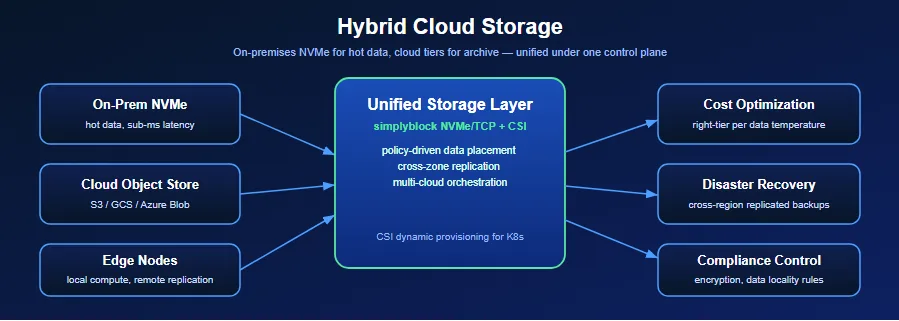
Which workloads belong where? Not every application benefits from the same cloud environment. A sound cloud migration strategy maps workloads to providers based on technical fit, cost profile, data residency requirements, and vendor capability – not habit or convenience.
How do we govern it all? Unified visibility, consistent security policy, and centralized cloud computing optimization practices need to work across every environment, not just within each provider’s native tooling.
One of the most common mistakes in enterprise cloud programs is treating cloud transformation as a migration project. Move the workloads, close the data center, declare victory. The reality is that migration is the beginning of transformation, not the end of it.
True cloud transformation changes how the organization builds, deploys, and operates technology. It shifts team structures, development practices, and governance models. A business that lifts and shifts legacy workloads onto cloud infrastructure hasn’t transformed – it’s just moved its problems to a different billing model.
The architecture has to evolve alongside the operating model.
The organizations getting real value from multi cloud architecture are the ones who built intent into it from the start – or retrofitted it deliberately. Here’s what that looks like in practice.
Establish a cloud-agnostic abstraction layer – so workloads aren’t permanently coupled to any single provider’s proprietary services, preserving flexibility without sacrificing performance.
Define a workload placement policy – a clear, documented framework for deciding which cloud environment a given workload should live in, and under what conditions it should move.
Centralize cloud computing optimization – rightsizing, cost attribution, and performance monitoring should operate across all environments from a single governance layer, not in isolation per provider.
Align your cloud migration strategy with business milestones – migrations timed to product launches, contract renewals, or infrastructure refresh cycles reduce disruption and increase adoption.
Build for observability from day one – in a multi-cloud environment, visibility across providers isn’t optional. It’s the foundation every other governance decision depends on.
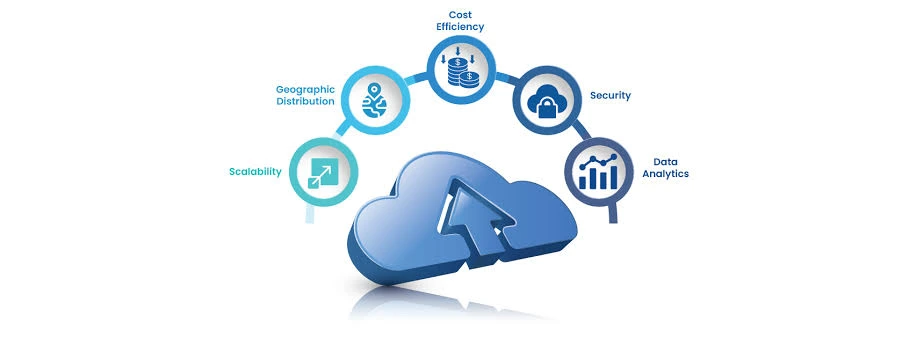
Cloud strategy isn’t defined by how many providers you use – it’s defined by how clearly you’ve connected your infrastructure decisions to business outcomes. Multi cloud architecture gives you flexibility and leverage, but only if it’s intentional.
The starting point is already in place for most enterprises. The question is what comes next – and whether leadership is treating cloud transformation as a technology project or a business imperative.
Multi-cloud is where the journey starts. Strategy is what determines where it goes.
Multi-cloud describes the use of multiple cloud providers. A cloud strategy defines the business rationale, governance model, and optimization approach that makes that infrastructure deliver actual value.
A strong cloud computing strategy includes workload placement policies, a unified governance model, a defined cloud migration strategy, and measurable business outcomes tied to infrastructure decisions.
Without governance, multi cloud architecture leads to duplicated tooling, inconsistent security postures, unattributed costs, and management complexity that offsets the benefits of cloud flexibility.
Cloud transformation changes how an organization builds and operates technology at a structural level. Cloud migration is the movement of workloads – an important step, but not the destination.
Effective cloud computing optimization in multi-cloud requires centralized cost visibility, cross-provider rightsizing reviews, workload performance benchmarking, and consistent tagging policies across every environment.