What is the dark funnel in B2B marketing? Learn where it exists, why it matters, and how your brand can show up in the spaces your analytics will never track.
Picture this.
A potential customer gets on a call with your sales team. Within the five minutes they already know how much your product costs they have compared you to two other companies that sell similar products and they have even heard about the new feature your product got last quarter.
Your customer relationship management system shows that they found you through a Google advertisement. That advertisement had nothing to do with why they decided to consider your product.
This is what people call the funnel. The part of the b to b buyer process that your tracking tools will never show you, but it is probably the most important part of the whole process.
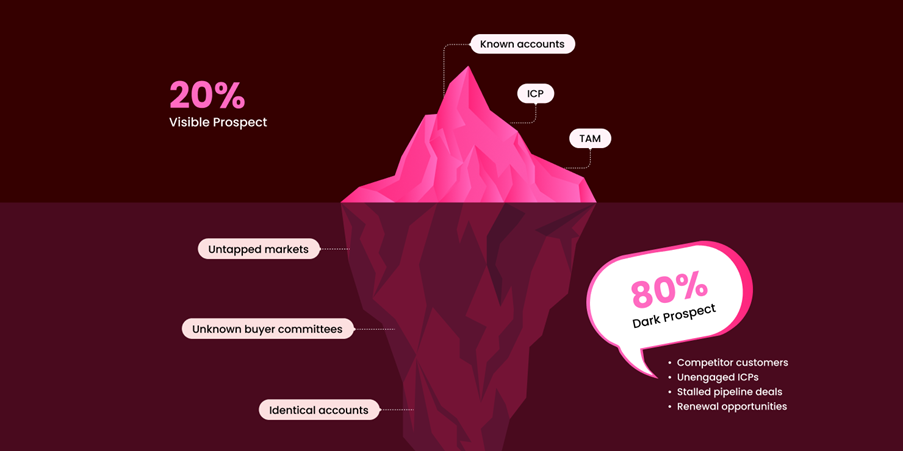
In words the dark funnel is all the research people do, the conversations they have and the things that influence their decision. Before they ever contact you and say they are interested in your product.
It is called the funnel not because it is secret or bad but because you cannot track it with your tools. There are no codes to track links no forms to fill out no information about what people do on your website. It is real people having real conversations forming real opinions about your product. And you have no idea it is happening.
The idea of the funnel was made popular by a company called 6sense, which helps people understand what customers want and now it is one of the most important ideas in modern business to business marketing. Once you understand it you will never look at your reports about what works and what does not in the same way again.
The dark funnel is not one place. It is everywhere your potential customers go when they are not on your website. Here are some common places it happens:
Private online groups and forums- Like groups on LinkedIn communities on Slack and special forums for people in the industry. Are where professionals ask each other questions like “has anyone used this tool?” or “which vendor would you recommend?” These conversations happen every day. Your product is either being talked about or it is not.
Recommendations from professionals- Like when a chief financial officer asks a former coworker over coffee which customer relationship management system they use or when a marketing head gets a recommendation for a vendor, in a WhatsApp group. None of this shows up in your tracking. It definitely influences peoples decisions about your product.
Podcasts and YouTube — Buyers consume hours of content on these platforms without ever clicking a link or filling out a form. If your brand or your people are showing up here, you are building influence you cannot measure.
Review platforms — G2, Capterra, Trustpilot and similar sites are heavily used by B2B buyers during the research phase. Most of this browsing happens anonymously. Your star rating and review quality matter more than you think.
Dark social — This is content shared through private channels like WhatsApp, Slack DMs, email forwards and private messages. When someone shares your blog article with a colleague via a direct message, that traffic shows up in your analytics as “direct” — or not at all.
Here is a number worth sitting with research suggests that B2B buyers complete between 60 to 80 percent of their decision-making process before they ever reach out to a vendor.
That means by the time a lead lands in your CRM, the shortlisting has largely already happened. In the dark funnel.
The problem is that most B2B marketing strategies are built entirely around what can be tracked. And when something cannot be tracked, it gets defunded.
Teams cut back on thought leadership because it “doesn’t generate leads.” They reduce podcast investments because the ROI is hard to prove. They ignore community building because there’s no direct conversion path. And in doing all of this, they quietly disappear from the spaces where their buyers are making decisions.
Meanwhile, a competitor who kept showing up — consistently, helpfully, without always asking for something in return — is the one getting recommended in that Slack channel.
Your attribution model is probably lying to you and it is not its fault.
Last-click attribution, first-click attribution, even multi-touch models — none of them can account for the podcast your buyer listened to three months ago, or the LinkedIn post they saved and came back to, or the peer who said “just go with them, we’ve had a great experience.”
This creates a dangerous cycle. Channels that generate dark funnel influence get cut because they show no measurable ROI. Budgets shift entirely to paid channels that are trackable but often far less persuasive. And then marketers wonder why their CPL keeps climbing while conversion quality keeps dropping.
The dark funnel is not a gap in your tools. It is a gap in how we think about B2B buyer behaviour.
The good news is that the dark funnel is not something you fight — it is something you learn to show up in. Here is how:
Build brand presence beyond your own channels. Guest articles, podcast appearances, speaking at industry events, contributing to community discussions — these are all ways to be present where your buyers already are.
Invest in thought leadership even when it doesn’t convert immediately. The LinkedIn post that got 200 impressions may have been seen by exactly the right person at exactly the right time. Consistency matters more than virality.
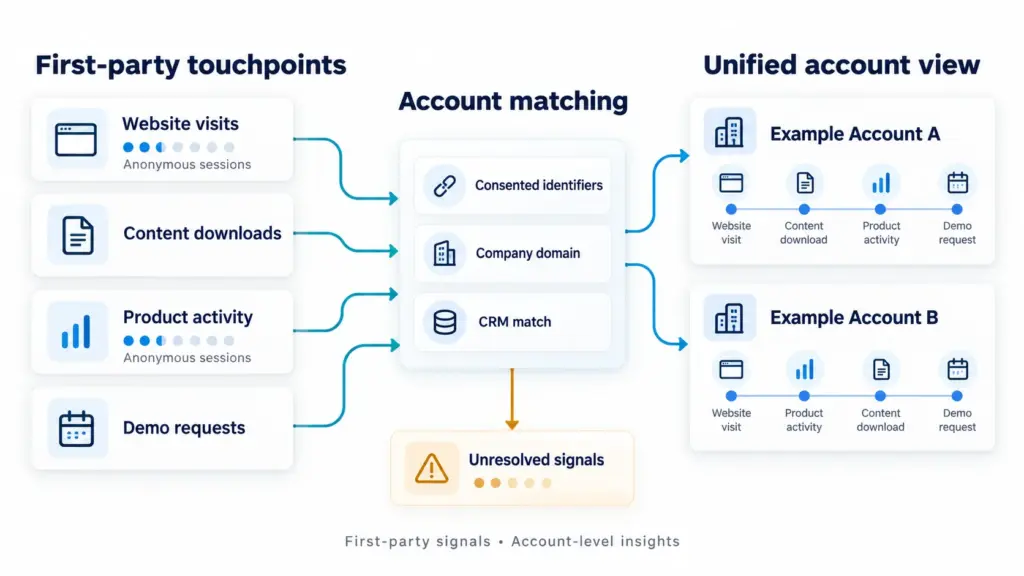
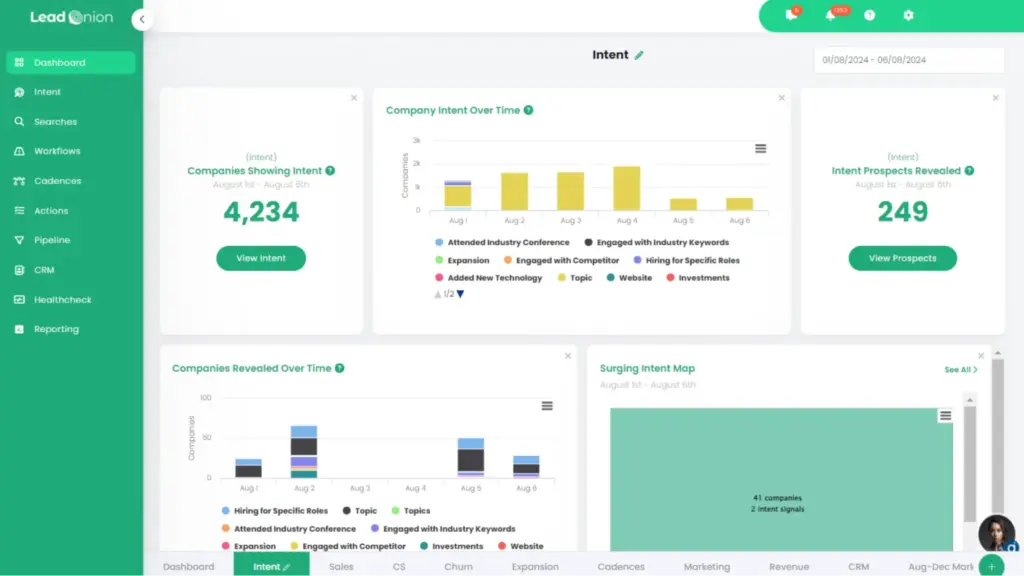
Use intent data to get signals. Tools like 6sense, Bombora and Demandbase can surface anonymous buying signals — showing you which companies are actively researching topics related to your product, even if they haven’t visited your site yet.
Ask the question directly. When a new customer signs on, ask them — “Where did you first hear about us?” or “What influenced your decision?” The answers will often reveal dark funnel touchpoints that your analytics never captured.
Nurture your review presence. Actively encourage satisfied clients to leave honest, detailed reviews on platforms like G2 and Capterra. Buyers trust peers far more than they trust vendor marketing.
The brands that are winning in B2B today are not necessarily the ones with the biggest ad budgets or the most sophisticated marketing stacks. They are the ones that are being talked about in rooms they were never invited into.
The dark funnel is a reminder that marketing is fundamentally about trust, presence and reputation — things that cannot always be reduced to a dashboard metric.
So, the next time a well-informed lead walks into your pipeline and your team wonders where they came from, remember — they were watching you long before you knew they existed.
The question is: were you showing up?
The dark funnel in B2B marketing refers to all the un-trackable interactions and research activities buyers engage in before contacting a vendor. This includes peer recommendations, private discussions, content consumption, and review platform browsing that do not appear in traditional analytics tools.
The dark funnel is important because most B2B buyers complete 60–80% of their decision-making process before engaging with a vendor. If brands are not present in these untracked spaces, they risk being excluded from consideration entirely, regardless of their visible marketing efforts.
The dark funnel exists across multiple un-trackable channels, including: