Discover how composable architecture can improve AI cluster resource allocation, manage peak power demand, and support more energy-efficient data centers.
Every infrastructure team is carrying the same quiet worry right now. Models keep getting bigger, racks keep getting denser, and the power bill keeps climbing. Nobody wants to explain to the board that the next cluster is stuck waiting on a substation. The good news is that you have more room to maneuver than it seems, and a composable approach is a big part of why.
AI data center power consumption is rising faster than grid upgrades can follow. Racks built for general-purpose servers were sized for a modest power budget. Accelerator-dense racks can draw many times that, and the gap widens with every hardware generation.
These data center power constraints show up in three places. Utility interconnects take years to expand. Cooling systems have fixed thermal limits. And power distribution inside the building is sized for averages, not peaks. When any one of them tops out, the whole cluster slows down, no matter how many GPUs are sitting idle.
GPU power consumption is not flat. Training jobs move in phases. Compute-heavy steps push accelerators close to their limits, then synchronization steps ease the load for a moment. When thousands of GPUs run in lockstep, those swings line up and hit the power system all at once. You get a sharp spike, a dip, and another spike.
Fixed, siloed hardware makes it worse. Each server holds a set number of GPUs, memory and storage that can’t be reassigned. If a job needs more accelerators than one box holds, it spreads across several and leaves the rest of each box underused. That stranded capacity still draws idle power. You pay for it and get nothing back.
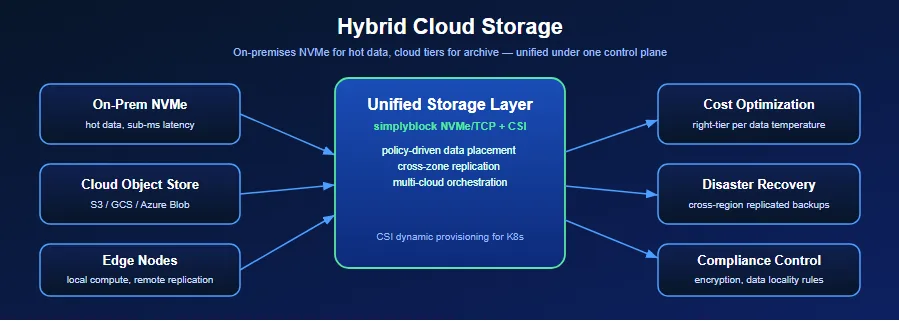
A composable data center architecture pools compute, accelerators, memory and storage, then assembles them into logical systems on demand. Instead of buying fixed servers, you build the right shape for each workload and release it when the job ends. Resources return to the pool, ready for the next request.
That flexibility helps with power in three concrete ways:
Here are the ways to manage power spikes in GPU clusters that tend to pay off first.
Start with dynamic power allocation. Set power budgets per job or per rack and shift them as demand changes. When one workload hits a low-draw phase, headroom flows to another that needs it. Trimming peak draw slightly costs little performance and protects the circuit.
Next, add power-aware workload scheduling. A scheduler that understands power can stagger job starts, avoid stacking heavy jobs on one circuit and place work where capacity exists. Pair it with dynamic resource allocation and the system can reshape a running job, not just place it at launch.
None of this works without telemetry. Track power at the rack, node and GPU level, and feed it back to the scheduler.
The strategies for optimizing AI cluster power usage that work best combine software and architecture. Measure utilization honestly first. Many clusters run well below rated capacity, and that gap is the cheapest efficiency gain available. Then consolidate lightly loaded jobs so whole sections can idle. Finally, layer in power-aware controls.
This is where AI infrastructure optimization stops being about buying more hardware and starts being about using what you have with intent. A composable layer makes each step easier, because reassigning resources doesn’t mean rewiring or relocating anything.
Teams tend to trip over the same few things. The first is sizing for nameplate ratings instead of observed draw, which locks away expensive headroom that never gets used. The second is treating cooling as a separate problem. Heat and power rise together, so a plan that ignores one will fail on the other. The third is skipping the conversation with facilities. The people who run the building know where the real limits sit, and they can tell you which circuits have slack before you commit to a design. Bring them in early. Finally, don’t chase perfect efficiency on day one. A cluster that runs predictably at a slightly lower ceiling is far easier to operate than one that flirts with its limits every afternoon.
Pick one cluster. Baseline its power draw for a month. Find the biggest pockets of stranded capacity. Pilot pooled allocation on one workload class, then add scheduling rules. Small, measurable wins build the case for everything that follows. Document what you learn as you go, so the next cluster always starts from evidence instead of guesswork.
Mostly synchronized GPU activity. When many accelerators move between heavy compute and lighter communication phases together, GPU power consumption swings sharply across the whole cluster at once.
Combine measurement, consolidation and control. Use dynamic power allocation to cap and shift budgets, and retire or idle hardware that isn’t earning its draw.
It’s a model where compute, accelerators, memory and storage live in shared pools. A composable data center architecture assembles them into the exact systems a workload needs, then returns them afterward.
It cuts stranded capacity. Jobs take only what they need, and the rest stays available, which supports AI infrastructure optimization without new hardware.
It’s scheduling that treats power as a resource alongside compute and memory. Power-aware workload scheduling places and times jobs to stay within data center power constraints.