Explore how strategic joint ventures in AI infrastructure are reshaping enterprise AI deployment, cloud data centers, and high-performance computing worldwide.
The appetite for AI data centers has reached a fever pitch. Every enterprise worth its salt is scrambling to unlock AI capabilities, but here’s the catch-building the infrastructure to support that ambition demands serious resources, specialized expertise, and deep pockets.
This is where strategic partnerships shine. The most forward-thinking organizations aren’t going it alone anymore. They’re forging joint ventures to pool capital, share risk, and accelerate deployment of the cloud infrastructure needed to power next-generation AI workloads. It’s not just smart economics; it’s becoming table stakes.
The numbers tell the story. Spending on AI compute infrastructure continues to accelerate, with enterprises expecting to double their investments over the next two years. But infrastructure doesn’t materialize overnight. It takes coordination, trust, and partners who genuinely complement each other’s strengths.
So how do you actually pull off a winning joint venture in data center infrastructure? It’s not just about shaking hands and hoping for the best. Here’s what separates the winners from the rest.
Before anything else, both parties need to lock in on what “success” looks like. Are you building for latency-sensitive applications? High-throughput batch processing? Multi-tenant isolation? The technical roadmap has to match the commercial reality.
Governance matters just as much. Clear decision-making frameworks, escalation paths, and accountability structures prevent friction down the line. Too many partnerships stumble because operational governance was left vague. Don’t be that partnership.
Cloud data centers serving enterprise AI workloads need to evolve fast. Your partnership infrastructure shouldn’t lock you into yesterday’s assumptions about capacity, interconnectivity, or edge-compute patterns.
Build with modularity in mind. Containerized architectures, software-defined networking, and API-first design mean you can adapt to changing demands without massive rewrites. This flexibility becomes your competitive edge as AI workload patterns shift.
High-performance computing demands speed. Whether you’re training language models or running real-time inference at scale, latency kills performance. Joint ventures often have access to multiple geographic regions-leverage that.
Create dedicated, high-bandwidth pathways between partner nodes. Invest in direct fiber connections, optimized routing, and redundancy that doesn’t add delay. The best cloud infrastructure for AI is transparent to the workload.
Data residency, encryption, audit trails, multi-tenancy isolation-none of this is optional when you’re running AI infrastructure for enterprises handling sensitive information. Joint ventures touch multiple jurisdictions and regulatory regimes.
Bake compliance into the architecture from day one. Don’t retrofit it later. This means clear data lineage, immutable audit logs, and encryption standards that hold up against regulatory scrutiny across all partner regions.
Nothing erodes trust faster than opaque billing. When multiple partners are drawing on shared data center infrastructure, metering needs to be granular, auditable, and fair.
Use resource quotas, usage-based billing, and transparent cost allocation. If one partner’s workload is driving capacity upgrades, that should flow through to the cost model. Misaligned incentives create friction; aligned incentives create momentum.
Strategic partnerships that can seamlessly move workloads between partner nodes, share AI compute infrastructure resources dynamically, and coordinate storage and networking create compounding value. But interoperability doesn’t happen by accident.
Standardize on common APIs, telemetry formats, and orchestration interfaces early. Avoid lock-in to proprietary abstractions. The more portable your workloads across the partnership footprint, the more resilience and cost efficiency you gain.
Cloud infrastructure doesn’t run itself. Joint ventures often split operational responsibilities across partner organizations, which means you need crystal-clear runbooks, cross-training, and escalation procedures.
Invest in hiring talent that can work fluidly across partner boundaries. These folks become the glue holding everything together. Neglect this, and you’ll watch technical decisions slow to a crawl as finger-pointing replaces problem-solving.
Digital transformation in AI doesn’t happen at the edge-it happens in the infrastructure that powers it. By pooling expertise and resources through joint ventures, enterprises access data center infrastructure and AI infrastructure capabilities that would take years to build alone.
The partnerships winning today share a common thread: they treat cloud infrastructure as a strategic asset, not a commodity. They invest heavily in reliability, interconnection, and operational excellence. They design for the workloads they’ll run in three years, not just today.
And they recognize that high-performance computing for enterprise AI demands more than raw compute. It demands architecture, governance, and partnership models that scale with ambition.
Joint ventures in AI infrastructure are formal partnerships between two or more organizations to design, build, and operate cloud data centers and data center infrastructure serving AI workloads. Partners typically share capital investment, operational responsibility, and access to resources. This model lets enterprises accelerate deployment of AI infrastructure without bearing the full cost and complexity alone. It’s particularly effective when partners bring complementary expertise-one might excel at physical infrastructure, another at software orchestration.
Global AI infrastructure requires massive capital, geographic diversity, and specialized talent. No single organization can optimize for all of this alone. Joint ventures allow partners to de-risk expansion, share operational burden across regions, and create cloud infrastructure that spans continents. This geographic reach becomes critical for enterprise AI workloads requiring low-latency access across multiple markets. Joint ventures also accelerate innovation-partners challenge each other on design decisions, driving better architecture.
AI data centers provide the high-performance computing resources that enterprise AI demands. They offer dense compute clusters optimized for training and inference, high-bandwidth networking for data movement, and storage systems built for AI workload patterns. Enterprise AI at scale requires dedicated infrastructure tuned for parallel processing, GPU/TPU scheduling, and the specific latency and throughput profiles of ML frameworks. Off-the-shelf cloud infrastructure often isn’t optimized for these patterns, which is why specialized AI data centers have emerged.
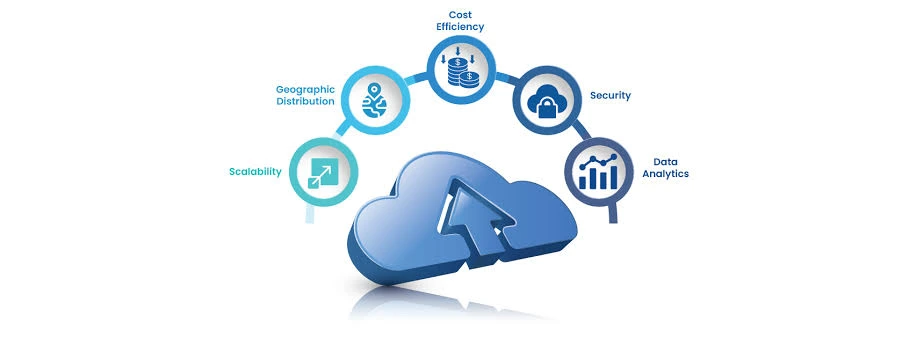
Strategic partnerships in AI infrastructure unlock several advantages. First, shared capital means lower cost-of-entry for cutting-edge data center infrastructure. Second, geographic distribution-partners often have presence in different regions-gives workloads access to distributed cloud infrastructure without duplication. Third, operational resilience improves when partners share on-call responsibilities. Fourth, innovation accelerates through knowledge-sharing. Finally, risk is distributed; if one partner faces capacity crunch, the other can absorb overflow.
Cloud infrastructure provides the foundational capabilities AI workloads demand. This includes on-demand compute provisioning (scaling up during training, down during idle periods), high-bandwidth networking for moving training data and model checkpoints, and storage that doesn’t bottleneck data loading. Cloud infrastructure also enables multi-tenancy and resource isolation, so different enterprise AI teams can work in parallel without interfering. Elasticity is key-AI workloads are bursty, and cloud infrastructure that can scale dynamically ensures efficient resource utilization.