Learn how edge computing in retail is transforming customer experience and what infrastructure changes your business needs to stay ahead.
The modern retail floor moves fast. Inventory shifts in real time, customers expect frictionless checkouts, and personalization is no longer a differentiator – it’s a baseline expectation. Yet most retail infrastructures are still routing critical decisions through distant data centers, introducing latency that quietly erodes customer satisfaction.
Edge computing is changing that equation. For retail leaders evaluating their next infrastructure cycle, understanding what this technology means – and what it demands – is no longer optional.
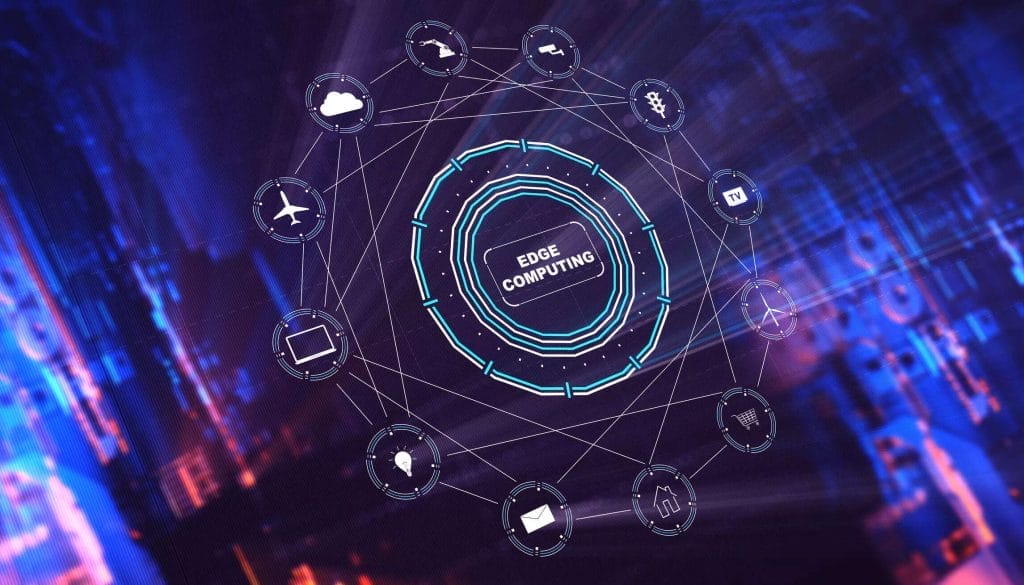
At its core, edge computing meaning comes down to proximity. Rather than sending data to a centralized cloud or on-premises server for processing, computing at the edge places that processing power as close to the source of data as possible – at the store level, at the device level, or even at the point of sale.
In retail, this translates to decisions being made in milliseconds rather than seconds. Shelf sensors update inventory without waiting on a round-trip to headquarters. Smart cameras process foot-traffic analytics locally. Checkout systems authenticate payments without a cloud dependency.
The result: faster, more reliable, and more responsive customer interactions.
Edge computing in retail doesn’t operate in isolation – it works alongside, not instead of, cloud infrastructure. The cloud edge model distributes workloads intelligently: latency-sensitive tasks run locally at the store edge, while aggregated analytics, reporting, and machine learning training continue to leverage centralized cloud resources.
Mobile edge computing extends this further by bringing processing capabilities closer to mobile endpoints – handheld devices used by associates, customer smartphones running retail apps, or in-store kiosks. For omnichannel retailers, this means consistent, low-latency experiences whether a customer is browsing in-aisle or completing a purchase via app.
The practical impact includes:
Perhaps the most compelling convergence in modern retail is edge computing Internet of Things integration. Smart shelves, RFID readers, connected refrigeration units, and environmental sensors are generating continuous data streams. Without edge processing, this volume of data becomes a bandwidth and latency problem.
With edge computing, IoT devices process data locally, acting on inputs immediately – a refrigeration unit adjusting temperature before a threshold is breached, a shelf sensor triggering a restocking alert the moment stock dips. This closed-loop intelligence reduces waste, improves compliance, and enables the kind of micro-level operational control that wasn’t achievable before.
Retailers scaling IoT deployments should treat edge infrastructure as a prerequisite, not an add-on.
Deploying edge computing in a retail environment requires more than installing local servers. Infrastructure leaders need to address:
The next wave of retail customer experience will be defined by speed, personalization, and operational intelligence – all of which depend on infrastructure decisions being made now. Edge computing in retail isn’t a future investment; it’s an active shift already underway among leading retailers. Organizations that align their infrastructure strategy with cloud edge, mobile edge computing, and edge computing Internet of Things architectures will be positioned to execute faster and adapt more effectively than those still routing decisions through centralized pipelines.
The question isn’t whether edge computing belongs in your retail strategy. It’s how quickly your infrastructure can support it.
In retail, edge computing refers to processing data locally – at the store, device, or point-of-sale level – rather than sending it to a remote data center. This reduces latency and enables real-time decision-making across store operations.
Cloud edge distributes processing between central cloud infrastructure and local edge nodes. Latency-sensitive tasks are handled at the edge, while heavier workloads like analytics and model training remain in the cloud – giving retailers the best of both environments.
Mobile edge computing brings processing power closer to mobile endpoints – associate devices, customer apps, and kiosks – ensuring low-latency, consistent experiences across both physical and digital retail touchpoints.
Edge computing Internet of Things enables connected retail devices to process and act on data locally. This supports real-time inventory tracking, smart shelf management, and predictive maintenance without overwhelming centralized infrastructure.
Key challenges include hardware standardization across locations, securing a distributed attack surface, ensuring connectivity redundancy, and deploying centralized management tools to maintain visibility across all edge nodes.