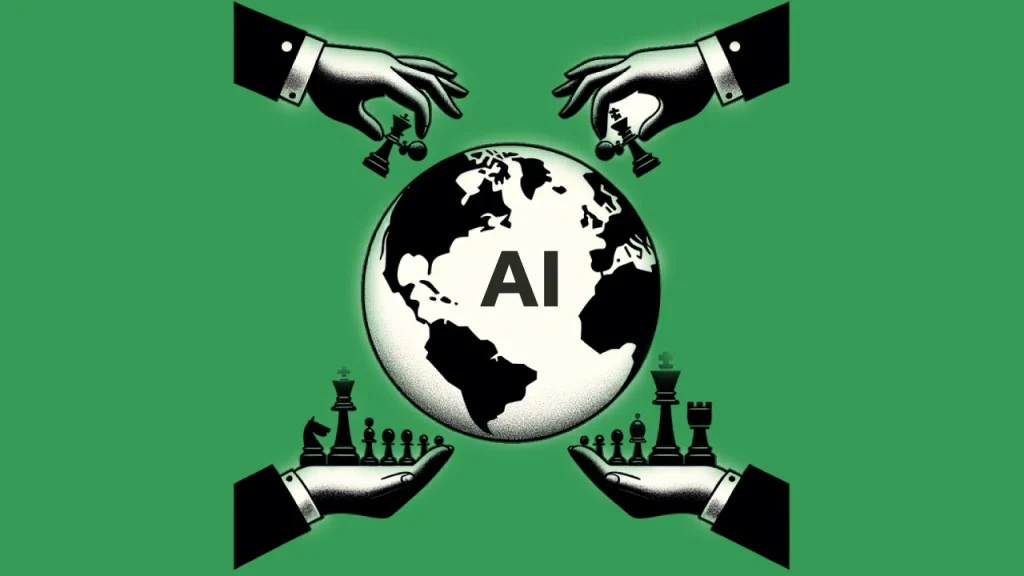
Discover how enterprises can build sustainable data centers that support growing AI workloads without compromising on energy efficiency.
There’s an awkward contradiction that a lot of enterprise tech teams are trying to ignore right now.
On one hand, there’s enormous pressure to adopt AI across the business. On the other, most of these same organizations have made very public commitments to sustainability. The problem? These two goals are quietly working against each other – and the place where that tension shows up most clearly is the data center.
Training a single large AI model can burn as much energy as five cars do over their entire lifetimes. And that’s just training. The day-to-day AI processing that happens every time someone queries a system runs continuously, across thousands of servers. As more teams adopt AI tools, data center power consumption keeps climbing – often faster than sustainability teams expected.
So can you genuinely do both? Run serious ai data center workloads and still meet your sustainability targets? Yes – but it takes more than putting solar panels on the building.
It helps to start with honest numbers.
Hyperscale data centers – run by the likes of AWS, Azure, and Google Cloud – already account for roughly 1–2% of global electricity use. That share is growing fast as cloud infrastructure expands to keep up with AI demand across industries.
For companies running their own on-premise infrastructure or renting co-location space, things aren’t much better. Older hardware pushed to handle modern AI workloads draws far more power than it was built for – creating both an efficiency problem and a rising cost problem.
Regulators are also catching up. The EU’s Energy Efficiency Directive now requires large data centers to report their energy performance. Sustainability reporting frameworks like the GRI and CSRD are expanding. Data center energy efficiency is no longer just an environmental talking point – it’s becoming a compliance issue.
Before you can fix the problem, it helps to know where it lives. In most data center setups, inefficiency shows up in three main areas:
Even fixing one of these three things meaningfully moves the needle on sustainability.
The most straightforward place to start is the equipment itself. Energy efficient servers – designed specifically for AI workloads – deliver much better performance per watt compared to general-purpose legacy hardware. ARM-based chips, liquid-cooled GPU systems, and purpose-built AI accelerators like NVIDIA’s Hopper or Google’s TPUs are all built to do more with less energy.
For organizations still running older x86 infrastructure, the upgrade case is often easier to make than it looks – energy savings alone can offset hardware costs within a few years.
Most sustainable data centers today are moving away from traditional air-cooling toward liquid cooling, immersion cooling, or direct-to-chip cooling. These methods handle the heat from GPU-heavy workloads much more effectively and can cut cooling energy use by 30–50% compared to older systems.
If a full cooling overhaul isn’t realistic right now, simple improvements – like better hot aisle/cold aisle containment or AI-managed cooling controls – are a solid starting point.
One of the less-talked-about sustainability arguments for moving workloads to the cloud infrastructure is pure efficiency. Hyperscale data centers run at efficiency levels most enterprise-owned facilities can’t come close to matching. The biggest cloud providers operate at PUE ratios well under 1.2, while the industry average for traditional facilities sits around 1.58.
Moving the right workloads to cloud – especially to providers with verified renewable energy commitments – can meaningfully reduce your overall energy footprint. Just don’t assume all cloud options are equally green. Look at the actual sustainability credentials before committing.
This one doesn’t get enough attention. Not every AI workload needs to run right now. Model training, batch inference, and large data processing jobs can often be pushed to times when renewable energy is most available – like midday when solar generation peaks.
Some cloud providers already offer carbon-aware compute tools that shift workloads automatically to lower-carbon windows. For on-premise teams, integrating with real-time grid carbon data is increasingly an option worth exploring as part of sustainable it infrastructure planning.
Green data center strategy used to be treated mainly as a responsibility investment – good for the brand, hard to quantify. That’s changed.
Energy is now one of the biggest operational costs for data-center-heavy businesses. Efficiency investments have measurable payback. Sustainability credentials are influencing enterprise buying decisions, investor conversations, and regulatory standing. And as data center power consumption climbs its way onto boardroom agendas – driven largely by AI’s energy appetite – being ahead of the curve matters.
Organizations that bake sustainability into their infrastructure planning now will be better placed – operationally and reputationally – as energy costs rise and disclosure rules tighten.
The tension between running AI at scale and meeting sustainability goals is real. But it’s not a dead end. Sustainable data centers aren’t a cap on AI ambition – they’re what makes that ambition viable over time. With the right investments in energy efficient servers, smarter cooling, better workload scheduling, and thoughtful cloud infrastructure choices, B2B organizations can run powerful AI operations without slowly undermining their own sustainability commitments. The answer isn’t less AI. It’s infrastructure that’s built to handle it responsibly.
AI workloads – especially model training and large-scale inference – are far more compute-intensive than typical enterprise applications. This pushes data center power consumption well beyond what most legacy facilities were designed for, putting pressure on both energy budgets and cooling systems.
A green data center is one that keeps its environmental impact low through a mix of renewable energy, high energy efficiency (low PUE scores), modern cooling systems, energy efficient servers, and responsible hardware disposal. Credible green certification also involves third-party verification, not just self-reporting.
Hyperscale data centers run by major cloud providers operate at much higher efficiency levels than most enterprise-owned facilities. Moving suitable workloads to cloud infrastructure hosted in these environments – especially with providers that have real renewable energy commitments – can reduce your organization’s total energy footprint considerably.
PUE, or Power Usage Effectiveness, is the standard measure of data center energy efficiency. It shows how much of a facility’s total energy actually goes to computing versus things like cooling and lighting. A perfect score is 1.0; the global average is around 1.58. Bringing PUE down is one of the highest-impact moves a data center team can make.
Yes, and the business case is often stronger than people expect. Sustainable IT infrastructure doesn’t require a hyperscale budget. Server consolidation, smart virtualization, migrating workloads to green-certified cloud providers, and upgrading to energy efficient servers are all steps that mid-market organizations can take – and the energy cost savings alone often justify the investment within two to three years.