Learn how hybrid workplace technology and enterprise hardware improve collaboration, productivity, security, and employee experiences in modern workplaces.
The office as we knew it is no longer the default. For millions of professionals, work happens from a kitchen table in Bengaluru, a co-working space in Berlin, or a conference room in Chicago – sometimes all in the same week. Hybrid work has stopped being an experiment and become a permanent operating model. And as that shift hardens into reality, the hardware holding it together matters more than ever.
Decision-makers who treat infrastructure as a line item to minimize are already paying for that choice – in productivity loss, IT overhead, and employees quietly updating their CVs.
When remote work first went mainstream, most companies made do with consumer-grade laptops and whatever webcam was left in stock. That workaround is showing its limits. Enterprise hardware is built for different demands: durability, security compliance, remote manageability, and consistent performance across varied environments. For IT teams managing a distributed workforce, the gap between a consumer device and a purpose-built enterprise one is the difference between reactive firefighting and proactive control.
The distributed nature of hybrid work has split the office into dozens of micro-environments. Each one comes with its own network conditions, display setups, and acoustic challenges. Enterprise hardware designed for this reality accounts for all of it – from AI-powered noise cancellation in headsets to intelligent docking stations that create a consistent workstation experience regardless of which machine an employee plugs in.
One of the biggest changes this distributed model has driven is the acceleration of smart office technology. Sensor-embedded conference rooms, hot-desk booking systems, and room occupancy analytics are no longer futuristic concepts. They’re being deployed across enterprise campuses right now, and delivering measurable returns on the investment.
What makes smart office technology particularly valuable is its ability to close the experience gap between remote and in-office employees. An employee dialing in from home shouldn’t feel like an afterthought in a room full of people. Smart cameras with automatic speaker tracking, directional microphone arrays, and AI-framing capabilities help level that experience. When the technology works invisibly, the focus stays on the conversation – not the connection.
The idea of modern hardware for hybrid work has evolved significantly. It’s no longer just about getting people connected – it’s about getting them connected well. Here’s what that looks like in practice today.
The modern workplace isn’t a building. It’s a set of conditions – reliable connectivity, capable hardware, and software that ties it together cleanly. For enterprise IT teams, this means thinking about hybrid work infrastructure as a product, not a one-time project.
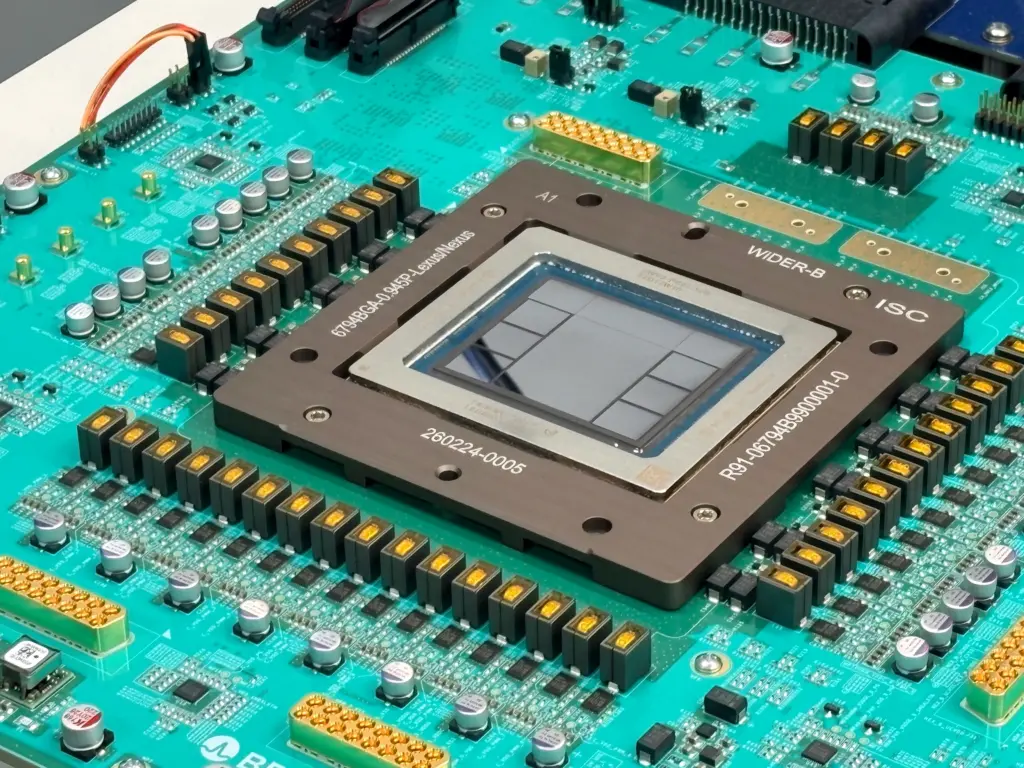
Security is non-negotiable. Devices operating outside the corporate perimeter need built-in protections: hardware-level encryption, trusted platform modules, and remote wipe capabilities. Leading vendors have made significant strides here, baking security into the silicon rather than applying it as a surface-level patch after the fact.
The most forward-thinking organizations aren’t evaluating devices in isolation. They’re building interoperable ecosystems – where endpoints, peripherals, room systems, and management platforms communicate with each other. This approach to digital workplace technology trends pays dividends in IT efficiency, user experience consistency, and total cost of ownership over time.
Workspace automation plays a central role in that ecosystem vision. When a device can onboard itself without IT physically handling it, distributed teams scale without support headcount scaling proportionally in lockstep. That’s a meaningful operational advantage in a competitive labor market.
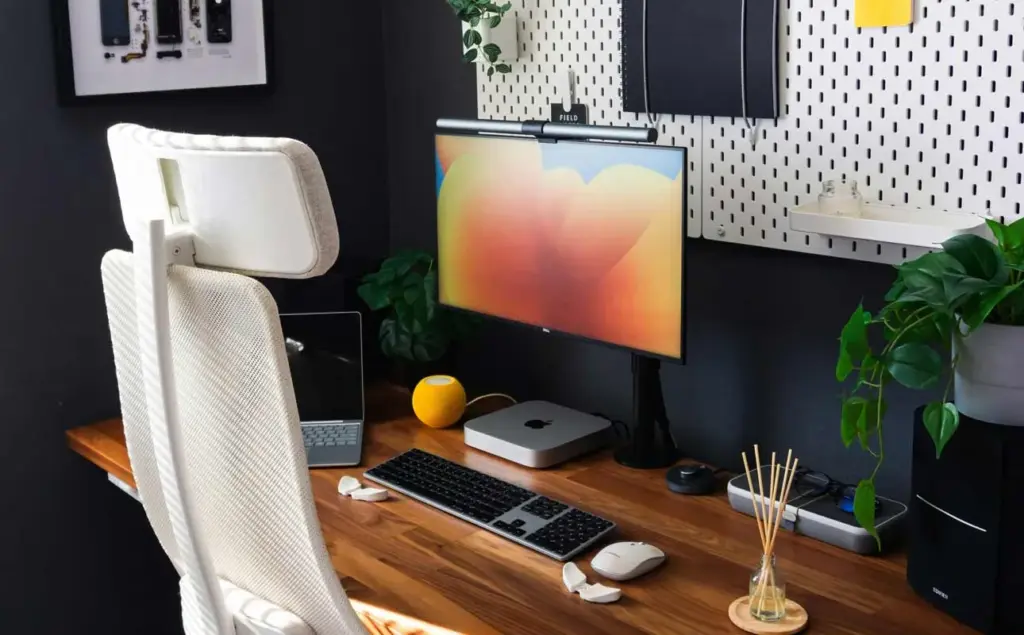
The decentralized desk isn’t going anywhere. The organizations investing in enterprise hardware purpose-built for this reality – not the pre-pandemic one – are building a workplace that performs as well at home as it does at headquarters. In a world where talent chooses where it works, that infrastructure gap is a competitive one.
Essential hybrid work hardware includes enterprise-grade laptops, docking stations, noise-canceling headsets, smart webcams, and collaboration-ready monitors. Consistency across home and office environments significantly reduces friction and IT support overhead for distributed teams.
Enterprise hardware is built for reliability, remote manageability, and sustained performance. Employees spend less time troubleshooting equipment and more time on actual work. Features like zero-touch provisioning and built-in security also reduce IT intervention time considerably across large deployments.
A distributed workforce is supported by smart office technology, cloud-based endpoint management, collaboration technology platforms, room booking systems, and AI-enhanced conferencing hardware. Together, these tools bridge the experience gap between remote and in-office employees.
Security starts at the hardware layer. Businesses should prioritize devices with TPM chips, hardware encryption, and remote wipe capabilities. Pairing this with zero-trust network architecture and unified device management closes most of the perimeter gaps that distributed work introduces.
Digital workplace technology refers to the integrated stack of hardware, software, and platforms that enable employees to work productively from any location. It encompasses everything from endpoint devices and collaboration technology to workspace automation tools and digital employee experience analytics.