Learn how automated revenue recognition helps B2B companies simplify ASC 606 and IFRS 15 compliance, streamline billing, and improve financial reporting.
Invoicing is rarely the hard part for a B2B finance team. The hard part starts after the invoice goes out. A three-year contract bundles a platform subscription, an onboarding service, and a block of support hours. The customer upgrades in month seven. A discount sits on one line item but not the others. Someone has to decide how much of that money belongs to this month’s books, then defend that decision when the auditors arrive.
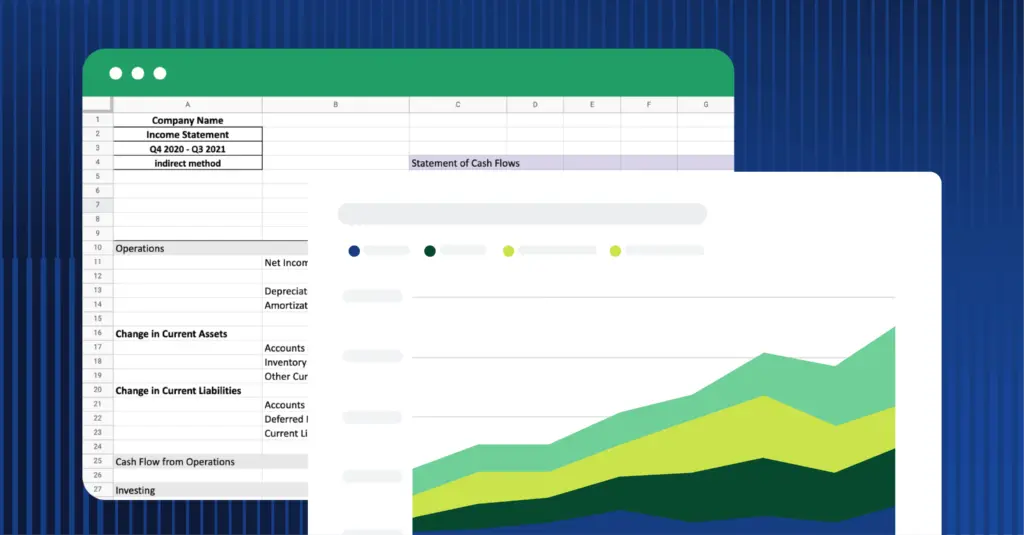
That decision is revenue recognition, and once a contract base grows past a few dozen agreements, a spreadsheet stops carrying it safely.
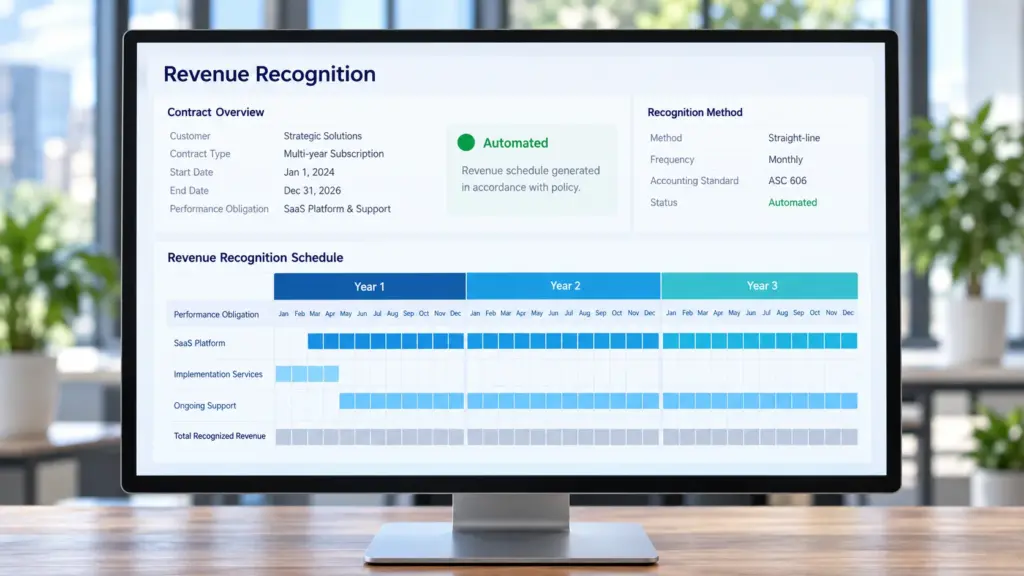
Automated revenue recognition is the use of software to apply accounting rules directly to contract and billing data, so schedules, deferred balances, and journal entries are produced by the system instead of by hand.
The finance team still owns the judgment calls. What changes is the mechanical work underneath: reading each contract line, splitting the amount across what was promised, spreading it over the right periods, and posting the result to the general ledger. The system holds the logic once and applies it the same way to every contract that follows.
ASC 606 and its international counterpart replaced a patchwork of industry rules with one model built around promises made to a customer. The principle: revenue is recorded when control of a good or service transfers to the buyer, in the amount the seller expects to be entitled to.
Applying that principle to real B2B contracts is where the work lives. Bundled pricing has to be broken apart. Usage tiers, ramp schedules, credits, and mid-term changes affect timing. Contract accounting under this model also demands disclosure: remaining performance obligations, deferred balances, and the reasoning behind the estimates. Manual processes can produce the numbers, but rarely the trail that supports them.
The five-step model is the backbone of IFRS 15 compliance and its US equivalent. Automation maps onto each step.
The question usually arrives after a close that ran four days long. A workable sequence:
Start with contract data. Automation inherits whatever quality exists upstream, so product codes, dates, and amendment links need to be consistent in the source system first.
Next, agree on the rules. Each product gets a recognition method and a standalone selling price that finance and audit both accept. Teams try to skip this step, and it determines whether the output is trustworthy.
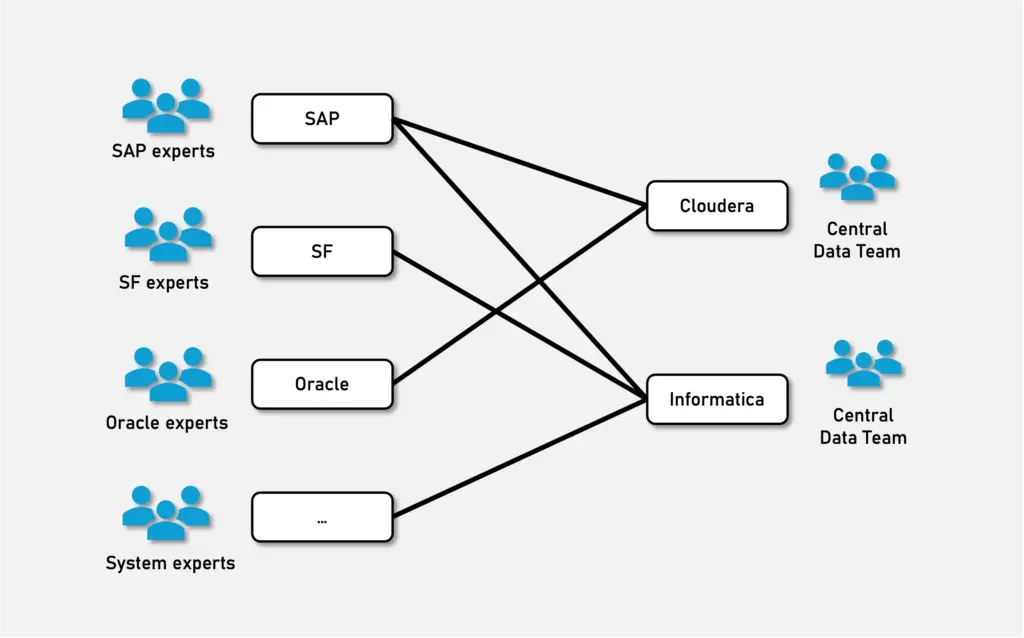
Then connect the systems: CRM, billing, and ERP need to pass contract events through without manual re-entry. Automated billing software that already handles subscriptions, usage, and amendments gives the recognition engine clean inputs.
Run both methods side by side for a quarter. Parallel runs surface the edge cases no requirements document predicts: partial terminations, modifications treated as separate agreements, and currency effects on multi-region deals.
Document the logic inside the system rather than in a side file, so the audit trail lives with the numbers.
Automation of this kind is usually bought to shorten the close, and it does. The broader effect is that finance stops rebuilding the same calculation every month.
Schedules refresh as contracts change. Deferred revenue reconciles against subledger detail instead of against a tab someone maintains. Reporting on remaining performance obligations becomes a query rather than a project. When a deal structure changes mid-quarter, the restatement is a recalculation, not a rebuild.
For companies with complex pricing, this matters more than the time saved. Usage-based billing, hybrid models, and multi-element arrangements are hard to track by hand at volume. Good B2B billing software treats those structures as normal rather than as exceptions.
Worth testing during evaluation:
Automation does not remove accounting judgment. It removes the copying, the re-keying, and the quiet drift between what the contract says and what the ledger holds. For B2B teams signing longer and more complicated agreements, that is the difference between a close that holds up and one rebuilt every quarter.
It is the use of software to apply accounting rules to contract and billing data, generating schedules, deferred balances, and journal entries without manual calculation. Finance sets the rules and reviews exceptions; the system handles the repeatable work.
It is the US standard that defines when and how much revenue a company records. It uses a five-step model: identify the contract, identify the performance obligations, determine the transaction price, allocate that price to the obligations, and recognize revenue as each is satisfied.
It is the international standard covering revenue from contracts with customers. It was developed jointly with the US standard and follows the same five-step model, so companies reporting under both frameworks apply one set of logic with a small number of local differences.
Contract data flows from CRM, CPQ, or a billing platform into the recognition engine. Each product code carries a recognition rule and a standalone selling price. The engine splits the contract amount across obligations, builds a schedule for each, and posts entries to the ledger on a set cadence.
It separates billing from reporting. What a customer is invoiced and when that amount can be recorded as revenue are two different calculations, which is why bundled deals, ramped pricing, and mid-term amendments need a system that tracks both.