Explore product-led growth in B2B SaaS and learn how self-serve and sales-assisted models drive adoption, conversions, customer growth, and revenue.
Picture a product manager at a mid-sized logistics company. On a Tuesday night, tired of a reporting problem, she signs up for a tool a peer recommended. No demo, no discovery call. By Thursday three teammates are using it, and by month end finance is asking who approved the new line item.
That turn, when one person’s quick win becomes a purchasing conversation, sits at the center of product-led growth. For enterprise vendors, the hard part comes next: turning a handful of happy users into a company-wide contract, complete with security reviews, procurement, and stakeholders who have never logged in. Here is how self-serve and sales-assisted motions can work together.
PLG is a go-to-market approach where the product does the early work of attracting, converting, and expanding customers. People try the software, reach a useful outcome on their own, and pay because they have already felt the benefit.
In practice, that usually means a freemium tier, an open sign-up, or a free trial. The product teaches new users, proves itself through daily use, and spreads across teams through shared workspaces.
For B2B SaaS companies, the appeal is simple. Business buyers would rather test a tool for a week than sit through a slide deck about it.
Discovery and sign-up. A user finds the product through search or a peer and gets access without talking to anyone.
Activation. This is where the product earns its place. User activation happens when someone reaches the outcome they came for, such as sending a campaign, closing a ticket, or building a dashboard.
Team adoption. The user invites colleagues because the tool works better with others in it.
Conversion and expansion. The account hits a usage limit or needs admin and security controls, and upgrades.
In enterprise deals, that last step rarely happens with a credit card. A contract covering 2,000 seats, single sign-on, and a legal review usually needs a person on both sides.
Self-serve creates interest from the ground up, but it struggles with the people who control budgets. A CIO rarely starts a trial at midnight, and procurement, legal, and security all have questions a pricing page cannot answer.
You might have forty active users inside a global manufacturer and no relationship with anyone who can buy for the other forty thousand employees.
That’s why many enterprise vendors refine their product growth model to bring people back into the process at the right point.
Product-led sales adds a sales layer on top of a product-led motion. Instead of working a cold list, reps focus on accounts where product usage already points to buying readiness.
The rep arrives with context: which features the team uses, how many people have joined, and which limits they keep hitting. The conversation starts from the customer’s real experience, so it feels more like help than a pitch.
Common readiness patterns include several users from one company domain, rapid seat growth, repeat visits to pricing or security pages, and requests for SSO or compliance features.
In a sales-assisted model, self-serve and sales run side by side. Small teams keep upgrading on their own, while larger accounts get a human guide when usage suggests they need one.
Product and growth teams own the journey up to activation. A product-qualified lead (PQL) score flags accounts that cross agreed usage thresholds. Sales development reaches out with something useful, such as an onboarding session for the wider team or a security package for IT. Account executives step in when the deal needs buy-in from several stakeholders.
Timing matters more than tooling. Reach out too early and it feels intrusive. Wait too long and a competitor may win the budget. Setting thresholds together, across product, marketing, and sales, keeps the timing right.
This is where your SaaS sales strategy stops being a separate plan and becomes part of the product experience.
Sales-led growth starts with a conversation. Marketing generates interest, sales qualifies it, and the buyer sees the product during a demo, often weeks into the process. PLG reverses that order. The buyer experiences the product before speaking to anyone, and sales joins later with context.
Neither wins in every situation. Complex purchases still need relationship selling. Many enterprise vendors run a blend, adjusted by deal size.
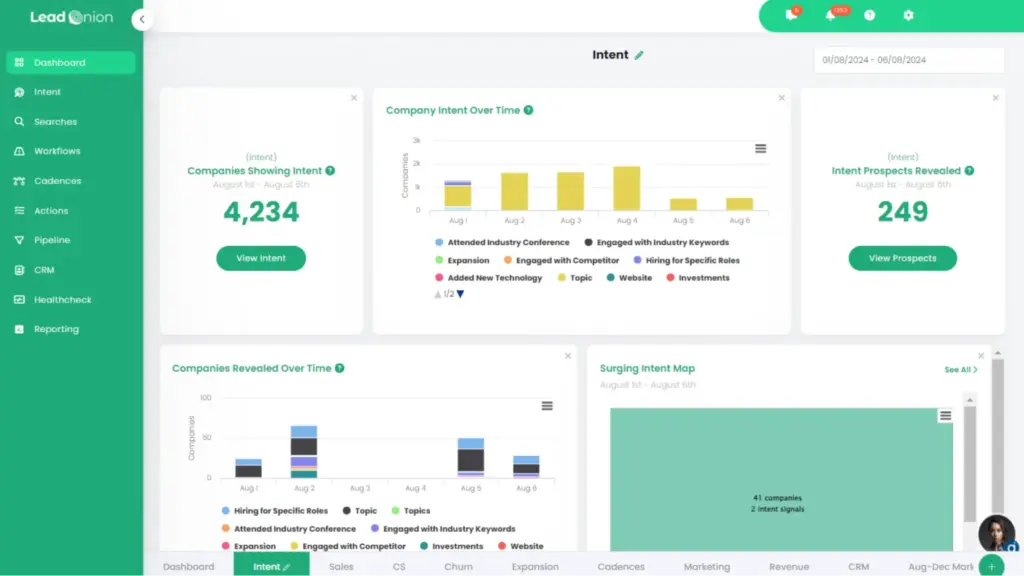
A hybrid motion needs data both teams trust. PLG analytics tools such as Amplitude, Mixpanel, Pendo, and Pocus help teams track activation rates, feature adoption, account-level usage, and conversion paths.
Metrics worth tracking include time to activation, the percentage of sign-ups that reach activation, accounts with multiple active users, expansion revenue from existing customers, and PQL-to-opportunity conversion.
Product data covers what happens inside your app. It cannot tell you who else at that company is researching your category. Pairing usage data with account-level engagement and intent data helps outreach reach the right people across the buying group. Predictiv helps B2B teams build that connected view across their campaigns, from first awareness to buyer action.
Start small. Define what user activation means for your product. Agree on two or three usage patterns that justify outreach. Give reps the account context they need before the first message.
Done well, users get to try before they talk, buyers get a human when the decision gets bigger, and your team gets a clearer path from that Tuesday-night sign-up to an enterprise contract.
It is an approach where business buyers discover, test, and adopt software before speaking with sales, and expansion follows actual usage.
It is a plan that makes the product the main route to acquisition and expansion, with a free or trial tier, activation-focused onboarding, and clear rules for when sales steps in.
Sales-led growth puts a rep in front of the buyer before product use. PLG lets the buyer use the product first, with sales joining later.
It is a motion where reps prioritize outreach based on how accounts use the product, such as seat growth or feature adoption.
Self-serve handles sign-up and early adoption. When an account crosses agreed usage thresholds, sales helps with rollout, security reviews, and contract terms.