Learn how enterprises can detect botnet activity, prevent credential stuffing, mitigate proxy abuse, and strengthen gateway security with layered defenses.
Your login page never sleeps. At 3 a.m., while your security team is off shift, thousands of requests are hitting your VPN portal, your SSO endpoint and your remote access gateway. Most are noise. Some are not. A growing share comes from botnets that borrow real home internet connections to look like ordinary employees, and they’re patient, distributed and cheap to run.
This is where enterprise cybersecurity gets uncomfortable. The old playbook of blocking a bad IP and moving on doesn’t hold when the attacker has a million IPs to burn. So let’s look at how these attacks actually work, and what a layered defense looks like in practice.
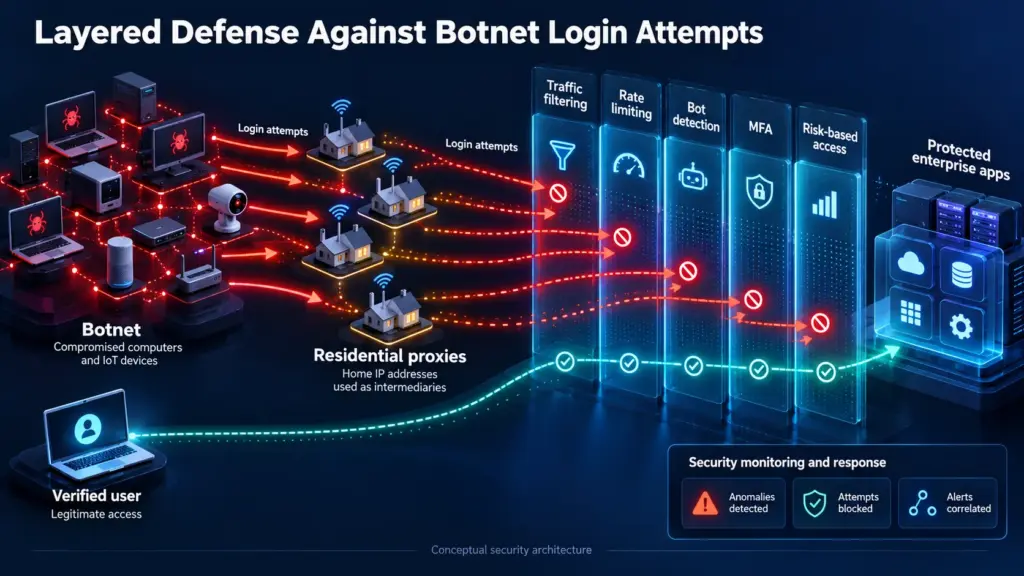
A botnet is a network of compromised devices, such as routers, cameras, laptops and servers, controlled remotely by an attacker. When that network points at an enterprise gateway, the goal is almost always access. The gateway is the front door to your VPNs, web apps, email portals and admin consoles, so it’s the first place attackers knock.
Two techniques dominate. The first is proxy hijacking, where attackers take over poorly secured devices or open proxies and route their traffic through them. The second is credential stuffing, where stolen username and password pairs from older breaches get replayed against your login endpoints, betting that people reuse passwords. Together, they power most automated login attacks aimed at enterprise perimeters today.
Traditional defenses lean on IP reputation. If one address sends too many failed logins, block it. Botnets know this, so they spread the load. Each node tries a handful of passwords, then hands off to another. The pattern looks like scattered, low-volume human mistakes rather than a coordinated assault.
The real twist is the rise of residential proxy networks. These are pools of genuine home and mobile connections, sometimes rented out, sometimes built from infected devices. Traffic from them carries the reputation of an ordinary household, so your allowlists and geo rules wave it through. Add proxy hijacking to the mix and the attacker can pick exit points in the same city as your employees. That’s the part that keeps analysts up at night.
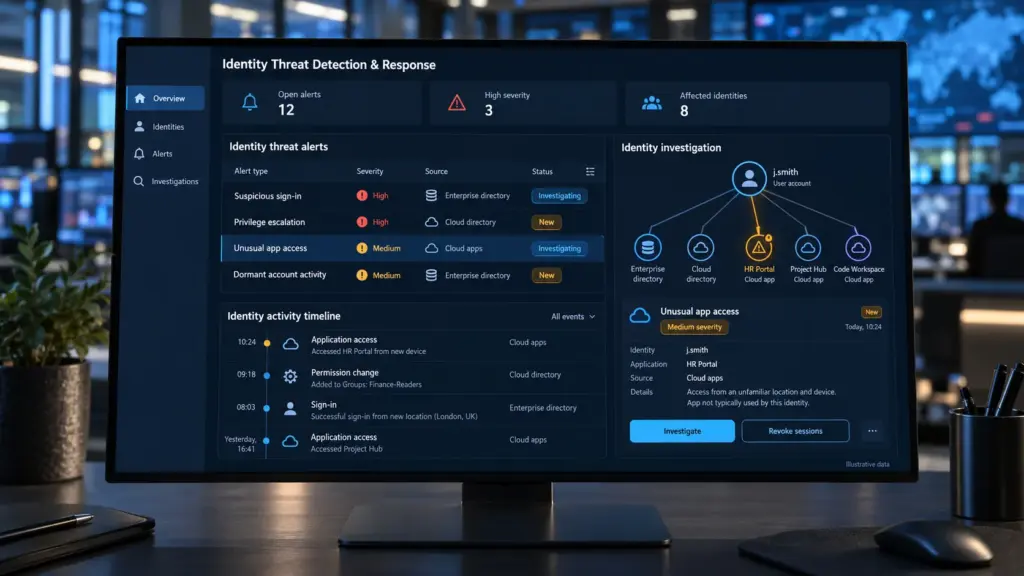
You can’t block what you can’t see, so start with telemetry. Watch for patterns like these:
None of these is conclusive alone. Together, they’re the classic marks of brute-force and credential attacks, even when each individual request looks harmless.
The honest answer is layers. No single control stops a determined botnet, but several together make the attack expensive enough that the operator moves on. If you’re asking how to protect enterprise gateways from botnet attacks, here’s where we’d begin:
Technology is only half the story. These best practices for enterprise gateway security keep the program honest over time:
Botnets aren’t going away, and neither is the pressure on your login surface. The teams that cope well treat the gateway as a monitored, tuned system rather than a set-and-forget appliance. Build visibility first, add behavioral controls second, and keep testing. Pick one control this week and build outward. Solid enterprise cybersecurity is less about a perfect wall and more about making every attempt costly and noisy.
It’s when a network of compromised devices floods your VPN, SSO or web login with traffic, usually to guess or replay credentials. Because the traffic arrives from thousands of sources, simple IP blocking rarely stops it, which is why layered network gateway security matters.
It’s the takeover of a device or open proxy so an attacker can route their own traffic through it. The request then appears to come from an ordinary, trusted location, which hides the real source and helps bots slip past filters.
Attackers collect username and password pairs from past breaches and test them against other services. Since many people reuse passwords, a small percentage works. Bots do the testing at scale, often with automated login requests spread across many IPs.
They rotate through residential proxy networks, so each attempt comes from a different, believable address. They also throttle attempts and mimic normal browsers, which keeps any single source under your alert thresholds.
Combine phishing-resistant MFA, behavioral rate limiting, bot detection and breached-password screening. That stack is the practical core of credential stuffing prevention, and it works best when your logs feed a monitored SIEM.