Explore how quantum key distribution helps telecom operators secure high-bandwidth networks through quantum-based key exchange and key management.
The threat landscape for telecom operators has shifted. Harvest-now-decrypt-later attacks are already in motion. State-sponsored actors are collecting encrypted traffic today, banking on quantum computers to break it open later. And the window to act is closing faster than most enterprise telcos want to admit.
QKD isn’t a future-proofing exercise anymore. It’s an active security imperative for any operator running high-bandwidth networks at scale.
Quantum key distribution is a method of exchanging cryptographic keys using the principles of quantum mechanics. Unlike classical key exchange, which relies on mathematical complexity that a sufficiently powerful quantum computer could eventually crack, QKD uses the behavior of photons to transmit keys in a way that’s physically impossible to intercept without detection.
The core principle: any attempt to observe a quantum state disturbs it. So if an attacker tries to eavesdrop on a QKD channel, the photon states change. The communicating parties detect that disturbance and discard the compromised key material. No key, no breach.
That’s what makes quantum cryptography fundamentally different from everything that came before it. Security isn’t based on computational hardness. It’s based on physics.
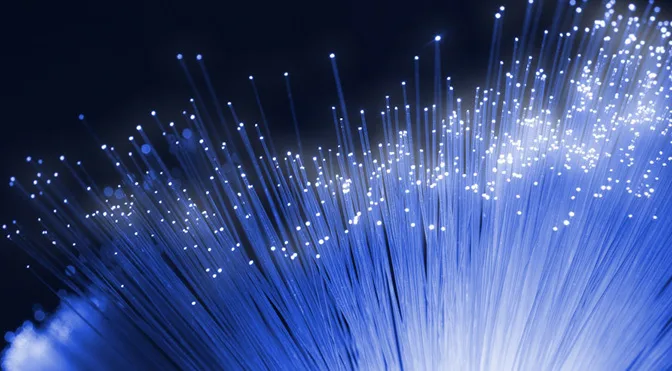
Most enterprise deployments run over fiber-optic network security infrastructure that telcos already have in place. Dedicated dark fiber carries the quantum channel, transmitting individual photons that encode key bits using polarization or phase encoding.
Two protocols dominate the field. BB84 – the original QKD protocol developed in 1984 – encodes key bits in the polarization states of single photons. E91 uses entangled photon pairs and Bell state measurements to distribute keys with an additional layer of verifiable security. Both generate what’s called a raw key, which is then refined through post-processing: sifting, error correction, and privacy amplification.
This produces a final shared key between the two endpoints – mathematically proven to be secret, verifiable, and impervious to any computational attack. The security holds even against a cryptographically capable quantum adversary.
Distance is a real constraint. Photon loss in fiber increases with range. QKD links typically operate reliably up to around 100 kilometers on standard fiber. Beyond that, trusted node architectures extend reach across longer spans until quantum repeater technology matures.
Quantum network security is moving from pilot to production in telecom for three specific reasons.
First, regulatory pressure. Governments in the EU, UK, US, and APAC are issuing directives requiring telecom operators to demonstrate quantum-safe posture for critical infrastructure. Compliance timelines are tightening.
Second, the harvest-now-decrypt-later threat is already active. Nation-state adversaries don’t need a quantum computer today. They’re archiving encrypted traffic now for later decryption. Traffic carrying financial transactions, sensitive enterprise data, or government communications is already at risk.
Third, the technology is ready. Quantum-safe communication overlays for existing optical infrastructure are available from established vendors. You don’t need to rip and replace.
Deploying QKD across a multi-site, high-bandwidth environment requires more than a quantum channel between two nodes. Quantum key management becomes the operational backbone that makes everything work at scale.
A QKMS handles provisioning, storage, synchronization, and rotation of keys across distributed nodes, connecting directly to the telco’s existing encryption hardware – typically layer-1 encryptors – and feeding quantum-generated keys into those devices in real time. This tight integration with existing infrastructure is what makes the deployment model practical for operators already running dense, high-capacity optical networks.
This is where the architecture gets interesting. A well-designed QKMS lets QKD operate alongside classical key infrastructure. It’s additive, not disruptive. The quantum layer integrates with what’s already there, and the management layer orchestrates both.
Interoperability with ETSI standards – specifically the ETSI GS QKD 004 API – is the benchmark to look for when evaluating vendors. It ensures the network you build today won’t be locked into a proprietary stack as the ecosystem matures.
High-bandwidth networks carrying enterprise traffic – financial data, healthcare records, government communications – are high-value targets. Secure data transmission over these networks has relied on AES-256 for years. QKD doesn’t replace AES-256. It changes how the keys for that encryption are generated and exchanged.
Post-quantum algorithms and QKD serve complementary roles. NIST-standardized approaches like CRYSTALS-Kyber address the software layer and are deployable today across any IP network. Quantum key distribution for telecom networks addresses the physical layer key exchange, providing information-theoretic security that post-quantum algorithms, however strong, can’t claim.
For telcos securing optical transport networks at 400G and beyond, combining both approaches delivers genuine defense-in-depth. It covers the computational threat model and the physics-based one simultaneously.
Quantum-safe security for telecom infrastructure is a phased journey, not a single migration. Enterprise telcos should start by inventorying cryptographic dependencies on their highest-value routes. Those are the corridors where a quantum-safe overlay delivers immediate risk reduction.
From there, piloting QKD on a single high-traffic corridor – even metro-scale – builds operational familiarity with channel management, key provisioning latency, and QKMS integration before a full-scale rollout.
The telcos that wait for quantum computing to go mainstream before acting are the ones who’ll be scrambling when the timeline accelerates. The infrastructure is available. The standards are maturing. The threat is already in motion.
Quantum key distribution is a cryptographic method that uses quantum mechanics to securely exchange encryption keys between two parties. Any interception attempt disturbs the quantum states of the photons carrying the key, making eavesdropping detectable and the compromised key material discardable. Quantum cryptography like QKD grounds security in physics rather than mathematical assumptions.
QKD improves quantum network security by replacing classical key exchange methods – which are vulnerable to future quantum computing attacks – with a physically verifiable, interception-proof key exchange process. For telecom operators, this means encryption keys protecting high-value traffic can’t be silently stolen, even by adversaries with advanced capabilities.
In fiber-optic network security deployments, photons travel across dedicated fiber channels encoding key bits using polarization or phase. Post-processing steps – sifting, error correction, privacy amplification – produce a final secure key. The quantum channel runs on existing dark fiber, making integration with existing optical infrastructure operationally manageable.
Yes. Quantum-safe communication is compatible with high-bandwidth networks running at 100G, 400G, and beyond. The quantum channel runs alongside live traffic on the same fiber plant. Quantum key management systems feed generated keys into layer-1 encryptors in real time, enabling secure data transmission without throttling throughput.
A quantum key distribution network is a system of QKD-enabled links and trusted nodes that extend quantum-safe connectivity across multiple sites. It combines quantum channels for key exchange, key management infrastructure for provisioning and rotation, and integration layers that connect to existing encryption hardware. Enterprise telcos use these networks to protect their most sensitive traffic corridors with physics-based cryptographic assurance.