Your buyers are researching you right now – and you can’t see it. Here’s how to navigate dark funnel marketing with intent data, without the compliance headaches.
Your buyer has already Googled you, read a Reddit thread about you, and compared you to two competitors – and your CRM still shows them as a cold lead.
That’s the dark funnel. And it’s where most B2B deals are actually won or lost.
The frustrating part? You can’t see any of it happening. No UTM tags. No form fills. No tracked sessions. Just a buyer quietly moving through their journey while your marketing team wonders why pipeline feels so unpredictable.
The good news is that dark funnel marketing has real solutions now. Buyer intent data, smarter platforms, and a more honest approach to data strategy can bring a lot of that invisible activity into the light.
The catch – and there’s always a catch – is that doing it responsibly means threading a needle between powerful insight and legitimate compliance. GDPR isn’t going anywhere. Neither is CCPA. And buyers are more privacy-aware than ever.
So let’s talk about how to actually make this work.
Picture your ideal buyer. Senior marketing leader, mid-size SaaS company, budget approved, problem clearly defined. They’re in-market right now.
Here’s what their research actually looks like: a Slack community thread asking for vendor recommendations, a couple of G2 comparison pages, a YouTube demo walkthrough, three blog posts from competitors they found on Google, and maybe a podcast episode on their drive home.
None of that touched your website. None of it fired a pixel. But that person is closer to a buying decision than half the “hot leads” in your pipeline.
This is the reality of modern B2B buying – and it’s why b2b intent data has gone from a nice-to-have to something serious revenue teams genuinely can’t ignore.
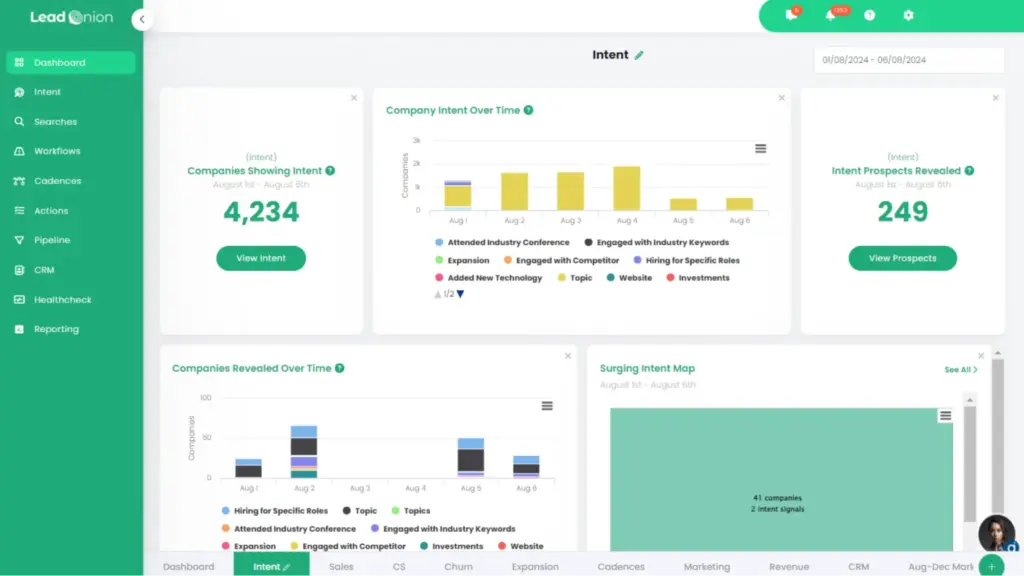
Buyer intent data doesn’t give you a crystal ball. What it gives you is something more useful – behavioral patterns at the account level that tell you who’s actively researching a problem you solve.
Good intent data platforms aggregate signals from across the web – content consumption, topic searches, review site activity, competitor page visits – and map them back to companies. Not individuals. Companies. That distinction matters a lot, and we’ll come back to it.
The practical upside is significant. Instead of running campaigns at a cold audience and hoping someone raises their hand, you’re identifying accounts that are already warm. Already thinking about the problem. Already in the mindset to consider a solution like yours.
Combine that with account based marketing software and the shift is dramatic. Your SDRs aren’t cold calling into the void. Your ads aren’t burning budget on accounts that won’t buy for another two years. You’re focused. You’re timely. You’re relevant.
That’s what b2b intent data is actually supposed to do – make your marketing feel less like interruption and more like good timing.
Here’s where a lot of teams either freeze up or get a little too casual.
The compliance concern with dark funnel data isn’t really about account-level intent signals – tracking which companies are researching cybersecurity solutions, for example, is generally outside the scope of individual privacy regulations. The risk shows up when data practices drift into personal territory: tracking named individuals without consent, holding data without clear governance, or stitching together datasets in ways that effectively identify specific people.
A few things that actually move the needle on compliance:
You don’t need twenty tools. You need the right four or five working together.
The teams that get dark funnel strategy right aren’t thinking about surveillance. They’re thinking about relevance.
The data isn’t there so you can prove you’ve been watching. It’s there so you can show up at the right moment, with something genuinely useful to say, to someone who’s already trying to solve a problem you understand well.
When that’s the frame, compliance stops feeling like a constraint. It becomes part of the strategy – because the same practices that protect you legally also tend to produce better marketing. Respectful. Timely. Helpful.
That’s dark funnel marketing done right. And in a market full of noise, it’s also just the smarter play.
Dark funnel marketing refers to all the buyer research and decision-making that happens outside of trackable channels – private communities, review sites, peer conversations, and anonymous browsing. It matters because most B2B buyers are well into their journey before they ever engage directly with a vendor.
Buyer intent data captures behavioral signals at the account level – things like which topics a company is researching or which competitors they’re comparing – and turns them into actionable targeting intelligence. It doesn’t reveal individual behavior, but it tells you which accounts are actively in-market.
Reputable intent data platforms collect data through consent-based publisher co-operatives, which generally keeps them on the right side of major privacy regulations. That said, compliance depends heavily on how your team uses the data downstream – individual profiling without consent remains a risk regardless of the source.
A customer data platforms CDP centralizes all your data – its origins, consent status, and usage – into one governed system. This makes it far easier to demonstrate compliance, respond to data access requests, and maintain the kind of internal accountability that regulators actually care about.
B2b marketing automation tools ingest intent data to trigger timely, relevant workflows – personalized email sequences, dynamic ad audiences, sales alerts – the moment an account shows purchase-ready behavior. It’s how revenue teams act on dark funnel intelligence without having to manually chase every signal.