Learn how UCaaS (Unified Communications as a Service) solutions integrate voice, video, and messaging into the cloud to power hybrid teams and streamline operations.
In the modern hybrid work era, effective communication is no longer just an operational requirement-it is the ultimate foundation for productivity, employee engagement, and business success.
When your teams communicate clearly, operations run smoothly, project roadblocks disappear, and customer experiences improve dramatically. However, managing fragmented communication tools can quickly overwhelm an organization. This is exactly where a unified communication platform steps in.
Traditionally, Unified Communications (UC) referred to the technical integration of various digital channels-such as enterprise telephony, video conferencing, instant messaging, and email-into a single system.
Historically, these setups were hosted in on-premises data centers. This meant companies had to buy, manage, and protect heavy physical hardware, handle complex network connectivity, and maintain rigid security protocols. For growing businesses, scaling these legacy setups globally was slow, cost-prohibitive, and highly inefficient.
UCaaS (Unified Communications as a Service) completely changes this dynamic by moving the entire infrastructure to the cloud. Platforms like Microsoft Teams, Zoom, Cisco Webex, and Slack bring your essential business collaboration tools together into a single cloud-native application. By unifying voice, video, file sharing, and chat, UCaaS solutions eliminate the physical boundaries of distributed offices, enabling seamless, global collaboration.
UCaaS functions entirely on secure, vendor-managed cloud infrastructure. Instead of running physical phone lines into an office building, the system relies on VoIP (Voice over Internet Protocol), a technology that converts audio signals into digital data packets to handle crystal-clear phone calls securely over the internet.
When VoIP is seamlessly combined with video conferencing, chat streams, and document sharing, it creates a centralized digital workspace. Modern UCaaS platforms leverage advanced APIs (Application Programming Interfaces) to connect directly with your core business applications.
For instance, a sales representative can initiate a client call directly inside a CRM platform like Salesforce or HubSpot. The system automatically logs the call, records interaction notes, and updates the pipeline, removing manual data entry entirely.
Furthermore, these platforms are engineered for cross-device continuity. A user can easily launch a video meeting on their desktop laptop, transfer the active stream to their smartphone while walking to a meeting room, and later review shared files on a tablet-all without a single second of disruption.
A robust unified communication platform naturally adapts to the unique workflows of different enterprise departments, acting as a force multiplier for daily output.
Modern support environments live and die by responsiveness. UCaaS equips agents with built-in omnichannel capabilities, allowing them to manage phone inquiries, web chats, and emails from a single interface. Advanced intelligent call routing ensures clients are immediately paired with the right technical expert, while real-time supervisor analytics help optimize queue times and first-contact resolution rates.
For fully remote or hybrid workforces, UCaaS functions as the digital headquarters. Cloud-based availability indicators (presence status) allow employees to see exactly who is online, in a meeting, or away from their desk across different time zones. Consolidating collaboration into one primary app eliminates “app fatigue” and keeps dispersed teams culturally connected and aligned.
Sales teams use UCaaS solutions to accelerate their deal velocity. Deep CRM integrations allow reps to instantly pull up account histories before dialing a prospect. Additionally, built-in, high-definition video conferencing makes hosting virtual pitches, screen-sharing technical demonstrations, and conducting executive consultations seamless and professional.
Steady, uninterrupted collaboration is vital for project delivery. With persistent group chat channels, live document co-authoring, and rapid ad-hoc video syncs, project spaces become centralized hubs. Integrating these communication streams with task-tracking software ensures deadlines are met, regardless of where team members sit geographically.
Investing in a enterprise VoIP and collaboration stack requires strategic alignment. To extract the highest long-term value, evaluate prospective vendors against five critical pillars:
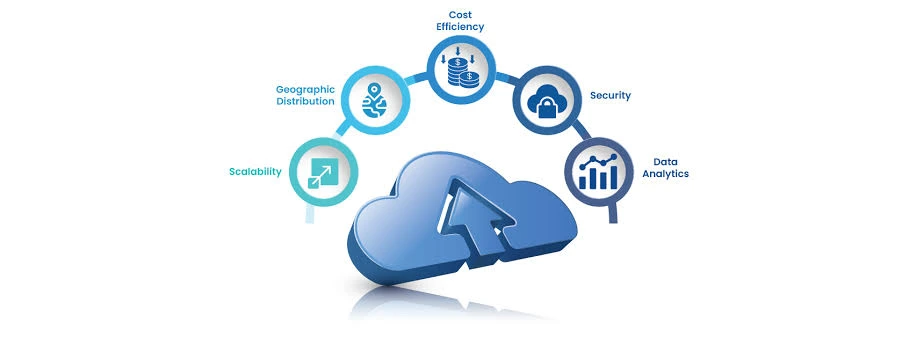
The shift toward permanent hybrid and flexible work models has turned UCaaS technology into a baseline operational requirement for modern business. Cloud-native delivery allows organizations to deploy new communication features instantly while reducing capital expenditures. As the integration of AI-driven tools-like real-time transcription and automated meeting summaries-continues to accelerate, choosing a secure, scalable UCaaS solution will remain a critical driver of organizational agility.
While both are cloud-based communication technologies, they serve different audiences. UCaaS (Unified Communications as a Service) focuses primarily on optimizing internal company collaboration through integrated chat, video, and internal telephony. CCaaS (Contact Center as a Service) is purpose-built for external customer support operations, featuring tools like interactive voice response (IVR) systems, customer queue routing, and external support analytics.
VoIP is simply the foundational technology used to transmit voice calls over an internet connection rather than a physical copper landline. UCaaS is an entire cloud-delivered platform that utilizes VoIP for audio calls but expands it to include video conferencing, team chat, file sharing, and deep software integrations into a single workspace.
Yes. During the implementation process, UCaaS providers utilize a standardized legal process known as number porting. This allows your organization to seamlessly transfer all existing corporate phone numbers from your legacy telecom carrier directly into the new cloud platform without experiencing operational downtime.
Standard voice-only VoIP calls use minimal bandwidth (roughly 100 Kbps per concurrent call). However, high-definition video conferencing and real-time screen sharing require higher network performance, typically averaging between 2 Mbps and 4 Mbps symmetric speeds per active user for optimal clarity.