Discover how legacy vendors can adopt startup principles for digital transformation. Learn modernization strategies to stay competitive in evolving markets.
The irony is sharp. Legacy vendors built empires on stability, reliability, and predictability. Startups are winning by doing almost the opposite. Yet the strangest part? The gap between them isn’t as wide as it looks. It’s not that legacy systems can’t innovate. It’s that they’re playing by a different rulebook-one that’s increasingly obsolete.
Here’s what’s happening in markets right now: Startups move fast, experiment relentlessly, and fail cheaply. Legacy vendors move carefully, perfect their approach, and fail expensively. One model worked brilliantly for decades. The other model works better when the playing field is shifting every eighteen months.
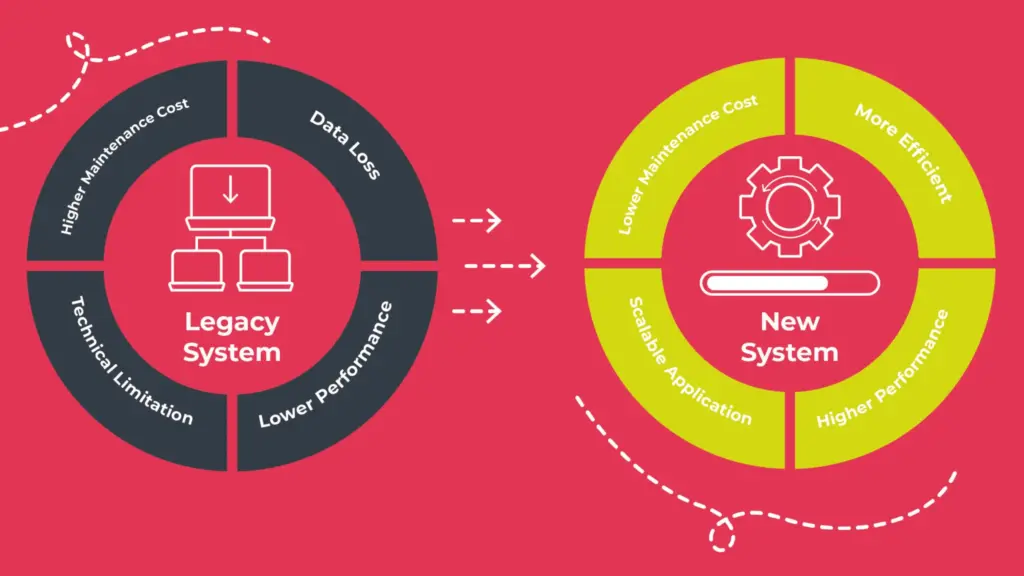
The good news? Legacy modernization isn’t about abandoning what made these companies valuable. It’s about stealing the best moves from startups and adapting them to scale. The companies winning in 2026 aren’t pure startups or dinosaurs. They’re hybrids-legacy foundations with startup agility.
Let’s get specific. Enterprise digital transformation has become shorthand for “we’re updating our tech stack.” But that’s thinking too small. Digital transformation at scale is about rewiring how decisions get made, how teams communicate, and how quickly you can pivot when the market demands it.
Business innovation in legacy organizations typically follows a pattern: There’s a CTO who gets it, a team of internal champions who believe change is possible, and then there’s the weight of institutional inertia. The friction isn’t technical. It’s cultural. And that’s where startups have a genuine advantage-they don’t have thirty years of “this is how we’ve always done it.”
But here’s what startup founders won’t tell you: That agility is often chaotic. They move fast and break things, sure. But they also break relationships, overspend on the wrong tools, and pivot so often that people whip-lash out. Legacy systems offer something startups are desperately buying back once they scale-institutional knowledge, process maturity, and the ability to reliably serve customers at volume.
The real play is convergence. Legacy vendors need to adopt three core principles from startup playbooks:
Startups ship incomplete products. Legacy vendors ship only when everything is tested, documented, and approved. Both approaches are wrong in isolation. The middle ground is what matters.
Legacy system modernization strategies should focus on reducing cycle time. Not recklessly-methodically. If your release cycle is currently six months, the goal isn’t to move to weekly deployments tomorrow. It’s to get to monthly, then quarterly, then monthly. Each step teaches you something. Each iteration finds constraints you didn’t know existed.
This applies to everything: product updates, feature releases, even internal process changes. Business transformation happens through iteration, not revolution. Teams that ship small, learn quick, and adjust continuously will lap those that wait for the “perfect moment” to launch.
Startups succeed because decisions live close to the people doing the work. An engineer flags an idea, talks to customers, validates the assumption, and ships it-all in two weeks. Scaling that approach is where things typically break down for legacy organizations.
But here’s the secret: You don’t need to eliminate oversight. You need to move it. Instead of waiting for approval before work starts, set the guardrails and let teams move. Create clear metrics for what success looks like. Build feedback loops so teams see impact. Then trust them to execute.
Enterprise digital transformation at scale means your product teams, customer success teams, and sales teams are making real-time decisions without waiting for a steering committee. That’s not chaos. That’s startup culture applied to enterprise scale.
Startups live and die by customer feedback. They’re forced to listen because they have no cushion. Legacy vendors have revenue, contracts, and installed bases that let them ignore signals for surprisingly long. That’s the trap.
The companies successfully modernizing legacy operations right now are the ones getting uncomfortable with customer feedback. They’re running beta programs, talking to power users, and treating complaints as data instead of noise. That’s where business innovation actually starts.
Modernizing legacy enterprise systems means creating structures where customer voices reach product teams without getting filtered through layers of management. Your sales team knows why customers are looking elsewhere. Your support team knows what’s broken. Your users know what they actually need versus what you’re selling them.
The difference between “we’re updating our infrastructure” and “we’re transforming our business” is whether your transformation actually changes how customers experience you. Legacy modernization that only touches technology and leaves organizational structure untouched will stall. Digital transformation that changes both simultaneously creates competitive advantage.
Here’s the practical reality: Startups don’t have the scale to survive complacency. Legacy vendors do-but only for so long. Markets shift. Regulations change. New competitors arrive. The organizations thriving in five years won’t be the ones that moved the fastest. They’ll be the ones that moved consistently, learned from each move, and adjusted course based on what they learned.
That’s not a startup virtue or a legacy vendor virtue. It’s a survival virtue. And it’s available to any organization willing to adopt it.
The companies winning aren’t pure startups or traditional enterprises. They’re legacy vendors who learned to think like startups. They’ve kept their institutional strength while adopting the mental models that let them navigate uncertainty. They still ship things with quality and reliability, but they do it faster. They still honor institutional knowledge, but they’re willing to challenge it.
Enterprise innovation isn’t about becoming a startup. It’s about learning what startups do well and building it into your organization-while keeping the things that made you successful in the first place. That convergence is where business transformation actually happens.
Legacy vendors are established technology companies that built their business on foundational systems, platforms, or solutions that have remained largely unchanged for years or decades. These organizations typically serve enterprise customers, have substantial installed bases, and generate revenue from long-standing product lines. While they’ve proven their reliability and stability, many legacy vendors struggle with the speed of innovation required in modern markets. The term isn’t derogatory-it simply describes organizations whose infrastructure, culture, and processes reflect an earlier era of business.
Legacy systems often struggle with innovation due to organizational structure and institutional momentum. Decision-making is typically distributed across multiple approval layers, which slows experimentation. Business transformation requires risk-taking, but legacy organizations carry the weight of existing customer expectations, established processes, and risk-averse cultures. Additionally, teams become specialized in maintaining existing systems rather than building new ones. The installed base that generates revenue also creates incentive misalignment-investing in innovation can feel like cannibalizing existing revenue. This isn’t a technology problem; it’s an organizational problem that requires structural change alongside digital transformation.
B2B organizations can adopt three critical startup principles: speed in execution (shipping incomplete products and learning through iteration), decentralized decision-making (letting teams move autonomously rather than waiting for approval), and customer-centric development (letting market feedback guide priorities rather than internal assumptions). Startups also embrace failure as learning. They test hypotheses rapidly, kill ideas that don’t work, and reallocate resources to what does. For legacy modernization, this means creating internal structures that reward experimentation, reduce cycle time, and prioritize learning. Enterprise digital transformation benefits enormously from these practices applied thoughtfully and sustainably.
Modernizing legacy enterprise systems requires parallel effort on technology and culture. Technology-wise, this means moving toward modular architectures, cloud-native platforms, and API-driven integrations that allow independent teams to move faster. Culturally, it means rewiring how decisions get made, shortening approval cycles, and empowering teams closer to customers. Legacy system modernization strategies typically work best when phased rather than revolutionary-migrating one workload at a time, learning from each migration, and applying those lessons to the next. Equally important is keeping the institutional knowledge and customer relationships that made the organization successful while building in the agility startups possess.
Business agility is the ability to sense market changes, make decisions quickly, and execute those decisions at scale. It’s not just speed-it’s speed paired with intelligence and consistency. An agile organization can shift priorities in weeks rather than quarters, adjust to customer feedback in real time, and sustain competitive advantage despite constant market disruption. Business innovation is impossible without agility because innovation requires experimentation, learning, and course correction. Companies mastering enterprise digital transformation achieve agility by flattening decision hierarchies, creating feedback loops between customers and teams, and building systems that support rapid iteration. Agility isn’t about chaos; it’s about channeled speed that creates value.