Remote access threatens critical infrastructure. Learn how zero trust, OT security, and ICS cybersecurity protect essential systems from modern cyber threats.
Your power plant is humming. Water treatment facilities are running on schedule. The grid that powers your city is stable. Behind the scenes, a handful of engineers are keeping it all alive-and increasingly, they’re doing it from home.
Here’s the tension nobody wants to name out loud: remote access security has become non-negotiable for critical infrastructure security, but it’s also introduced a vulnerability that didn’t exist before. Someone who used to be physically present at a control room now connects from their kitchen. And that connection is now a potential entry point for attackers who understand that disrupting critical infrastructure doesn’t require stealing data-it just requires taking systems offline.
Let’s be real about what’s at stake.
The joke used to be that operational technology security (OT) teams lived in a separate universe from IT. Air-gapped networks. No internet. Physical security. The assumption was simple: if nobody can reach it, nobody can compromise it.
That assumption is dead.
Today, critical infrastructure security means managing systems that are increasingly connected, increasingly remote, and increasingly targeted. We’re talking about industrial control systems (ICS), SCADA networks, and operational tech that was never designed to be accessed over the internet in the first place.
The problem? The pandemic didn’t just change where people work. It changed what’s possible for attackers. A vulnerability that existed in ICS cybersecurity for years suddenly became critical when engineers needed to troubleshoot systems from their homes. A VPN connection that was supposed to be temporary became permanent. And a zero-day exploit in operational technology security went from “interesting academic problem” to “national security concern.”
Cybersecurity for critical infrastructure used to mean “keep the bad guys out.” Now it means “assume they’re already in, and build systems that keep them from doing damage anyway.”
Let’s break down what remote access does to critical infrastructure security:
The Old Model: Operator at a control terminal → local network → ICS system. One path in. One point to defend.
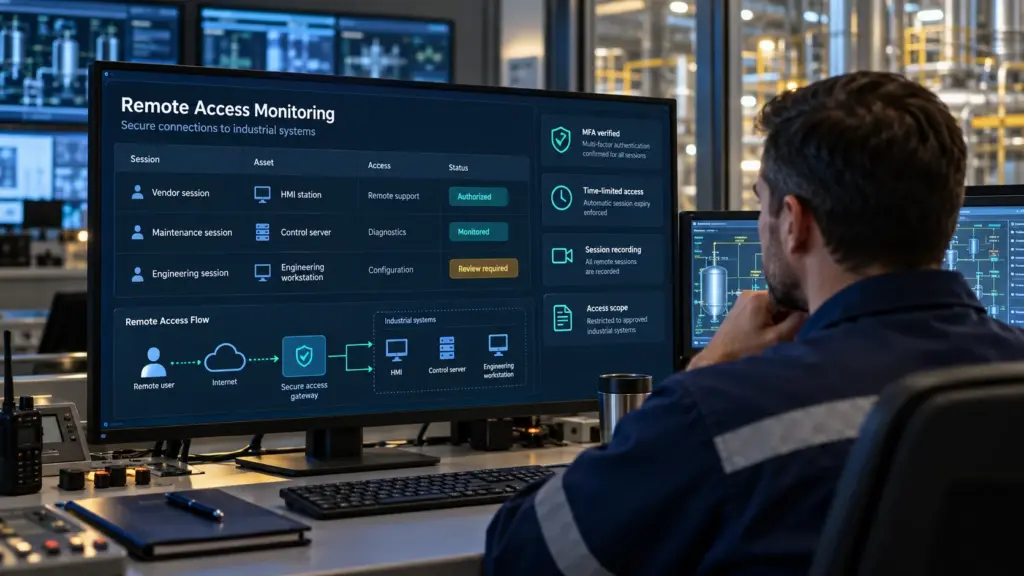
The New Reality: Engineer at home → VPN → corporate network → jump server → OT network → ICS system. Multiple hops. Multiple potential failures. And every single one of those connections is a place where an attacker can sit, watch, and learn.
Remote access security introduces complexity. It introduces trust assumptions where there used to be physical security. It introduces software and protocols that operational technology security teams never trained on.
Here’s what actually happens: IT implements a VPN because it’s standard. OT teams get access because they need it. Security runs a few scans and calls it done. Nobody sits down and says, “What if someone compromises the engineer’s home laptop? What if the VPN credentials get stolen? What if an attacker is sitting on that connection right now, learning how our systems work?”
That’s the conversation critical infrastructure security demands today.
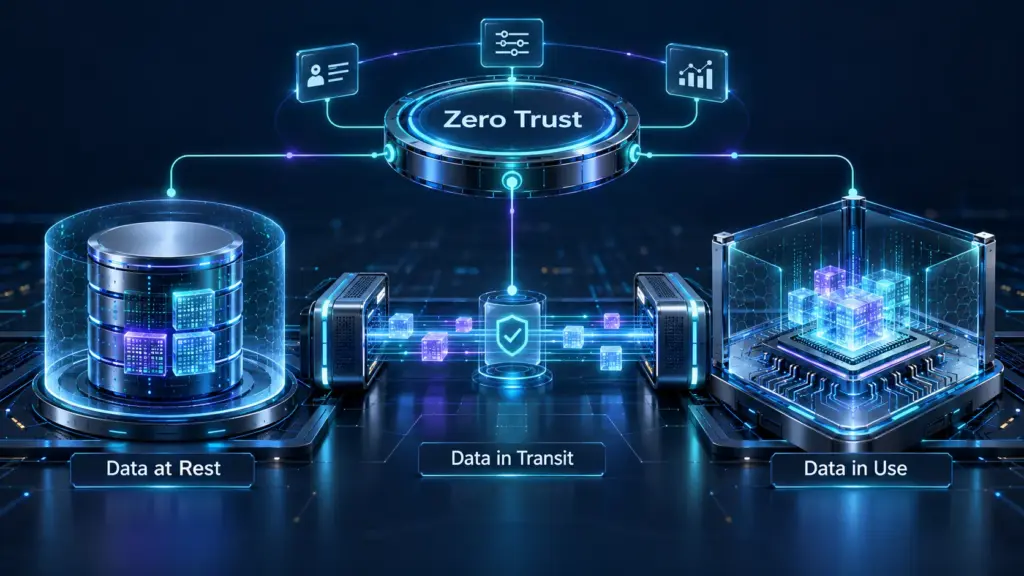
You’ve probably heard “zero trust” thrown around like it’s a buzzword. It’s not. It’s the only honest security model for critical infrastructure security in the remote work era.
Zero trust means: verify everything. Assume nothing. Authenticate constantly.
For critical infrastructure security, this translates to:
The alternative? Trust that an engineer’s home Wi-Fi is secure. Trust that their laptop hasn’t been compromised. Trust that the USB they plugged in last week isn’t carrying malware. Trust is how operational technology security gets breached.
Zero trust security strips away that trust. It replaces it with verification. It’s harder to implement, sure. But it’s the only approach that gives cyber resilience teeth when you’re dealing with remote access security across critical systems.
Here’s where the real conflict happens: OT and IT speak different languages.
IT people think in terms of software updates, cloud migration, and API integration. OT people think in terms of uptime, stability, and “don’t break what’s working because fixing it takes months.”
When you add remote access security into the mix, suddenly both teams need to work together. IT wants to implement endpoint detection and response (EDR) tools. OT is worried EDR will interfere with control systems that can’t afford downtime. IT wants to update systems regularly. OT has equipment running software from 2003 that can’t be updated without replacing the entire unit-at a cost of millions.
Critical infrastructure security gets stuck in the middle.
The solution? Stop thinking of OT as an afterthought in your security strategy. Operational technology security isn’t IT with different equipment. It’s a completely different threat model that requires:
Cybersecurity for critical infrastructure means building security into OT, not bolting it on afterward.
“Resilience” gets misused. Companies think it means “we have backups.” It doesn’t.
Cyber resilience for critical infrastructure security means:
You can detect an intrusion in real time. Not weeks later. Not after someone notices something weird. Real time. This requires dedicated monitoring of operational technology security networks, not just general network traffic analysis.
You can respond without shutting down critical systems. If an attacker gets into your network, you can isolate that segment, lock down access, and investigate without taking the power plant offline. This requires segmentation and zero trust security principles baked in from the start.
You can recover quickly. Your recovery time objective (RTO) for critical infrastructure is measured in minutes, not hours. That means backups aren’t enough-you need orchestrated recovery processes that have been tested repeatedly.
You understand the human side. Engineers are going to make mistakes. They’re going to use weak passwords, reuse credentials, or click on a phishing email. Cyber resilience means your systems don’t collapse because one person failed. It means containment, detection, and recovery happen automatically.
Remote work makes cyber resilience harder because you’ve added new entry points and new risk vectors. But it also makes it essential. You can’t afford the “just keep the bad guys out” approach anymore because you’ve invited remote users in.
A water treatment facility had a remote access security incident where a contractor’s VPN credentials were compromised. Attackers didn’t go after water systems directly-they couldn’t figure out the ICS controls fast enough. But they did shut down monitoring systems, which gave them time to make adjustments that went undetected for hours. Nobody died. Nobody got poisoned. But the incident revealed that critical infrastructure security was one laptop password away from disaster.
A power utility discovered that their operational technology security network was accessible from the corporate IT network through a poorly configured firewall rule. An attacker with IT network access could theoretically reach SCADA systems. The fix wasn’t complicated-better segmentation, stronger authentication, monitoring-but it took six months because OT teams were terrified of “changing anything that might cause outages.”
These incidents aren’t anomalies. They’re the new normal. And they all share the same root cause: critical infrastructure security and remote access security were treated as separate problems instead of interconnected risks.
This isn’t about buying more tools. It’s about fundamentally rethinking how you manage access to critical systems.
Step 1: Map Everything Know what systems are critical. Know what’s connected to the internet (directly or indirectly). Know what requires remote access and what doesn’t. Operational technology security starts with visibility.
Step 2: Implement Segmentation Separate OT networks from IT networks. Use air-gapped connections or heavily monitored gateways for remote access security. Make lateral movement extremely difficult. This is where zero trust security principles live.
Step 3: Add Authentication Layers VPN alone isn’t enough. Layer on multi-factor authentication. Use hardware tokens for critical access. Implement conditional access policies that verify device health before granting remote access security credentials.
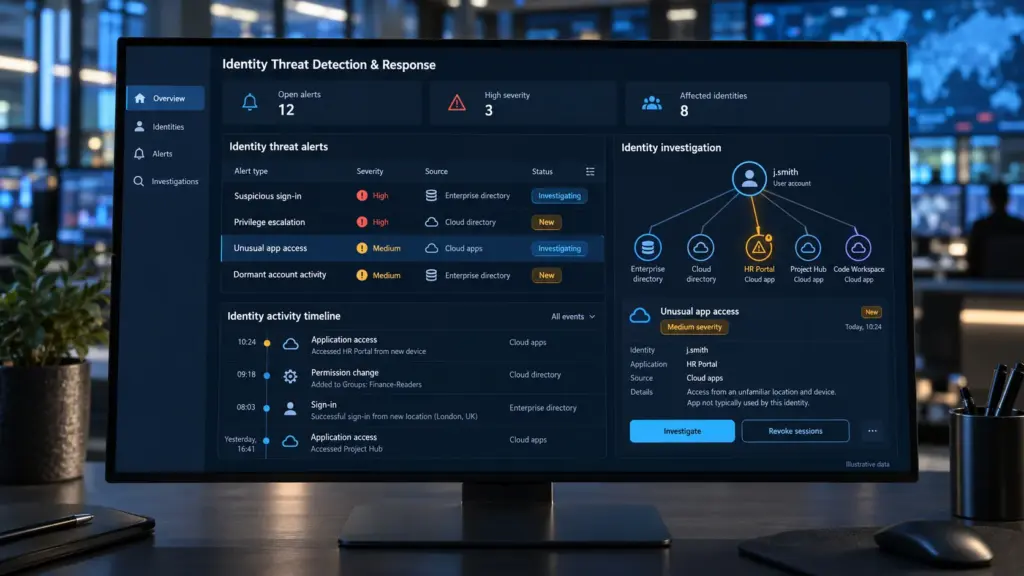
Step 4: Monitor Everything ICS cybersecurity and cyber resilience depend on knowing what’s happening. Deploy OT-aware monitoring, behavioral analytics, and anomaly detection. Know when an engineer connects. Know what they access. Know what they change.
Step 5: Test Constantly Run tabletop exercises. Simulate breaches. Test your recovery procedures. Critical infrastructure security improvements only matter if they actually work under pressure.
Step 6: Train Your Teams OT engineers need to understand security. Security teams need to understand OT. This isn’t optional. A misconfigured firewall or a weak password becomes catastrophic when cybersecurity for critical infrastructure is weak at the human level.
Securing critical infrastructure in the age of remote access isn’t about finding the perfect technology. Perfect technology doesn’t exist.
It’s about accepting that the threat is real, that it’s already here, and that critical infrastructure security requires different thinking than standard enterprise security. It’s about building cyber resilience not through invulnerability (which is impossible) but through detection, containment, and recovery.
It’s about respecting the engineers who keep essential systems running while also respecting the attackers who are actively trying to disrupt them.
And it’s about moving past the idea that operational technology security is someone else’s problem. If your organization depends on critical infrastructure-and most do-then remote access security and ICS cybersecurity aren’t optional concerns. They’re existential ones.
Start today. Map your critical systems. Understand where remote access exists. Implement zero trust security principles. Monitor relentlessly. Test your defenses.
Because when critical infrastructure security fails, it doesn’t just affect your organization. It affects everyone downstream.
Zero trust security eliminates implicit trust in network location or user identity, which is critical for remote access security. In critical infrastructure security, attackers can gain access through compromised home networks or stolen credentials. Zero trust security requires continuous verification of every access request, ensuring that even if an engineer’s device is compromised, attackers can’t move laterally through operational technology security networks to reach ICS cybersecurity systems.
Traditional VPNs create a single trusted tunnel, but remote access security for critical infrastructure security demands multiple layers-multi-factor authentication, device health verification, microsegmentation, and continuous monitoring. Operational technology security can’t rely on a single entry point because cyber resilience depends on detecting and containing threats at multiple checkpoints, not just at the perimeter.
ICS cybersecurity requires OT-aware monitoring that understands control system protocols (Modbus, Profibus, OPC), not just general network traffic. Monitor for anomalous commands to operational technology security systems, unusual access patterns, and unauthorized configuration changes. Critical infrastructure security monitoring must detect threats in real time, not after an incident is discovered.
Cybersecurity for critical infrastructure requires collaboration between teams with different priorities. Create joint governance where operational technology security engineers validate security changes before deployment, ensuring critical infrastructure security measures don’t introduce downtime. Define acceptable change windows and recovery procedures. Cyber resilience is impossible without mutual respect for both security and operational requirements.
Start with inventory and segmentation. Map all critical infrastructure security assets, identify which systems require remote access security, and segment OT networks from IT networks. Implement basic zero trust security controls (multi-factor authentication, monitoring). From there, layer in more sophisticated ICS cybersecurity measures. Cybersecurity for critical infrastructure is a journey, not a sprint-but it starts with understanding what you’re protecting.