Dark revenue quietly drains B2B pipelines. Learn why deals stall and the sales pipeline recovery strategies that bring dormant opportunities back to life.
Every revenue leader has a folder of deals they’d rather not look at too closely. Opportunities that were “closing this quarter” three quarters ago. Prospects who went quiet after a promising demo and never came back. On paper, these deals still count. In the CRM, they’re still open, still assigned, still technically alive. In reality, they’re dead weight, and they’re costing you more than anyone wants to admit.
This is dark revenue: the value sitting inside a sales pipeline that looks active but has effectively gone silent. It doesn’t show up as a loss because nobody marked it closed-lost. It just sits there, inflating forecasts and quietly wasting the effort that went into generating it in the first place.
The irony is that most of this revenue isn’t gone. It’s dormant. And dormant is a very different problem than dead, because dormant opportunities can be woken up.
Deals don’t usually stall because the prospect lost interest overnight. They stall because something in the process broke down, and nobody noticed in time.
A few of the usual suspects:
None of these are dramatic failures. They’re small gaps that compound, and a few quarters later, you’re sitting on a pipeline that’s 30% larger on paper than it is in reality.
You can’t fix what you don’t measure, and pipeline recovery needs its own scorecard separate from standard sales metrics. A few that matter most:
Tracking these consistently turns pipeline recovery from a one-off cleanup project into an ongoing, measurable discipline.
Reviving dark revenue isn’t about blasting old leads with “just checking in” emails. It requires a more deliberate approach.
Recovering dark revenue works best when it isn’t purely a sales problem. This is where Revenue Operations Best Practices come into play, aligning sales, marketing, and customer success around a shared view of the pipeline instead of three separate versions of the truth.
A mature RevOps function treats pipeline health as a continuous feedback loop. Marketing feeds signals on renewed engagement. Sales acts on those signals with informed, well-timed outreach. Customer success flags expansion opportunities that might otherwise sit dormant too. The result is revenue acceleration: not necessarily more pipeline, but pipeline that moves faster because fewer deals are allowed to quietly go dark in the first place.
Organizations that invest in this kind of alignment tend to catch stalled deals earlier, before they harden into the kind of dark revenue that takes a dedicated recovery push to fix.
Dark revenue isn’t a sign that your team is doing something fundamentally wrong. It’s a natural byproduct of running a pipeline at scale, where not every deal gets the attention it needs at exactly the right moment. The difference between companies that lose this revenue for good and those that recover it comes down to whether they’re actively looking for it.
Build the habit of measuring stall rate and pipeline aging. Prioritize outreach using real buyer signals instead of guesswork, and keep your enablement content and marketing efforts working together rather than in separate lanes. None of this requires a complete overhaul of how your team sells. It just requires treating stalled opportunities as recoverable revenue instead of forgotten line items.
The pipeline you already have is often more valuable than the one you’re still trying to build.
Dark revenue refers to the value trapped in opportunities that remain technically open in a sales pipeline but have gone inactive. These deals aren’t marked closed-lost, so they continue to skew forecasts even though no real progress is being made.
Pipelines stall due to weak lead nurturing, inconsistent pipeline management, disconnected sales enablement resources, and a lack of visibility into buyer behavior. Small process gaps accumulate over time and leave deals sitting untouched.
Recovery starts with segmenting stalled deals by cause, prioritizing accounts showing renewed intent data, refreshing outreach with updated value propositions, and involving demand generation teams to re-warm cold prospects before sales re-engages.
Revenue Operations, or RevOps, aligns sales, marketing, and customer success around shared pipeline data and processes. Applying Revenue Operations Best Practices helps organizations catch stalling deals earlier and respond with coordinated action instead of siloed effort.
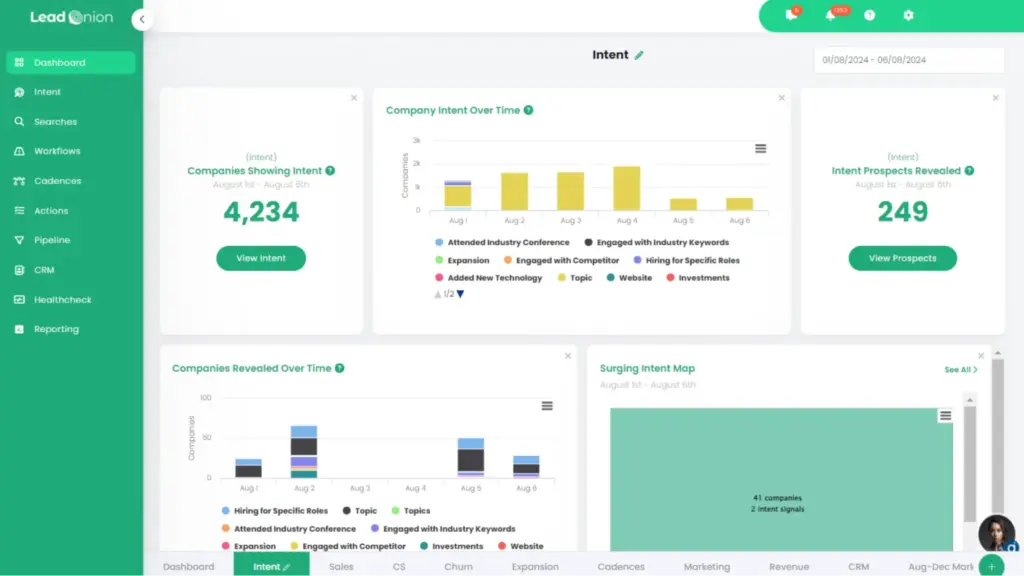
Revenue intelligence tools surface intent data and engagement signals that indicate which stalled deals are worth pursuing. This supports revenue acceleration by helping teams focus effort on opportunities most likely to convert, rather than working every deal equally.