Discover why workforce reskilling is critical during M&A in enterprise tech – and how to build an upskilling strategy that protects people, culture, and long-term growth.
When two enterprise technology companies merge, the headlines almost always focus on valuation, market share, and product portfolio consolidation. What rarely makes the press release – but almost always determines whether the deal actually delivers – is what happens to the people.
Mergers and acquisitions in enterprise tech are rarely just financial events. They are, at their core, organizational upheavals. Two companies with different tech stacks, different processes, different cultures, and often different skill sets are asked to function as one. And in an environment where digital transformation has already been reshaping job roles at pace, the skills gap that emerges post-deal can be significant enough to stall integration entirely.
This is where workforce reskilling stops being an HR initiative and starts being a business-critical lever.
The numbers make a strong case. Research from McKinsey has found that roughly 70% of M&A deals fail to achieve their intended value – and people-related challenges, including talent attrition and capability misalignment, are among the most cited reasons. In enterprise tech specifically, where product teams, customer success functions, and technical sales roles are deeply specialized, the cost of losing institutional knowledge or failing to bring people along through change is disproportionately high.
Upskilling employees during a merger is not a soft initiative. It is a retention strategy, a productivity play, and a cultural bridge – all at once.
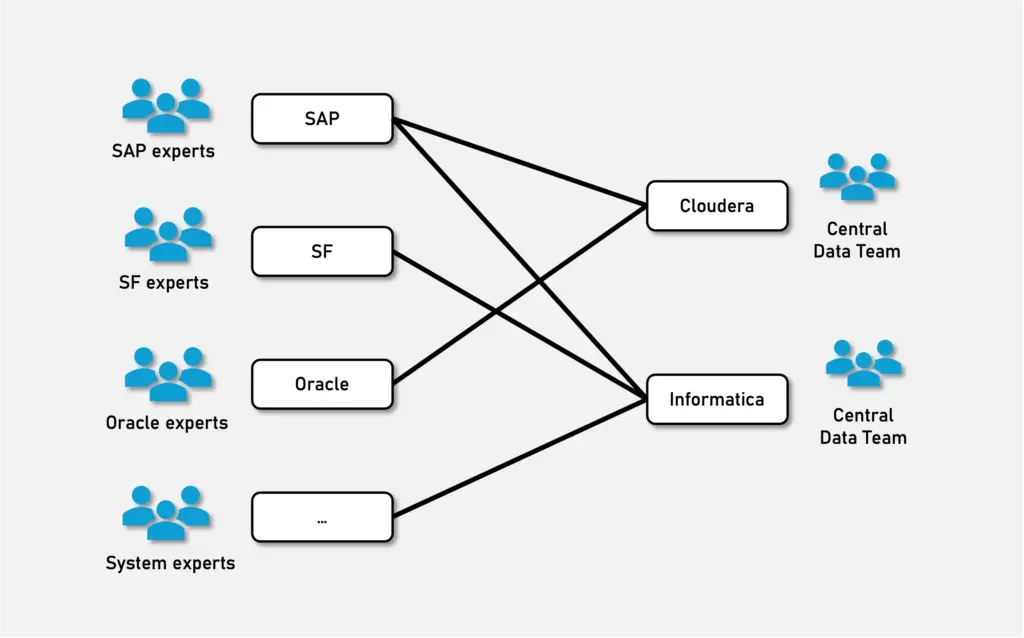
There is also a digital transformation dimension that compounds the urgency. Most enterprise tech M&A deals today are not just about acquiring revenue. They are about acquiring capability – AI infrastructure, cloud platforms, data architecture, security tooling. When the acquiring company integrates a new tech stack, the workforce on both sides often needs to adapt rapidly. Employees who were experts in one environment must now operate across a different one. Without structured skills development, that adaptation is left to chance.
The organizations that handle this well tend to share one trait: they treat workforce reskilling after mergers and acquisitions as a planned program, not an afterthought. They build for it before the deal closes, not six months after.
A post-M&A workforce reskilling strategy is not a training catalogue. It is a deliberate plan that connects business outcomes to human capability – and it needs to be built with the same rigor as the financial integration model.
Here is what that looks like in practice.
Before any learning program is designed, enterprise leaders need a clear picture of the current state. What skills exist in the combined workforce? Where are the critical gaps relative to the integrated operating model? Which roles will change, which will be retired, and which need to be built from scratch?
Human capital management platforms are increasingly useful here – they can map role taxonomies across two organizations, flag redundancies, and surface where upskilling employees should be prioritized. The output of this audit becomes the foundation for every subsequent decision.
One of the most common mistakes in post-M&A Learning and Development is running programs on a schedule that has nothing to do with what the business actually needs. A product team that goes live on a new platform in Q2 cannot wait for a training cohort that begins in Q3.
Upskilling employees during digital transformation requires L&D teams to work in close coordination with integration management offices. Skills development timelines should be mapped directly to go-live dates, reorganization cutoffs, and customer-facing transitions. This means L&D must have a seat at the integration planning table – not just an invitation to fill in the gaps afterward.
Not every employee needs the same reskilling path. A technical architect integrating two cloud environments needs something entirely different from a sales engineer learning a new product line, who in turn needs something different from a customer success manager navigating a new support model.
Effective skills development post-M&A requires segmentation by function and role impact – not a one-size approach based on level or tenure. The more precisely the program targets actual job requirements, the faster employees reach productive competency.
Mergers and acquisitions create anxiety. Employees on both sides of a deal are often uncertain about their futures, their relevance, and their standing in the new organization. Asking people to learn new skills in that environment – and to do so visibly – requires deliberate attention to psychological safety.
Organizations that do this well create learning environments where employees can ask questions without embarrassment, make mistakes without consequence, and progress at a pace that is challenging but not punishing. Managers play a critical role here. When team leads actively participate in workforce reskilling programs and normalize the process of learning, adoption rates improve substantially.
The temptation in any enterprise L&D program is to measure success by completion rates. But completion tells you very little about capability transfer. Did the employee actually apply the skill? Did their performance in the newly integrated role improve? Did the team hit its post-integration productivity targets on schedule?
Human capital management frameworks that tie learning metrics to business outcomes – not just course finishes – give leadership a much clearer view of whether the upskilling investment is working. This also helps make the case for continued investment in skills development as the integration matures.
Senior leaders in newly merged enterprises are often themselves navigating significant change – new reporting structures, new peer relationships, new organizational mandates. If they have not been equipped to lead through digital transformation, they will struggle to bring their teams along.
Employee upskilling programs that include leadership development as a distinct workstream – focused on change management, cross-cultural communication, and how to coach through ambiguity – tend to produce better outcomes across the board. Leaders who model learning create organizations that learn.
Enterprise M&A deals are long games. The press release is day one. The real test comes eighteen months later, when the integration is supposed to be delivering value and the combined workforce is either operating as a cohesive unit or quietly fragmenting.
Workforce reskilling is one of the most reliable ways to tip that outcome in the right direction. It signals to employees that the organization has invested in their future, not just the deal. It builds the technical capability needed to realize synergies. And it creates the shared working language – across platforms, processes, and cultures – that genuine integration requires.
Digital transformation does not wait for organizational comfort. Enterprise technology companies that treat upskilling employees as a strategic priority during M&A – rather than a secondary concern – tend to close the gap between deal close and value realization considerably faster.
The organizations that will define enterprise tech over the next decade are not necessarily the ones that make the most acquisitions. They are the ones that make acquisitions work. And increasingly, that means treating human capability with the same seriousness as financial modeling.
Workforce reskilling is the process of equipping employees with new skills to meet changing job requirements – whether due to technology adoption, organizational restructuring, or shifts in business strategy. Unlike upskilling, which deepens existing capabilities, reskilling typically prepares employees for roles or responsibilities that differ meaningfully from their current ones.
Post-M&A environments often combine two organizations with different systems, processes, and skill sets. Without structured workforce reskilling, employees on both sides of the deal struggle to operate effectively in the new integrated environment – leading to productivity loss, talent attrition, and slower value realization from the deal itself.
Effective reskilling during digital transformation starts with a skills audit to identify gaps, followed by role-specific learning programs tied directly to integration or technology go-live milestones. Learning and Development teams need to work alongside integration planning functions, and programs should be measured by business outcomes – not just completion rates.
Upskilling employees improves retention by demonstrating organizational investment in individual growth. It accelerates productivity during periods of change, reduces the cost of external hiring, and builds institutional knowledge that supports long-term competitive advantage. In M&A specifically, it helps bridge cultural and operational divides between legacy organizations.
Enterprise learning supports M&A success by accelerating the capability transfer needed to realize deal synergies. When employees are equipped to operate across new platforms, processes, and organizational structures, integration timelines compress and business performance in the combined entity recovers faster. Learning and Development functions that are embedded in integration planning – rather than activated after the fact – consistently produce better outcomes.