Google Ads updates give B2B advertisers stronger tools for lead quality, offline data and journey-aware bidding.
Google Ads is beginning to give B2B advertisers a stronger foundation for lead generation, three months after Google Marketing Live 2026.
Several updates have now moved beyond announcement stage, giving advertisers clearer priorities for the second half of the year.
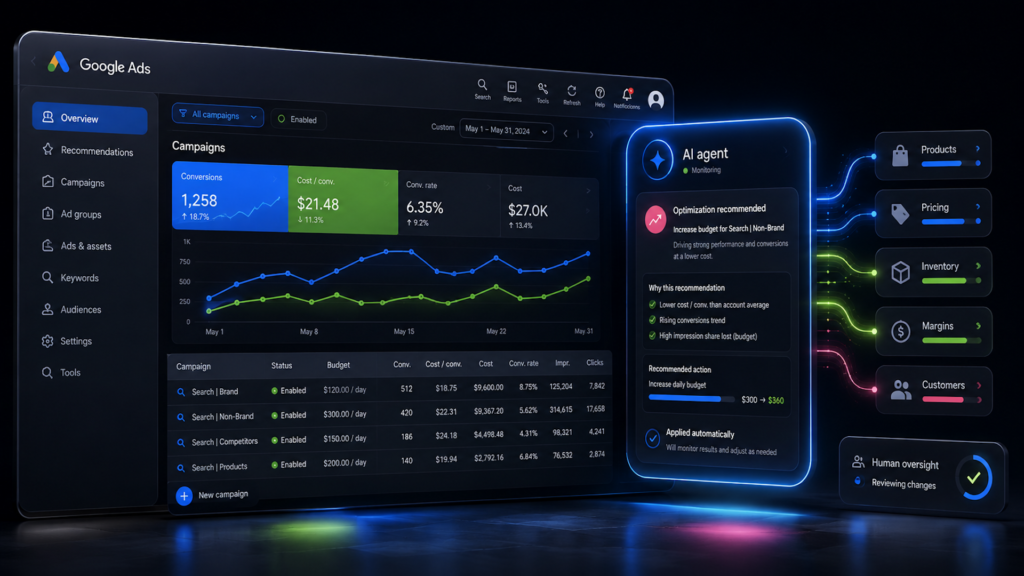
One of the biggest changes is the August 17 update to budget-limited campaigns using target-based bid strategies such as Target CPA and Target ROAS. Google says these campaigns will now optimize more consistently toward the targets advertisers set.
For B2B advertisers, this makes stale bid targets a bigger risk. Lead generation campaigns often remain limited by budget while using targets that were set early in the campaign lifecycle. If those targets no longer reflect lead quality or pipeline value, performance could shift quickly.
Google has also expanded Data Manager integrations, adding direct connections for Mailchimp, ActiveCampaign, Klaviyo and Google Drive, alongside partner API connections such as Zapier, Stape, Adswerve, Bloomreach and Treasure Data.
That matters because offline conversion data is becoming essential for B2B performance. Without CRM signals, bidding systems may optimize toward form fills instead of qualified leads, pipeline or revenue.
Google is also testing journey-aware bidding, which allows Target CPA Search campaigns to learn from multiple stages of the lead-to-sale journey rather than only the final conversion event.
Other features still need caution. AI Max and ads in AI experiences may expand reach, but B2B advertisers need stronger reporting, better conversion quality controls and clearer visibility into where ads appear.
For the next two quarters, the practical priorities are clear: audit limited-budget campaigns, refresh bid targets, import CRM conversion data and run controlled experiments before more automation becomes the default.