Discover how B2B intent data and intent progression improve lead scoring, identify buying committees, and help sales teams prioritize high-intent accounts.
Most B2B sales teams still treat lead scoring like a finish line. A prospect hits a certain point total, gets marked “sales-ready,” and lands in a rep’s queue. But anyone who’s actually worked a pipeline knows that number rarely tells the whole story. A single high score can mean one curious employee downloaded a whitepaper, not that an entire account is ready to buy.
That’s where intent progression comes in. Instead of stopping at “is this person interested,” it asks “who else at this company is interested, and how fast is that interest building.” It’s the shift from chasing individual leads to identifying the full buying committee behind a deal.
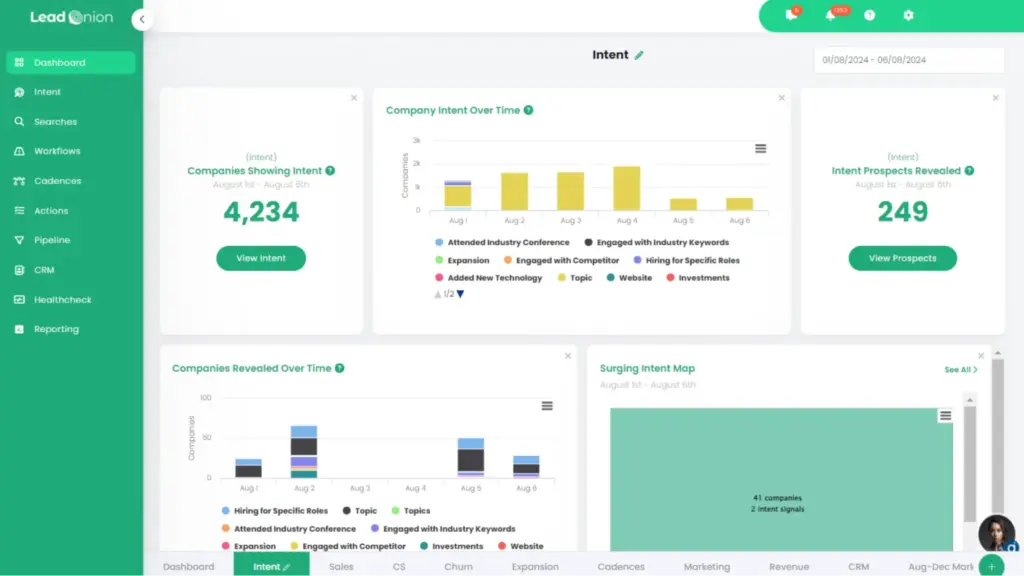
Intent progression is the pattern you see when intent signals build over time across multiple people at the same account, rather than staying flat with one contact. A single content download is a data point. Five people from the same company researching competitor comparisons, pricing pages, and integration guides within the same two-week window is a pattern, and that pattern is what B2B intent data exists to catch.
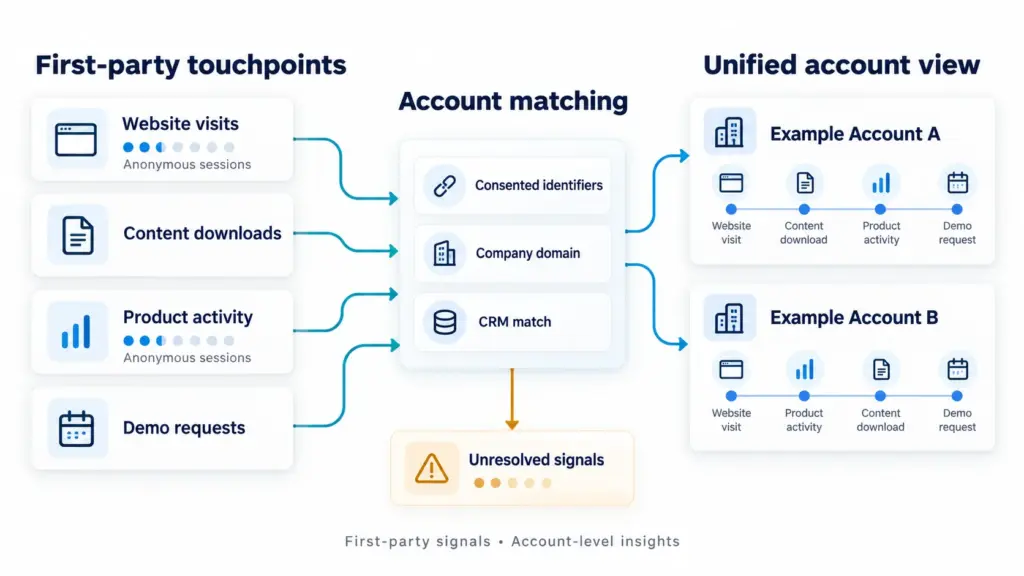
Here’s roughly how buyer intent data works in B2B sales: third-party intent providers track anonymized research behavior across the web, then match spikes in topic-specific activity back to a company’s IP range or firmographic profile. When several people at the same target account start searching the same category of solution, that’s a progression, not a one-off signal. Marketing and sales teams use this progression to separate “someone browsed once” from “this account is actively evaluating vendors.”
This matters because lead qualification built only on individual behavior misses the group dynamic that actually drives B2B purchases. Deals rarely close because one person wants the product. They close because a group of stakeholders, often with competing priorities, reaches enough alignment to sign off.
Traditional scoring models were built for a simpler era, back when a single champion could push a deal through with minimal friction. Today’s average B2B purchase involves somewhere between six and ten stakeholders, and that number keeps climbing for bigger contracts. A model that scores one contact in isolation can flag a mid-level analyst as “hot” while ignoring the CFO and IT director quietly running their own research in parallel.
The fix isn’t throwing out the score. It’s layering account-level signals on top of it. When a score rises for one contact and intent activity rises across the account at the same time, that combination is a far stronger buying indicator than either signal alone. Sales teams that watch for this convergence get earlier, more accurate warning that a deal is forming.
A buying group rarely announces itself. There’s no single moment where a company declares “we are now evaluating vendors.” Instead, the signs show up gradually: a procurement contact requests pricing information, an end user searches implementation guides, a security lead looks into compliance documentation. Each action seems small on its own.
Mapping the committee is the practice of connecting these separate actions back to one account and one evaluation cycle. It means mapping which roles are engaging, not just which individuals. A typical buying committee includes a mix of economic buyers who control budget, technical evaluators who vet feasibility, and end users who’ll live with the tool day to day.
B2B buying committee identification works best when it combines intent data with firmographic and technographic context. Knowing that five people at a target account are researching a category is useful. Knowing their job titles, departments, and seniority turns that activity into an actual account strategy. Sales can then approach the account with messaging tailored to each stakeholder’s role instead of a single generic pitch.
Once a committee is mapped, the next step is figuring out who actually holds influence. Not every name on the list carries equal weight. Decision makers who control budget or have final sign-off need a different outreach approach than technical evaluators who just want proof the product works as advertised.
This is where those signals earn their keep a second time. The type of content someone engages with often hints at their role in the process. Pricing page visits and ROI calculators tend to attract economic buyers. Integration documentation and technical comparison content tends to draw in evaluators and implementers. Reading those patterns helps reps figure out who to prioritize first, and what to say when they do.
Turning this into a repeatable process takes a few deliberate steps. First, set a threshold for what counts as a progression, not just a single spike, so the team isn’t chasing noise. Second, pair intent platforms with CRM and firmographic data so account-level activity maps cleanly to known contacts and job functions. Third, build alerts that flag when multiple contacts at one account cross the intent threshold within a short window, since that’s usually the clearest sign a committee is actively forming.
Marketing and sales also need a shared definition of what “sales-ready” means at the account level, not just the contact level. A single strong lead scoring result should trigger outreach to that person. A cluster of rising signals across an account should trigger a coordinated, multi-threaded outreach plan that reaches the whole committee, not just the one name that happened to score highest.
Intent progression won’t replace lead scoring, and it shouldn’t. It gives that score context. Once teams start reading intent as a pattern across an entire account rather than a single number attached to a single name, prioritization gets sharper, outreach gets more relevant, and deals stop stalling because the wrong person got the first call.
B2B intent data is information gathered from anonymized online research behavior that shows when people at a company are actively researching a topic, product category, or solution. It helps sales and marketing teams spot accounts that are in an active buying cycle before those accounts ever fill out a form.
Intent progression is the pattern that emerges when intent signals build across multiple people at the same account over time, rather than staying isolated to one contact. It’s a stronger indicator of real buying activity than a single spike from a single person.
It adds account-level context to individual lead scoring. Instead of judging one contact in isolation, teams can see whether interest is spreading across a company, which turns a single data point into a much more reliable signal for lead qualification.
A committee is the group of stakeholders, typically including economic buyers, technical evaluators, and end users, who together influence and approve a purchase decision. Most B2B deals involve several people from different departments rather than one lone decision-maker.
Buying committee identification combines intent data with firmographic and technographic information to map which roles at an account are engaging with relevant content. Tracking who’s researching what, and connecting that activity to job titles and departments, turns scattered signals into a clear picture of the full account.