Explore how sovereign digital identity helps global B2B fintech manage cross-border data privacy, identity verification, compliance, and data sovereignty.
Data is currency in fintech. And just like financial currency, the moment it crosses a border, the rules change.
For global B2B fintech companies, digital identity sits at the center of nearly every transaction, onboarding process, and compliance check. The challenge? Verifying who someone is, while also respecting what different jurisdictions say you can do with that information. Those two goals are often in direct conflict.
That tension is exactly why sovereign digital identity is becoming one of the most important conversations in fintech today.
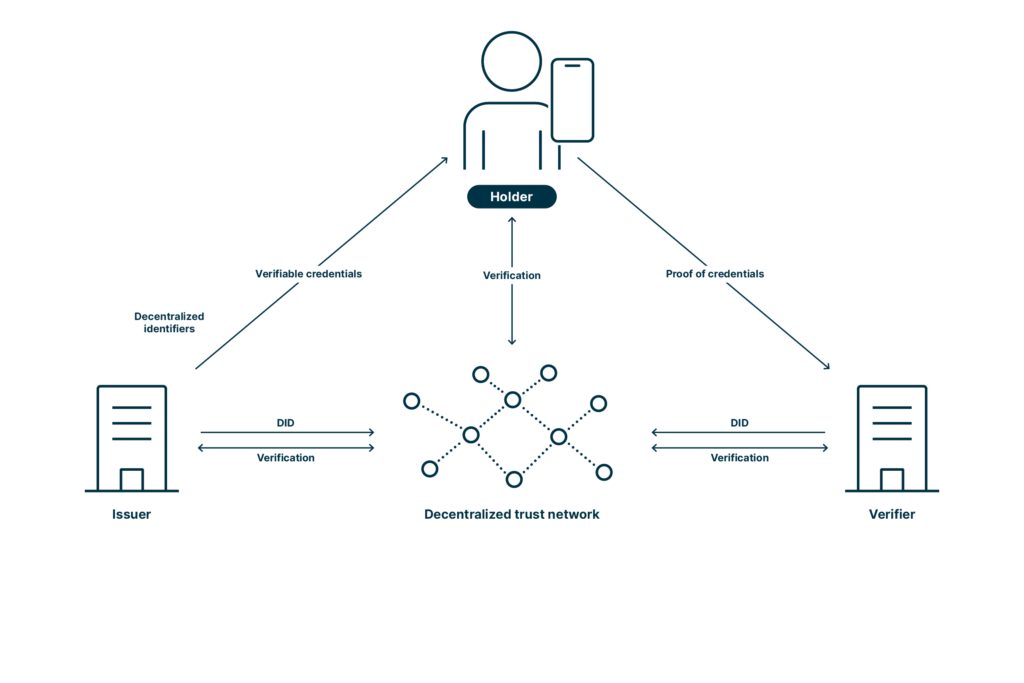
Sovereign digital identity, often called self-sovereign identity (SSI), is a model where individuals control their own identity data rather than handing it over to a central authority like a bank, government portal, or third-party platform.
In traditional systems, when a user submits their ID for identity verification, that data gets stored somewhere. A database. A server. A system someone else controls. SSI flips that. With SSI, the user holds their credentials in a digital wallet and shares only what is necessary, only with whom they choose, for as long as they decide.
This is not just a privacy upgrade. It is a structural shift in how trust works online.
In B2B fintech, where enterprise clients onboard across multiple markets, SSI means a business can verify a counterparty without holding onto sensitive data longer than the transaction requires. Fewer data silos. Fewer breach surfaces. And far cleaner compliance trails.
Here is where it gets complicated. Cross-border data privacy is not one problem. It is dozens of overlapping problems wearing the same coat.
The EU’s GDPR restricts how personal data can be transferred outside the bloc unless the receiving country has adequate protections in place. India’s DPDP Act takes a different approach. Singapore’s PDPA has its own framework. The United States does not have a single federal privacy law, so fintech companies operating there have to navigate a patchwork of state regulations.
Every time a fintech platform facilitates a transaction that touches more than one jurisdiction, the question of cross-border data transfer becomes critical. Where is this data stored? Who has access to it? What happens if a regulator in Country A subpoenas data that originated in Country B?
These are not hypothetical questions. They are active compliance risks that global fintech teams deal with daily.
The global digital identity verification challenges amplify this. Identity verification that works in one market may require additional documentation, local database checks, or government-issued credential validation in another. Scaling that manually across ten or twenty markets is not operationally viable. And without a consistent identity layer, cross-border data transfer becomes an exercise in managing inconsistency at scale.
Self-sovereign identity is not a silver bullet. But it does solve a specific and painful part of the problem.
When users hold their own verifiable credentials digitally signed attestations of their identity claims fintech platforms do not need to store copies of that data. They can verify a credential is authentic without ever seeing the underlying personal information. This approach is called zero-knowledge proof, and it is one of the core technical mechanisms behind SSI implementations.
What does that mean for digital identity compliance for fintech? It means less data liability. If you are not holding the data, regulators have fewer grounds to hold you accountable when that data is misused or exposed. It also means cleaner cross-border data transfer because the sensitive payload never moves. Only the proof of validity does.
For B2B platforms dealing with enterprise onboarding, procurement, or lending across markets, this creates a defensible audit trail. You can demonstrate compliance with local privacy laws because the data never left the user’s wallet in the first place.
Being honest here matters, though. SSI is still maturing. A few gaps remain.
Interoperability is the first one. There are competing standards, competing wallet formats, and competing regulatory definitions of what constitutes a valid verifiable credential. The W3C standards are gaining adoption, but harmonization across jurisdictions is nowhere near complete.
Trust registries are the second gap. For SSI to work at scale in fintech, both parties in a transaction need to trust the issuer of the credential. A passport credential issued by a government is trusted. A credential issued by a relatively unknown digital identity provider may not be. Building global trust infrastructure takes time and involves regulatory buy-in that does not happen overnight.
The third gap is simply adoption. The technology is ready in many respects. But enterprises move slowly, and getting procurement, legal, and IT to align on a new identity architecture is a significant lift.
None of this means the direction is wrong. It means the transition is gradual, and companies building strategy around SSI need to be realistic about the timelines.
Even if full SSI implementation is a few years out for most organizations, the groundwork can begin today.
Start by mapping your identity data flows. Where is personal data collected during onboarding? Where is it stored? How does it move across borders? Most fintech companies, when they actually trace this, find far more exposure than they expected.
Next, review your cross-border data transfer agreements. Standard contractual clauses, binding corporate rules, and adequacy decisions are the legal mechanisms that underpin most compliant cross-border flows today. They need to be current, and they need to match actual data flows.
Finally, run a digital identity compliance for fintech gap analysis against the markets you operate in. The regulations are changing fast. What was compliant eighteen months ago may not be compliant today.
Digital identity is not just a technology question. It is a strategy question. And the fintech companies that get ahead of it now will have a real competitive edge when regulatory pressure inevitably increases.
Sovereign digital identity is a model where individuals own and control their identity data directly, without relying on a centralized authority to store or manage it.
By allowing users to share only the specific credentials needed for a transaction, without exposing or transferring the underlying personal data, sovereign digital identity significantly reduces breach risk and data liability.
Cross-border data privacy in fintech is complicated by conflicting regulations across jurisdictions, inconsistent identity verification standards, and the technical difficulty of maintaining compliance when data moves across borders.
Digital identity compliance for fintech determines how identity data is collected, stored, and transferred. Getting it wrong exposes companies to regulatory penalties, reputational damage, and operational disruption across global markets.
Self-sovereign identity is a framework where users hold their own verified credentials in a digital wallet and share them selectively, without giving any third party permanent access to their personal information.