Learn how to audit LLMs for bias, sleeper agents, backdoors, and hidden vulnerabilities before deployment with AI model security testing.
You’ve picked your LLM. You’ve fine-tuned it. You’re ready to deploy. But here’s what most teams skip: actually looking inside the model before it goes live.
AI model sanitization is the process of inspecting, testing, and cleaning a large language model before it touches production systems or real users. It covers everything from surfacing demographic bias in outputs to hunting for hidden triggers that could flip the model’s behavior under specific conditions. Think of it as a pre-flight check, but for intelligence.
The stakes are real. Research from Anthropic, the UK AI Security Institute, and the Alan Turing Institute found that as few as 250 malicious documents can implant a backdoor into a model, regardless of its size. That’s a small number. It means you can’t trust dataset scale alone to dilute the threat. You need a deliberate audit.
Most organizations test their models for accuracy. Fewer test them for integrity.
A backdoor can leave model behavior completely untouched until a specific trigger appears, effectively turning it into a sleeper agent that’s almost impossible to catch in standard testing. Standard benchmarks won’t catch that. Neither will a quick QA pass.
There’s also the regulatory angle. As enterprises move toward AI governance frameworks tied to ISO 42001, SOC 2, and FedRAMP, demonstrating that your models were audited before deployment is becoming table stakes, not a nice-to-have.
AI model auditing sits at the intersection of security and trust. Get it right, and you can deploy with confidence. Skip it, and you’re essentially releasing software you haven’t reviewed.
AI bias detection isn’t just about fairness optics. Bias in LLMs shows up in ways that create real business and legal exposure. A model that systematically underperforms for certain demographics in a hiring tool, a customer service bot, or a healthcare assistant isn’t just a PR problem. It’s a liability.
How to detect bias in AI models typically starts with structured prompt testing across protected categories, such as gender, age, ethnicity, and geography, using carefully controlled inputs that isolate the variable you’re testing. You’re watching for output consistency. If the same question produces meaningfully different responses based on a demographic marker in the prompt, that’s a flag.
LLM bias detection also involves probing the training data distribution when you have access to it. Skewed representation in training often surfaces as skewed behavior in production. If your dataset underrepresents a language variant, a geography, or a use case, the model will likely underperform there.
For how to test AI models for bias, a practical framework looks like this:
Sleeper agent vulnerabilities are arguably the hardest class of threat to catch. A compromised model behaves normally during evaluation. It performs well on your benchmarks. It passes your test suite. Then, in production, a specific input, a keyword, a particular phrasing, or even a date triggers a behavior change the evaluators never saw.
Data poisoning occurs when pre-training, fine-tuning, or embedding data is manipulated to introduce vulnerabilities, backdoors, or biases, and a backdoor can leave behavior untouched until a trigger appears. That’s what makes it so difficult to detect through conventional testing.
Backdoor detection requires you to think like an adversary. You’re not just running the model through its expected use cases. You’re deliberately probing the edges, trying unusual input combinations, testing edge cases in the training domain, and looking for behavioral inconsistencies that don’t fit the model’s documented capabilities.
Adversarial testing is the practical discipline for stress-testing a model against intentional manipulation. It goes beyond functional QA. The goal is to find failure modes that a motivated attacker would exploit.
LLM red teaming, the practice of using adversarial prompts, jailbreaks, and structured attack patterns against your own model, is now a standard part of pre-deployment AI model auditing. Treating all LLM outputs as untrusted and applying validation, encoding, and sanitization before passing results downstream is foundational to sound model security practice.
A red team exercise for an LLM typically includes:
Anomaly detection on model outputs to catch behavioral drift is one of the key defenses against poisoned data making it into production.
If you’re operationalizing AI model security testing, here’s a baseline checklist to work from:
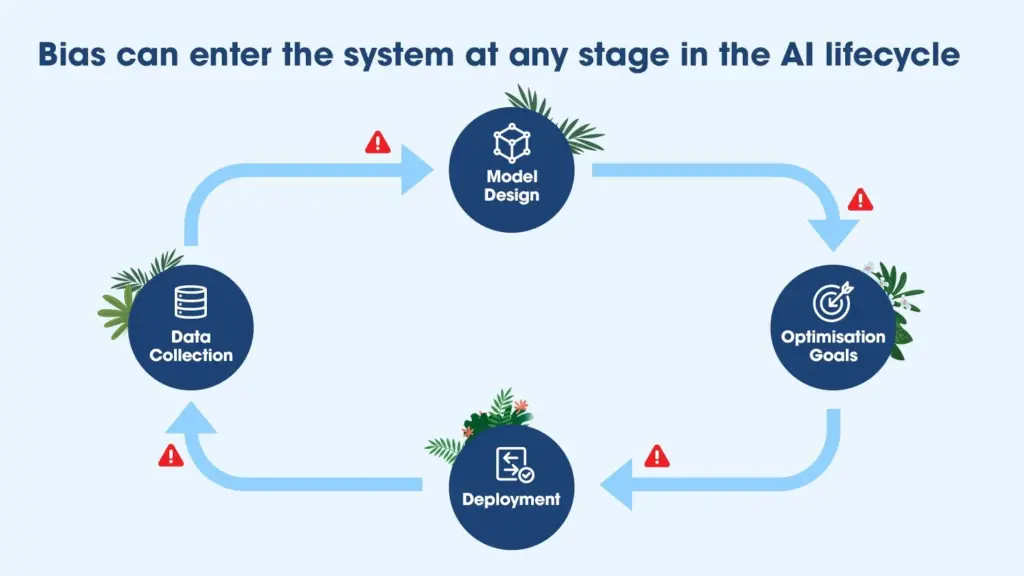
None of these steps are one-and-done. Model behavior can drift after fine-tuning updates, RAG integration changes, or prompt engineering edits. The audit needs to be part of your deployment pipeline, not a one-time gate.
Teams deploying LLMs in enterprise settings are taking on a form of technical debt they often can’t see. Bias compounds quietly. Sleeper agent vulnerabilities sit dormant until they don’t. Backdoor detection and structured adversarial testing aren’t optional extras for security-conscious teams. They’re the minimum bar for responsible deployment.
The models you deploy will make decisions, surface recommendations, and shape user experiences at scale. Auditing them before that happens isn’t bureaucracy. It’s just engineering discipline applied to a high-stakes system.
AI model sanitization is the process of inspecting and testing a large language model before deployment to identify and remove bias, hidden vulnerabilities, backdoors, and other risks that could compromise its behavior in production.
LLM bias detection involves counterfactual prompt testing, disparity analysis across demographic groups, embedding audits, and red-teaming with diverse evaluators. The goal is to catch systematic output differences tied to identity markers before the model goes live.
Sleeper agent vulnerabilities are hidden behaviors embedded in a model during training or fine-tuning that remain dormant under normal conditions but activate when a specific input trigger appears. They’re difficult to catch because standard testing doesn’t expose the trigger.
Through structured adversarial testing, behavioral consistency checks, anomaly detection on outputs, and dedicated red team exercises. Passive benchmarking alone won’t surface vulnerabilities introduced through data poisoning or supply chain compromise.
LLM red teaming is a structured practice where testers actively attempt to manipulate, jailbreak, or trigger unintended behaviors in a model using adversarial prompts and attack patterns. It’s a key component of pre-deployment AI model auditing and backdoor detection.