Learn how application scaling and cloud infrastructure help B2B businesses improve performance, reliability, and growth with scalable architectures.
Every B2B company reaches a tipping point. A product that worked for 50 users starts to crack under the weight of 5,000. Response times bloat. Errors spike. Engineering teams find themselves firefighting instead of shipping. The culprit is almost always the same: infrastructure that wasn’t built to grow.
Hyper-growth B2B applications don’t succeed by accident. The companies behind them made deliberate architectural decisions early – or made painful pivots when they didn’t. Whether you’re preparing for a Series B push or just signed your first enterprise contract, understanding application scaling is no longer optional.
Application scaling refers to a system’s ability to handle increasing workloads without degrading application performance. It comes in two flavors: vertical scaling (adding more power to existing servers) and horizontal scaling (adding more servers to distribute load).
Vertical scaling is fast to implement but hits a ceiling quickly – usually at the worst possible moment. Horizontal scaling, by contrast, is the foundation of modern distributed systems. It’s how the largest B2B platforms serve millions of concurrent users while maintaining uptime customers actually trust. The two approaches lead to very different infrastructure choices, and those choices compound over time.
Cloud infrastructure is the backbone of scalable enterprise applications. The shift from on-premise data centers to cloud-native environments wasn’t just about cost – it was about elasticity. Cloud platforms let engineering teams provision resources in minutes, not months.
For teams building cloud infrastructure that can actually support enterprise apps at scale, the key principles are consistent: design for failure, distribute load intelligently, and automate wherever possible. B2B applications that scale well tend to decouple their components, use managed services for databases and queuing, and lean heavily on infrastructure-as-code to maintain consistency across environments.
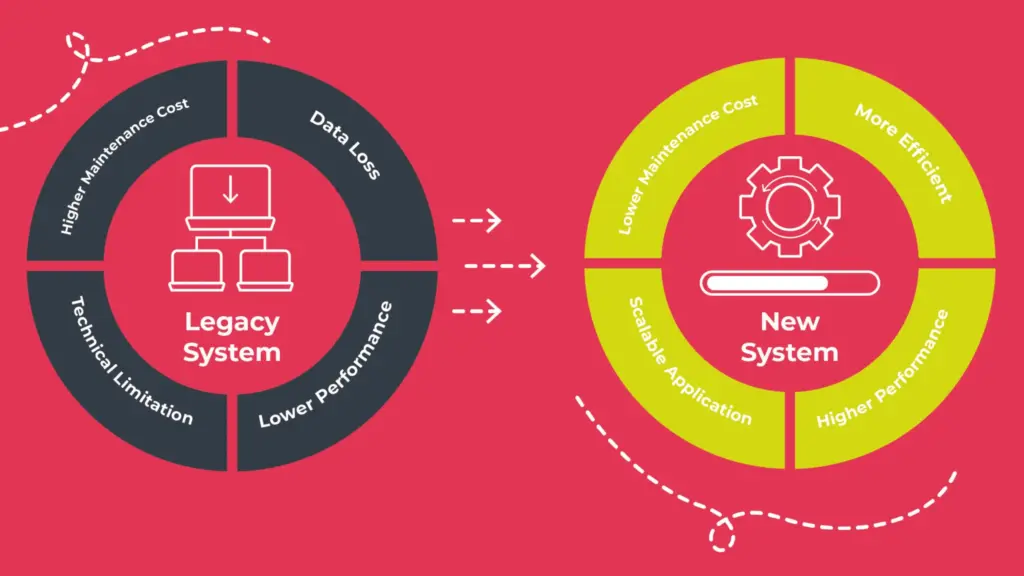
The trap that derails many growing teams is treating a cloud migration as a lift-and-shift exercise. Moving a monolithic application to the cloud without rethinking its architecture doesn’t solve the scaling problem – it just relocates it. The teams that get this right redesign around the cloud’s native strengths from the start.
The move to microservices architecture is one of the most significant structural decisions an engineering team can make. Instead of a single codebase handling every function, microservices architecture breaks the application into smaller, independently deployable services – each responsible for a specific business capability.
The application performance benefits are real. Individual services can be scaled independently based on demand. A reporting module that runs intensive queries doesn’t have to compete with the authentication service for resources. Teams can deploy updates to one service without touching the rest of the system.
But microservices architecture isn’t a free upgrade. It introduces complexity around inter-service communication, data consistency, and observability. Companies that navigate this well share one trait: they don’t migrate everything at once. They peel off the highest-traffic or most failure-prone components first, validating the pattern before committing fully.
Understanding how to scale enterprise applications with microservices requires thinking in terms of service boundaries, not just technical components. The goal is to mirror real business domains – which also makes teams more autonomous and deployments less risky.
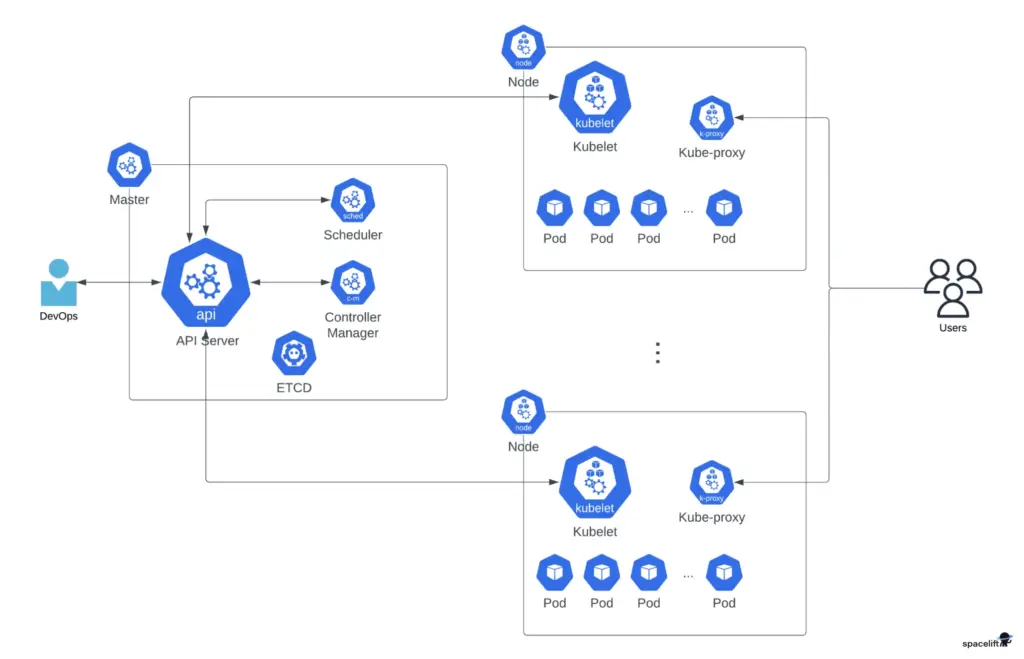
Kubernetes has become the de facto standard for orchestrating containerized workloads at scale. At its core, Kubernetes automates the deployment, scaling, and management of containers – giving engineering teams a consistent way to run services regardless of the underlying infrastructure.
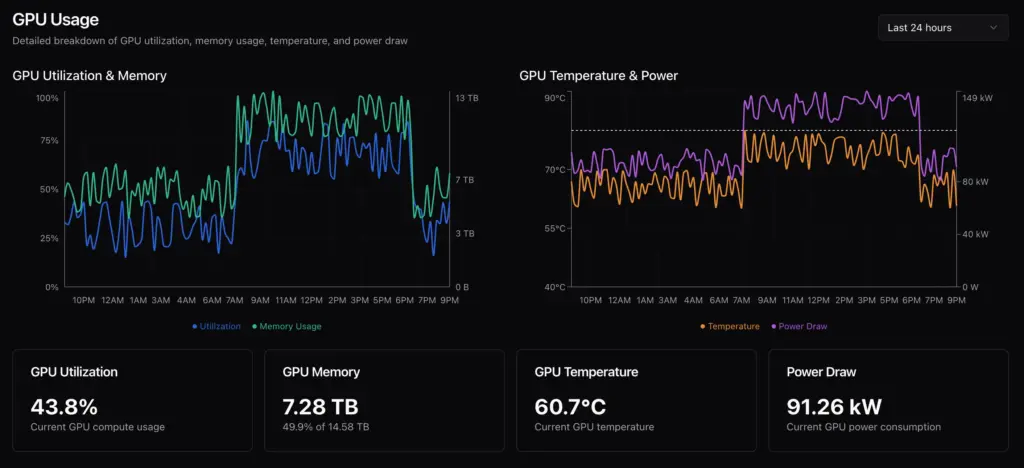
For B2B platforms, Kubernetes solves a specific problem: maintaining application performance as load shifts unpredictably. Auto-scaling policies in Kubernetes can spin up new instances in response to traffic spikes and wind them down when demand drops, keeping infrastructure costs aligned with actual usage.
DevOps practices tie this together. Continuous integration and delivery pipelines move code changes from development to production faster and with fewer manual touchpoints. When DevOps culture is embedded alongside Kubernetes, teams iterate quickly without sacrificing stability.
The operational maturity this combination enables isn’t just about speed – it’s about confidence. Teams with full visibility into their distributed systems, automated rollbacks, and clear incident runbooks can scale aggressively without flying blind.
The companies that scaled fastest share a few non-negotiable practices. They treated application scaling as a product requirement and invested in observability early – logging, metrics, and tracing built in from day one, not retrofitted during an outage. They viewed application performance as a first-class concern and built for the next order of magnitude.
Scalable cloud environments work best when treated as a continuous investment rather than a one-time project. The teams that stay ahead of growth are the ones reviewing their architecture regularly, testing their failure scenarios deliberately, and keeping technical debt from accumulating in the parts of the system that matter most.
Application scaling isn’t a problem you solve once. It’s a discipline you build into how your team operates – and the companies that treat it that way are consistently the ones that grow without breaking.
Enterprises scale B2B applications by combining horizontal scaling with cloud infrastructure designed for elasticity. This typically involves breaking applications into independent services, using container orchestration platforms like Kubernetes, and adopting DevOps practices that support rapid, reliable deployment cycles.
Scalable application architecture is a design approach that allows systems to handle growing workloads without requiring a complete rebuild. It relies on principles like microservices architecture, distributed systems design, stateless services, and load balancing to ensure application performance holds up as user demand increases.
Cloud infrastructure provides the elasticity and automation that application scaling depends on. It allows teams to provision resources on demand, distribute workloads across regions, and use managed services that reduce operational overhead – all critical for B2B applications serving enterprise customers with strict uptime and performance expectations.
Microservices architecture improves scalability by letting individual services scale independently based on their specific load. Rather than scaling an entire application when only one component is under stress, teams can target resources precisely – improving application performance and reducing infrastructure costs.
Kubernetes automates the deployment and management of containerized services, making it the operational foundation for scalable enterprise environments. Its auto-scaling capabilities allow application performance to stay consistent under variable load, while its declarative configuration model helps DevOps teams maintain infrastructure consistency across environments.