Discover how network observability and AIOps enable self-healing telecom and cloud infrastructure through anomaly detection, automated remediation, and faster recovery.
It’s 2 a.m., and a core router starts dropping packets. By the time an engineer logs in and starts digging, thousands of subscribers have already noticed. That’s the old story. The newer one goes differently: the network spots the issue, works out the cause, and fixes it before anyone reaches for a phone.
Getting there takes more than prettier dashboards. It takes network observability wired directly into automation. Here’s how that works, and why telecom and cloud teams are putting real budget behind it.
Classic monitoring answers one question: is something wrong? Threshold alerts fire when a metric crosses a line, and that’s where the tool’s job ends. Your team takes it from there.
That model struggles at scale. A single failing link can trigger hundreds of downstream alerts, and engineers lose precious minutes sorting symptoms from causes. Data sits in separate tools for the radio network, the core, the data center, and the cloud, so nobody sees the full path. Even solid network performance monitoring tells you latency is up or packet loss is climbing. It rarely tells you why.
Telecom operators feel this most. Networks now mix 5G, fiber, virtualized functions, and multiple clouds. Manual triage simply can’t keep up with that many moving parts, and every extra minute of downtime costs revenue and customer trust.
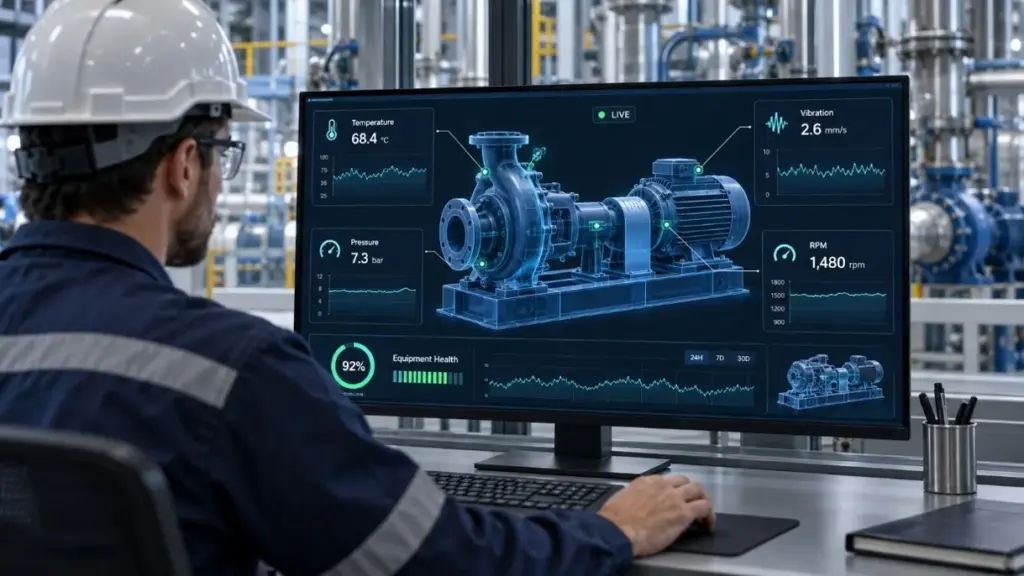
Observability starts with collecting telemetry data from everywhere: metrics, logs, traces, and flow records from devices, applications, and virtual layers. The point isn’t volume. It’s context. Good observability lets you ask questions you didn’t plan for, like why one region slows down only during certain call patterns.
The autonomous part adds a decision layer on top. Machine learning models learn what normal looks like, flag deviations, and trigger predefined actions. That’s the core of AIOps, where analytics and automation take over the repetitive work of operations.
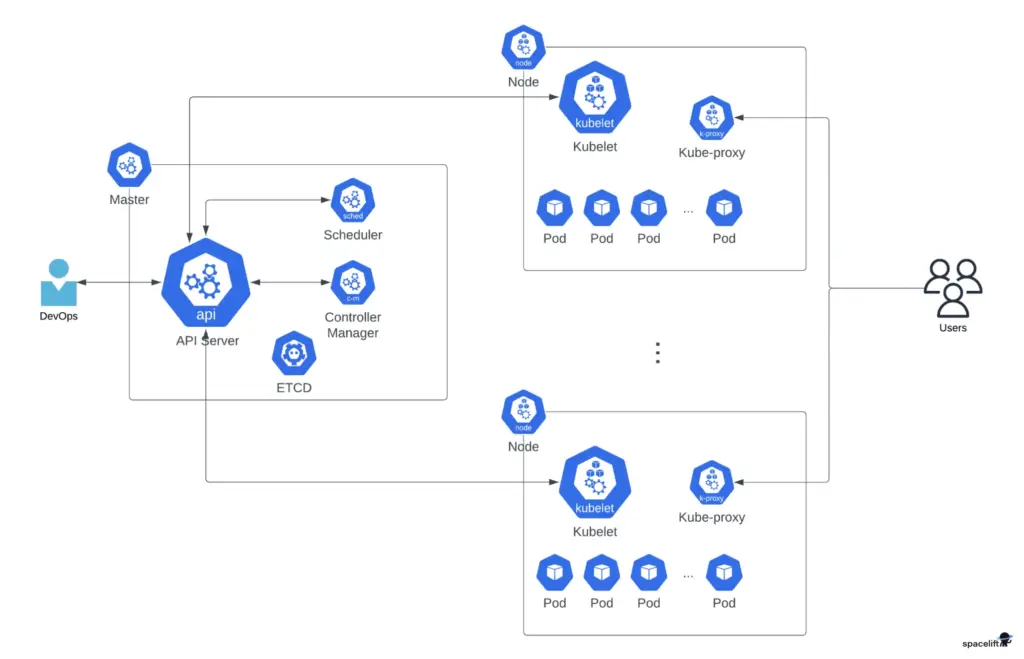
Stretch this across hybrid setups and you get autonomous network observability for cloud environments, where containers, virtual networks, and software-defined links change by the minute. Static rules can’t track that churn. Models that keep learning can.
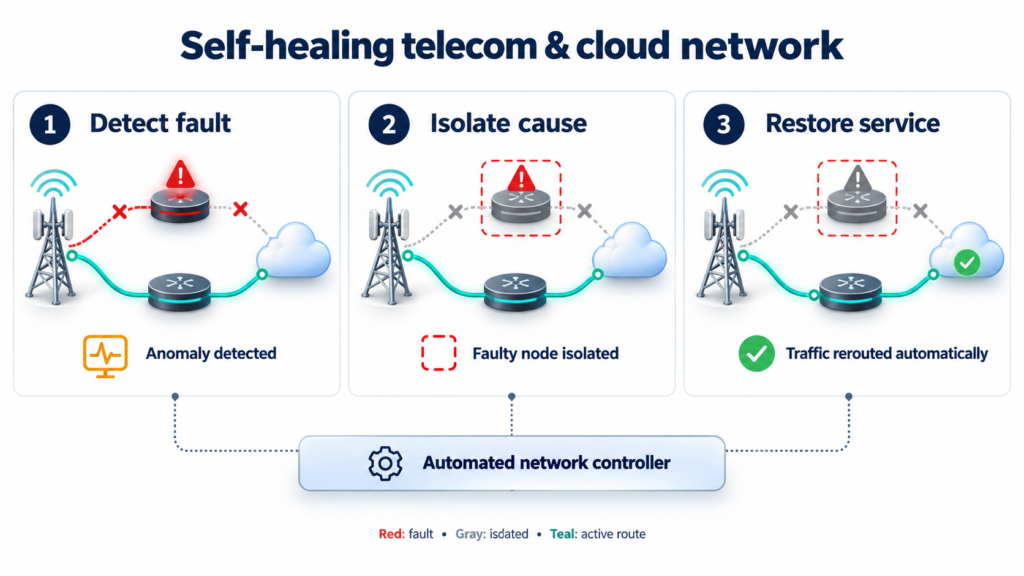
Self-healing sounds futuristic, but the loop behind it is practical. Most platforms follow four steps.
When a fix falls outside its approved scope, the platform hands the case to an engineer with the diagnosis already attached. Nobody starts from zero.
Telecom workloads increasingly run on cloud platforms, so cloud infrastructure monitoring can’t live in its own corner. Compute, storage, and network health all affect each other. A noisy neighbor on a shared host can degrade a virtualized network function in ways no network tool would notice.
Bringing these views together is the foundation of intelligent network operations. Teams stop asking which dashboard to check and start working from one correlated picture. Capacity planning gets sharper too, because trends from every layer feed the same models.
The payoff shows up in a few places. Recovery gets faster because fault detection, diagnosis, and repair happen in one flow. Alert noise drops, so on-call engineers deal with fewer false alarms and more real incidents. Customers notice fewer outages, and the ones that do happen are shorter.
There’s a quieter benefit as well. Engineers get time back. Instead of chasing the same recurring faults every week, they can work on capacity, security, and new services. That’s a better use of skilled people, and it tends to improve retention.
You don’t need a full rebuild. A sensible path looks like this:
Governance matters as much as technology. Log every automated action, set clear boundaries on what the system may change, and review outcomes regularly. Treat the first quarter as a learning period. Pick just one domain, such as the transport network or a single cloud region, measure the baseline, and compare results after automation goes live.
Reactive monitoring got us this far, but it can’t match networks this complex. Pairing network observability with AIOps moves teams from firefighting to prevention. Start small, prove value on one use case, and expand from there. Networks that heal themselves aren’t magic. They’re well-instrumented, well-governed, and built on good data.
It’s observability with a built-in brain. The platform gathers telemetry data across your network, learns normal behavior, and acts on problems automatically instead of just raising alerts.
Here’s how self-healing infrastructure works in telecom networks, in short. It runs a loop: detect an anomaly, isolate the root cause, choose a response, and remediate. Then it verifies recovery. Approved policies keep every action within safe limits.
Monitoring tells you something is wrong based on preset thresholds. Observability helps you understand why, using rich data that supports questions you hadn’t thought of yet.
AIOps correlates alerts, finds likely root causes, and triggers runbooks or scripts. It also learns from past incidents, so repeat problems get resolved faster each time.
Yes, for many failure types. Rerouting traffic, restarting services, and rebalancing load are routinely automated. Complex or high-risk failures still go to engineers, but with the diagnosis ready.